
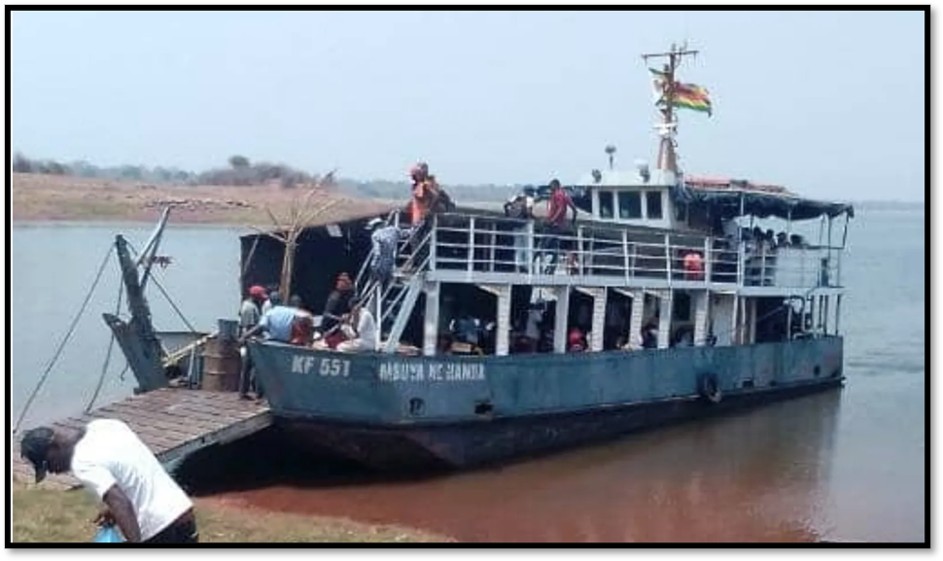
Overloaded Mbuya Nehanda ferry capsizes on Lake Kariba
On 11 August 2026 the Mbuya Nehanda ferry capsized on Lake Kariba leading to the death of at least 97 people
The MV Rida Mbuya Nehanda (KF551) a ferry certified to carry 90 passengers and owned by government through the Rural Infrastructure Development Agency (RIDA) capsized in rough weather on Lake Kariba on 11 August 2026 during its regular cruise between Kariba town and Chalala, an isolated rural community on the Lake Kariba shore that relies heavily on the transport link. The Mbuya Nehanda ferry left Kariba in an overloaded condition – survivors had noted that the ferry seemed crowded with passengers and cargo.
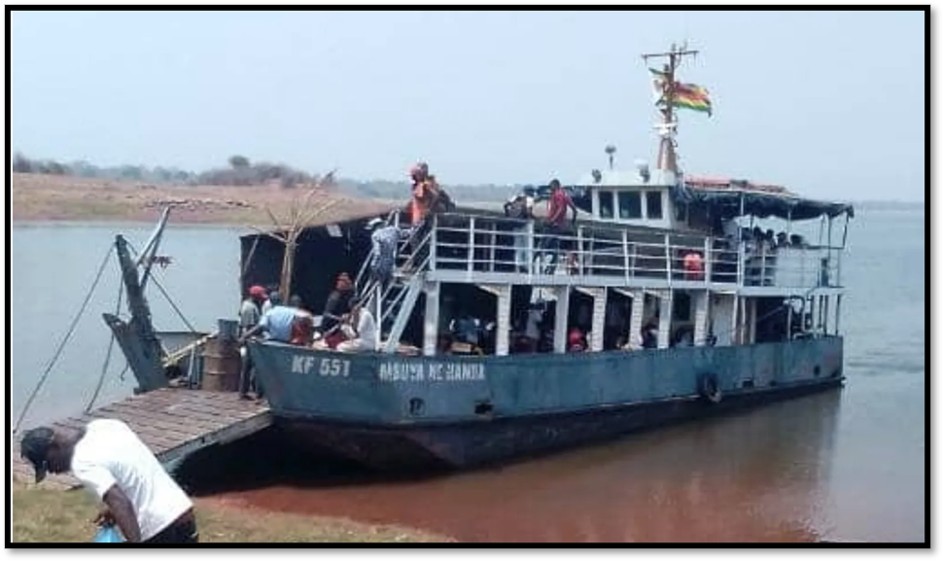
Photo Mutsa Murombedzi/X: MV Mbuya Nehanda before the disaster
Did the Zimbabwe Meteorological Services Department (MSD) issue a weather warning?
It appears the MSD did issue an early warning on 11 August advising all lake users against sailing on Lake Kariba. Government officials, including local government Minister Daniel Garwe, confirmed during post-cabinet briefings that the meteorological service had explicitly warned of dangerous, strong waves developing on the Binga side of the lake. However the ferry's captain, Sign Patsikadova, appears to have actively disregarded these weather advisories and proceeded with the journey anyway.
The severe weather, caused by a regional cold front bringing strong south-westerly winds (known locally as the Binga wave) and choppy waters overwhelmed the deck causing engine failure before the severely overloaded vessel capsized. The Herald reported wind speeds strengthened during the day reaching about 29 km/h (18 mph) by 2pm.
Was there ongoing oversight failures and breaches of safety procedures by RIDA?
This appears likely. Investigators estimate between 150 and 180 people plus heavy cargo were on board the ferry at the time. The fact it had an official capacity of 90 passengers indicates the captain and crew must have known it was overloaded and points to systematic and continued breaches of safety procedures that were tolerated by RIDA. Minister Garwe was quick to point the finger at the vessel’s captain, Sign Patsikadova, and say he disregarded warnings from the MSD not to sail.
In addition, there is evidence from survivor accounts that the cargo included luggage, goats, drums of fuel and other material destined for fishing communities at Binga and that it covered the life jackets and made it difficult to access them.
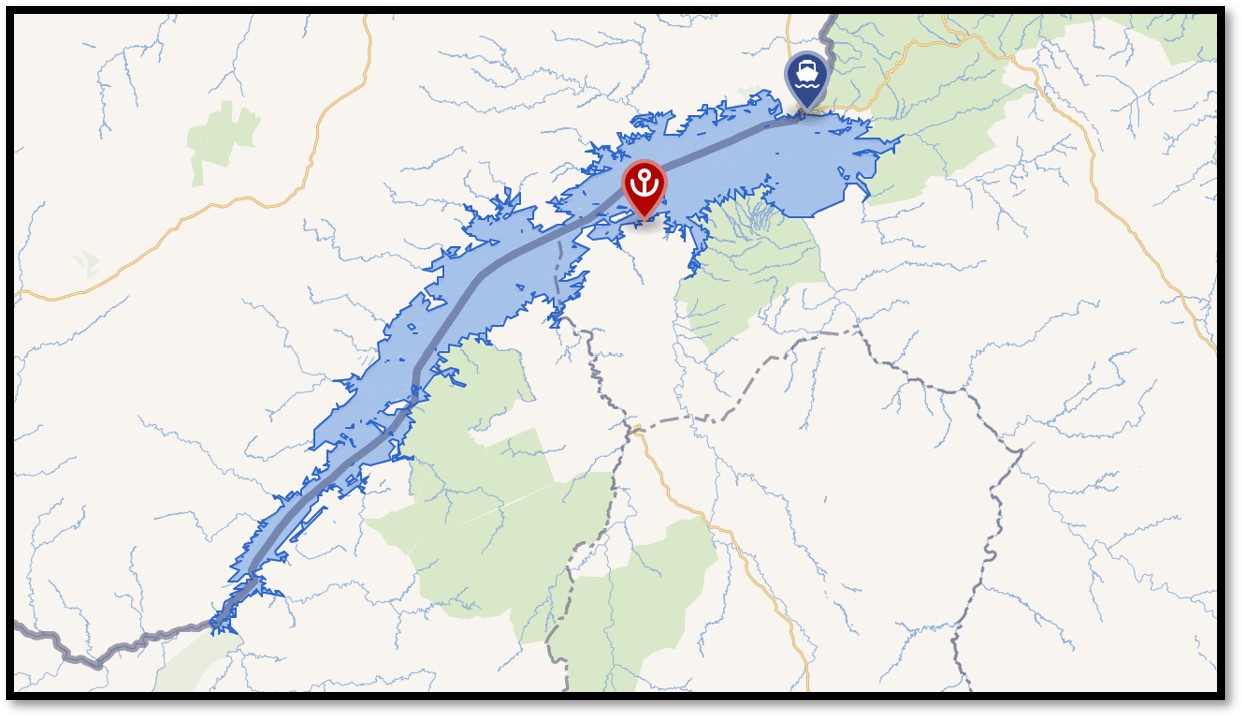
Wikipedia – location of the ferry disaster at coordinates: 16°47′42″S 28°16′34″E
Survivors accounts of the disaster
The Mbuya Nehanda ferry was equipped with two newly added engines to support the movement of cargo, but on the 11 August only one engine was operational. Survivors say about 30 minutes into the journey, waves began washing over the vessel, the bilge pump became submerged preventing it from pumping out incoming water and the remaining engine eventually stopped, after which the ferry turned broadside to the waves and capsized.
Survivors state that they asked the captain to turn around or seek shelter at a nearby island, but he refused. As the ferry listed to one side, the captain instructed passengers to move to the other side in an attempt to correct the list.
Passengers said they expressed concern about the deteriorating weather before departure, requests to turn back or seek shelter at nearby Long Island were ignored or rejected by the crew. The strong wind had alarmed passengers even before departure, particularly as a box of electrical equipment was blown into the water at Kariba harbour. Survivors said, "Children were screaming and most of the passengers were vomiting, but the captain did not seem to care."
Itayi Marumisa, a trader from Mola village said, "The life jackets were buried under the luggage, and not more than 30 people managed to get them." Those that managed to get a life jacket often struggled to get them on as this was not demonstrated prior to leaving Kariba harbour. Some of the survivors who lacked life jackets stayed afloat by holding onto floating objects, while others climbed onto the overturned hull.
Many of the survivors said they were only alive because rescue boats came from Tashinga with Zimbabwe Parks and Wildlife Management Authority (Zimparks) staff and local boat operators reaching the scene at approximately 2pm who managed to rescue 77 people from the water and from the overturned hull. Without these volunteers the casualties would have been even higher.
Crew Member Anymore Chambati, who did ticketing and safekeeping of money on the Ferry said he had counted 153 people on board, including five crew members. Children under 5 years old travelled free and were not ticketed. Mr Chambati described to ZBC the terrifying situation minutes before the ferry capsized saying: “People were screaming as water started getting into the boat. Luggage was falling into the water and everyone was trying to find a way to survive. We could not locate the machine we use to drain water it might have fallen off as well.“
Other survivors wanted to know why it was not mandatory for all passengers to be wearing life jackets before the ferry left Kariba harbour.
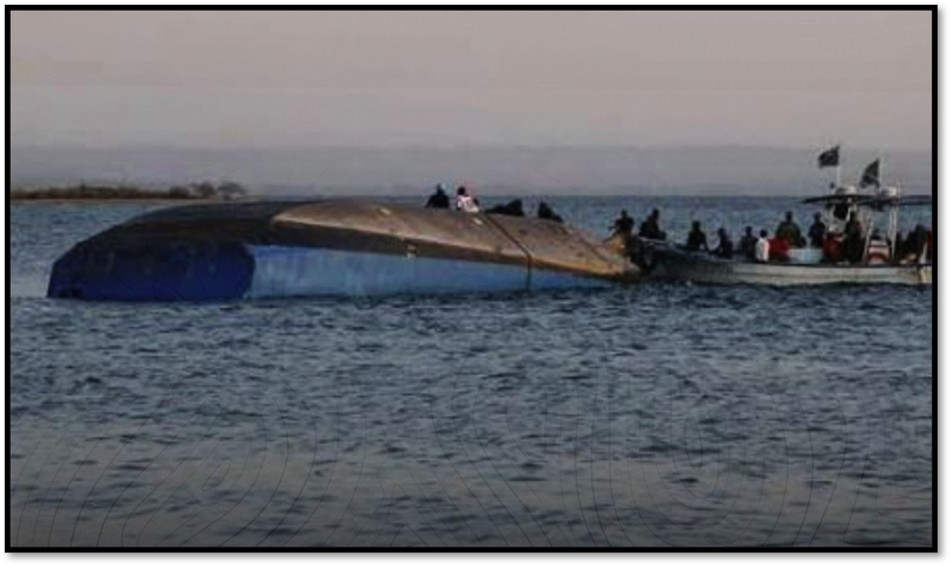
Facebook: survivors of the MV Mbuya Nehanda being rescued
Is any government investigation likely to be meaningful?
Th government has said it has begun a review of operational compliance and any safety breaches of the vessel. A formal inspection of the hull has started which has now been raised and towed to the mainland. However, this review is unlikely to transparent or honest. The technical investigation is likely to be covered by the Transport Ministry itself – the Zimbabwe Republic Police (ZRP) being unlikely to have the technical knowledge, and the Transport Ministry is hardly likely to attribute any blame to itself as they issued the fitness certificate for the forty-one year old vessel.
Zimbabwe Lawyers for Human Rights said: “The bereaved families, the survivors, and the public have a right to know what happened.” Many voices are calling for a full independent investigation as they believe there will be a cover-up by the authorities who will pin the blame on individuals rather than the responsible government organisations.
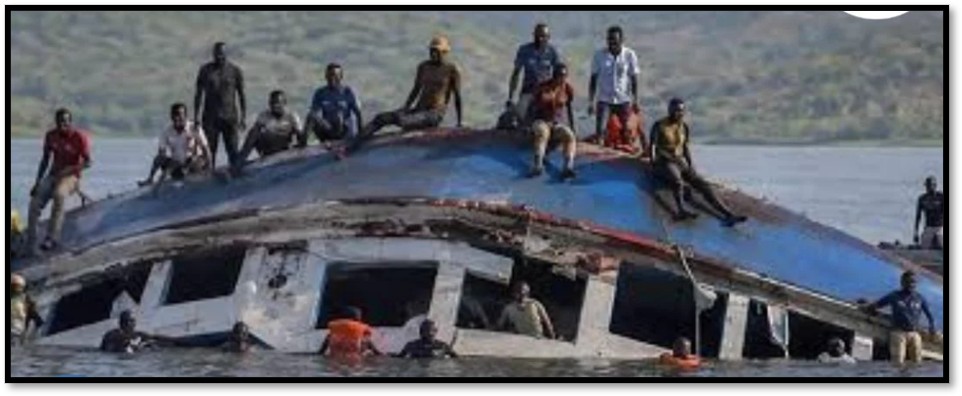
Facebook: survivors on the upturned hull of the MV Mbuya Nehanda
Blame has been laid and arrests made before the conclusion of any investigation
The drowned captain of the ferry has already been blamed by government ministers for negligence and human error in choosing to sail despite severe weather warnings.
Ignatius Chiome, the 49-year-old Kariba District Clerk and acting District Coordinator for RIDA was arrested and appeared at the Kariba magistrates court charged with culpable homicide. He has been remanded in custody pending further legal proceedings.
Minister Garwe was also quick to absolve the ferry itself from any contributory blame saying, “The boat had a fitness certificate, it was certified by the Transport Ministry.” However the ferry was forty-one years old and may have been in poor mechanical condition.[1] Every citizen in Zimbabwe knows that most government ministries are corrupt or lack technical competence being stuffed with ZANU-PF loyalists. This statement by the minister should be taken with a large pinch of snuff as the government will be keen to shift any responsibility away from its ministries.
Investigators and government sources are already attributing the disaster on 11 August 2026 to human error and negligence without waiting for the conclusions of any formal investigation. However, a combination of systematic failures, administrative negligence and a poorly performing state-run agency’s role will surely have also played a significant part in this disaster.
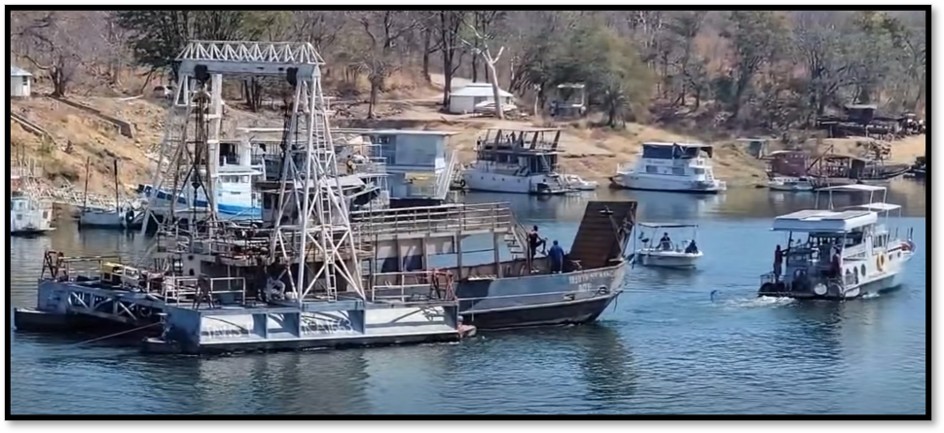
Photo ZBC: Mbuya Nehanda ferry wreck being towed to the mainland
Does the government declaration of a state of disaster have any significance?
Yes, it legally unlocks and redirects national treasury funds toward an emergency response and permits:
· funding deep-water divers, fuel and security forces to retrieve victims from Lake Kariba
· covers hospital bills, emergency medical care and support for the 77 survivors
· permits the state to provide affected families with cash for coffins and transport to move bodies back to their respective home villages for burial
· permits immediate criminal intervention and the ZRP quickly arrested Ignatius Chiome, the district coordinator for Kariba RIDA, charging him with culpable homicide
· because the ferry service is so essential for Lake Kariba’s remote fishing camps and villages like Chalala, it gives powers to fast-track the procurement and deployment of replacement vessels without waiting out the months-long standard public tendering processes.
There has already been much public criticism over the government's announcement of a US$100 financial assistance package per affected family with critics and social media users stating the amount is insulting to the victims.
The facts
This was the deadliest maritime disaster in Zimbabwe’s history. The death toll at 20 August stood at 97 people, including at least 39 children.[2] Many parents were taking children home for the school holidays. Of the five crew members aboard, two survived. 77 survivors were rescued.
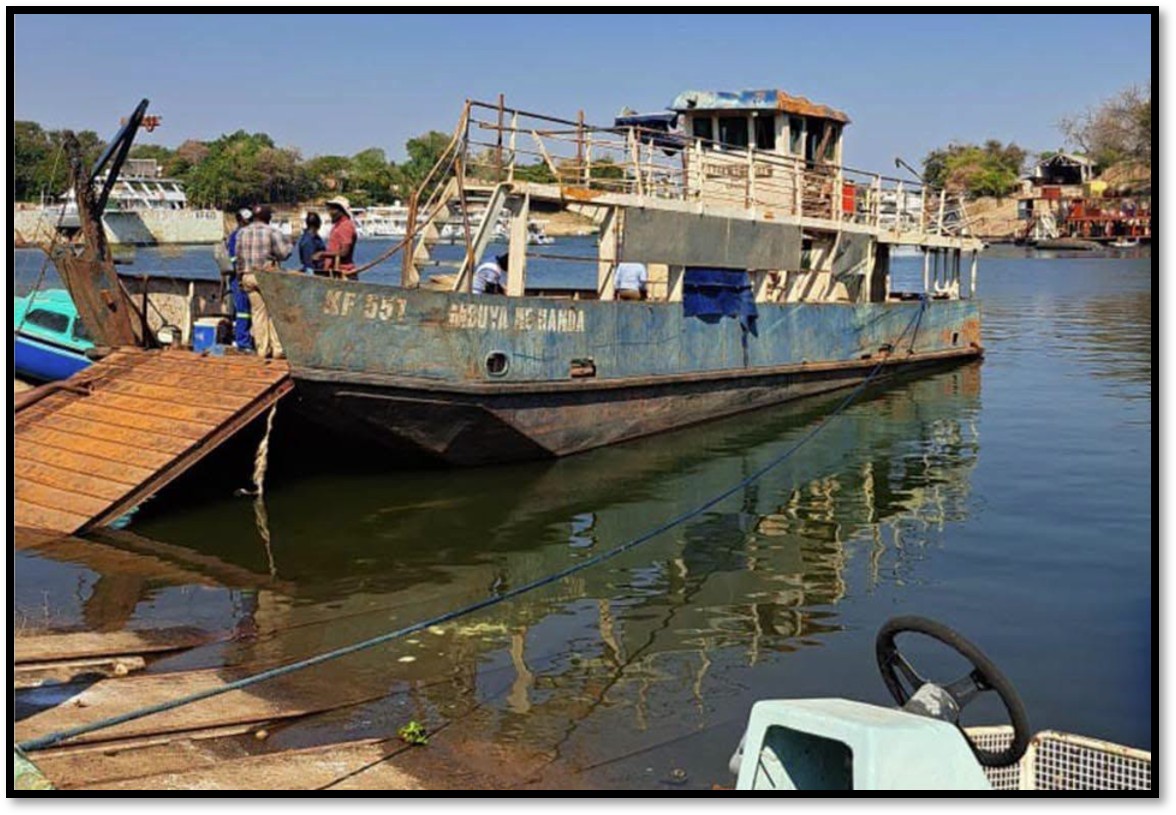
The Herald: The MV Mbuya Nehanda recovered from Lake Kariba
References
Zimbabwe Official Arrested Over Lake Kariba Ferry Disaster. https://allafrica.com/view/group/main/main/id/00097907.html
Khanyisile Ngcobo. 18 August 2026. Kariba ferry death toll rises to 93, making it Zimbabwe's deadliest transport disaster. BBC. https://www.bbc.co.uk/news/articles/cjwx58n1153o
Cathy Buckle 19/08/2026 The Tragedy of Kariba Ferry KF551. https://cathybuckle.co.zw/
Wikipedia. 2026 Lake Kariba ferry accident https://en.wikipedia.org/wiki/2026_Lake_Kariba_ferry_accident
Economist 19/08/2026
Notes
[1] The ferry had reportedly been donated to the government in 1985, but whether it was donated in a new or secondhand state is not evident
[2] Kariba ferry death toll rises to 93, making it Zimbabwe's deadliest transport disaster.