
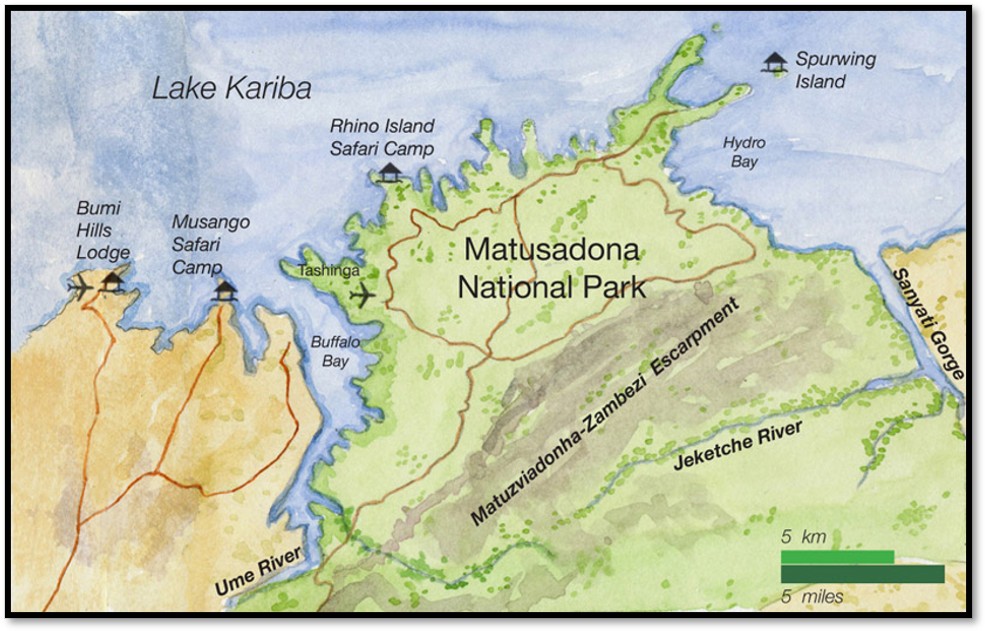
Matusadona National Park; African Parks in partnership with Zimbabwe Parks and Wildlife Management Authority (PWMA)
- Entry fee
- entrance fee to sites
Matusadona holds a special place for Zimbabwe as a tourism and heritage area, with its spectacular position on Lake Kariba. It is home to more than 240 bird species, baobab woodlands and wildlife, including elephant, lion and buffalo and now rhino and wild dog (painted wolves) However, decades of poaching coupled with inadequate resourcing have contributed to its decline, as elephant numbers have been drastically reduced and the once abundant population of black rhinos was largely eliminated.
Much of the information in this article is taken from African Parks 2023 Annual Report[1] in an effort to help maximise the attractions of the Matusadona National Park that is their first partnership in Zimbabwe.
African Parks, a conservation non-profit organisation lists 24 Parks and Reserves under its care throughout Africa in thirteen countries as widespread as Angola to Zimbabwe and including Chad, Malawi, Rwanda and South Sudan and all the others named on the map below.
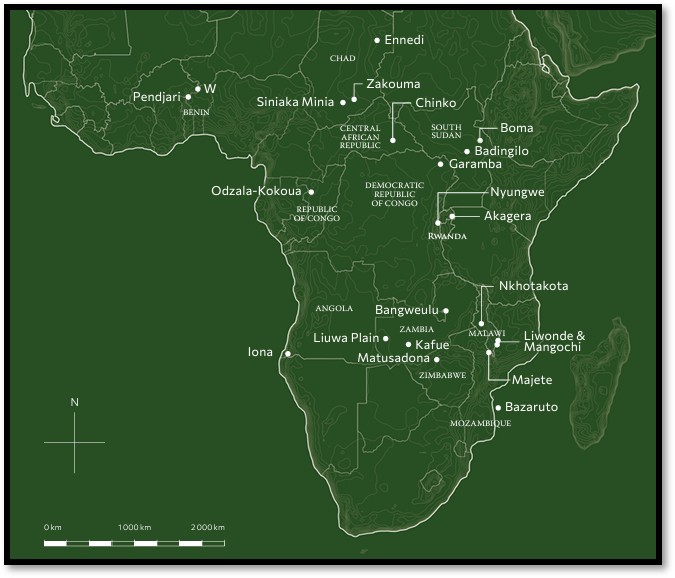
African Parks 2023 Annual Report: African Parks partnerships with governments and local communities
Zimbabwe Parks and Wildlife Management Authority (PWMA) manages five million hectares of land, 13% of Zimbabwe’s land area. PWMA has a statutory duty for the protection, management and administration of Zimbabwe’s wildlife and the Authority signed a 20-year Public Private Partnership (PPP) with African Parks for the co-management of Matusadona National Park in 2019 called the Matusadona Conservation Trust (MCT)
Under this agreement, the park's management is split according to each partner's strengths: PWMA retains sovereign ownership and legal authority over the land, while African Parks takes on direct day-to-day operational management, funding responsibilities and technical implementation.
Great credit is due to the Government of Zimbabwe and PWMA for taking this first courageous step and permitting a foreign organisation – African Parks - to provide funding and management systems to jointly manage this national park and develop its wildlife resources to their full potential. Conservationists had thought it highly unlikely that the government of Zimbabwe would ever allow a foreign organisation to take control of its wildlife resources.
Background
Matusadona National Park gets its name from the rolling Matusadona hills and covers 1,470 square kilometres. The Lake Kariba southern shoreline forms its northern boundary, the west boundary is the Ume river and the eastern boundary is the Sanyati river with its stunning steep-sided gorge. Matusadona translates as “dripping with dung!”
Matusadona was proclaimed a National Park in 1975 and was well-known for its concentrations of elephant, lions and black rhinos – the prospect of its regeneration filled the local people with optimism; they are grateful to African Parks together with PWMA and the ongoing support from The Wyss Foundation, Oak Foundation and Stichting Natura Africae.
Frances Read, from African Parks, said it was one of the country’s flagship and most valuable areas, with the potential to become a leading safari destination. This park has been much neglected and largely stripped of its wildlife; it has long been in a woeful and deteriorated condition with PWMA having insufficient resources to control the rampant poaching and insufficient interest from the private tourist sector due to its remoteness to establish a sustainable commercial infrastructure.
Matusadona is fraught with challenges and in desperate need of funding and proper management, which it will undertake in partnership with the Zimbabwe Parks and Wildlife Management Authority. Poachers have all but wiped out its black rhino population, whilst elephant numbers have been severely depleted. Ms Read said the first job will be to secure its borders to allow wildlife populations to recover and rebound naturally before implementing effective management structures and law enforcement strategies. “We will then be working with the local community so they start to see that this is for them and that this is an asset,” she said. “Matusadona is a very special place for Zimbabwe and has a lot of potential for tourism and socio-economic development.”
Recent updates from Matusadona National Park highlight major milestones in wildlife restoration, reinforced anti-poaching security, and community-driven conservation initiatives.
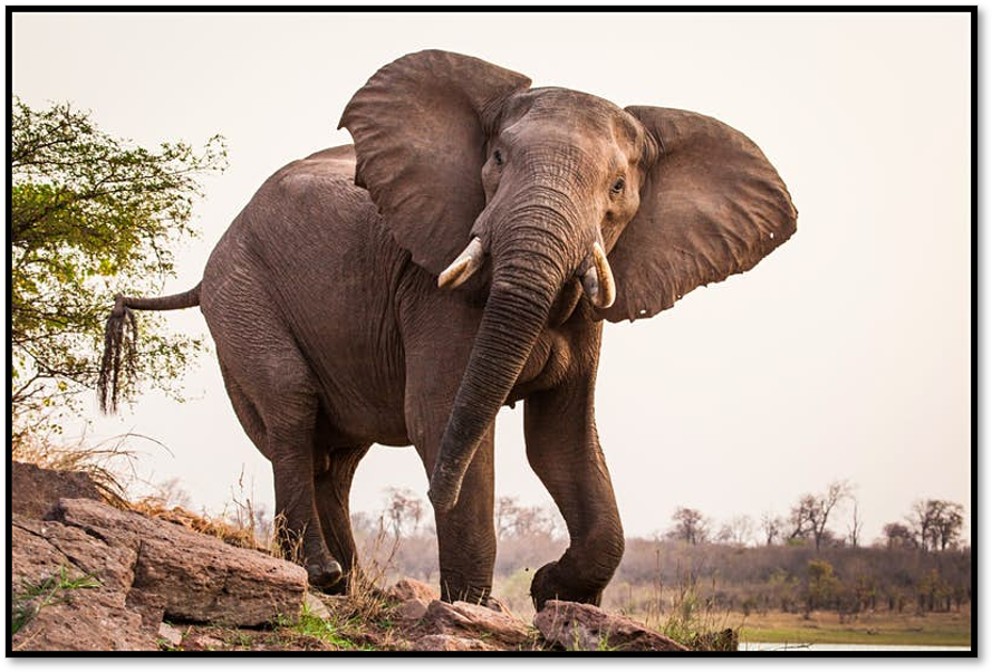
Scott Ramsay, www.lovewildafrica.com A new agreement will restoration the wildlife populations at Matusadona National Park
Matusadona Conservation Trust (MCT)
The Trust focuses on five primary operational pillars to run the park effectively:
1. Law Enforcement and Anti-Poaching
Joint Ranger Teams: The Trust recruits, equips, and employs local wildlife rangers. These teams undergo intense field training to conduct regular land and water patrols.
Advanced Monitoring Technology: Under African Parks’ guidance, the park uses digital real-time tracking, satellite foot collars for wildlife, and digital control rooms to map and deter potential poaching threats.
2. Wildlife Restorations and Management
Species Reintroductions: The Trust spearheads massive ecological restoration projects. This includes the June 2026 return of black rhino and the February 2026 reintroduction of African wild dogs, and earlier translocations of species like buffalo, eland, and sable antelope.
In a landmark conservation achievement, critically endangered black rhinos were successfully reintroduced to Matusadona National Park in June 2026, marking their return after a 30-year absence. This historic translocation represents a full-circle moment for wildlife conservation in Zimbabwe.
The Core Details of the Repopulation
The Return Fleet: An initial group of 17 black rhinos was airlifted into the park on 3 June 2026. They were sourced from the Imire Rhino and Wildlife Conservancy, Matobo National Park, and one other undisclosed location. Another 20 rhinos are scheduled for translocation next year.
A Genetic Homecoming: These rhinos are not an alien population; they are the direct descendants of the original Matusadona bloodline. When organized poaching devastated the Zambezi Valley in the late 1980’s and early 1990’s, the Zimbabwe Parks and Wildlife Management Authority (PWMA) evacuated the surviving rhinos to safe havens across the country. Their descendants have now been brought back to their ancestral home.
Phased Release Process: Upon arrival, the rhinos were held in custom-built bomas (enclosures) for up to a month to acclimatise. They are being released in phases into a secure 175-square-kilometre Intensive Protection Zone (IPZ) within the park.
3. Ecological Restorations and Species Returns
The Return of the Black Rhino: The landmark translocation of 17 critically endangered black rhinos occurred in June 2026, re-establishing a native population that had been entirely lost to the area. Equipped with satellite foot collars, the rhinos are adjusting well inside the park’s Intensive Protection Zone.
Reintroduction of African Wild Dogs: In early 2026, a total of 20 endangered African wild dogs (painted wolves) were translocated to the park as two distinct packs (one of 6 and one of 14) Having successfully navigated their soft-release phase, the packs are currently being tracked and monitored by rangers as they settle into their apex predator roles.
Prey Base Stability: These major carnivore and megafauna returns build upon the mid-2025 translocation of 74 animals, including African buffalo, common eland and sable antelope, all introduced to rebalance the local ecosystem.
Expanding Conservation Boundaries: The management extends beyond the 1,470 km² core park. The Trust explicitly co-manages the adjacent 725 km² waters of the Lake Kariba Recreational Park and works within the 2,000 km² Nyaminyami Rural District to secure vital wildlife corridors.
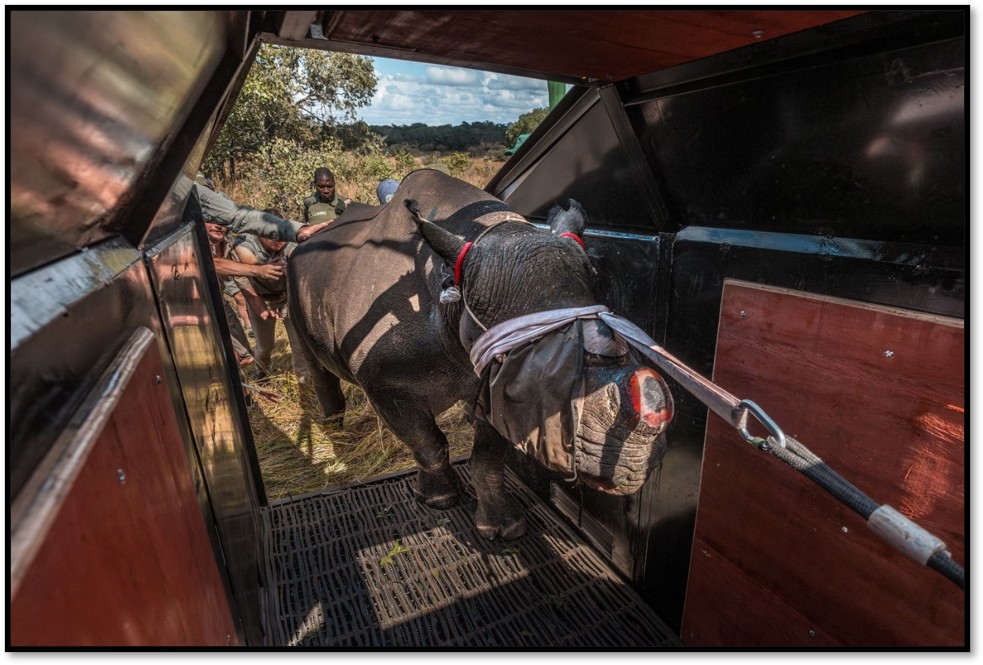
Photo: Marcus Westberg: A black rhino is shepherded into a capture crate at Imire Rhino and Wildlife Conservancy in Zimbabwe.
4. Community Development & Engagement
Livelihood Support: The co-management model actively aims to create a "conservation-led economy". They work with surrounding local communities to build sustainable fisheries, fund solar-powered boreholes, and implement electric-fenced gardens to prevent elephants from trampling local agriculture.
Mitigating Human-Wildlife Conflict: The Trust funds infrastructure and deploys specialized ranger teams to help communities adjacent to the park handle predator issues safely.
5. Tourism & Infrastructure Revitalisation
Upgrading Infrastructure: African Parks injects international funding to build and repair park roads, field stations, ranger bases, and airstrips to facilitate smooth operations.
Commercial Strategy: The Trust oversees photographic safari concessions, luxury lodges, and Lake Kariba houseboat operations. The revenue generated from tourism is fed directly back into the upkeep of the park and community upliftment programmes.
New Wilderness Camps: To accommodate the growing interest from travellers eager to see the return of the Big Five, high-end, low-impact tourist facilities have expanded. New remote destinations like Jenje Camp (six canvas-sided rooms overlooking wild riverbeds) and the upgraded Fothergill Island luxury camp are drawing international tourism revenue, which feeds directly back into the park’s $4 million annual conservation budget
Much of the following is taken directly from African Parks 2023 Annual Report.
Communication is key to safeguarding Biodiversity – Matusadona National Park borders the Nyaminyami Rural District communal lands. To sustain biodiversity conservation within the broader 17,000 km² Sebungwe region, park management is supporting the development of a Land Use Plan, which is being undertaken together with the local Rural District Council, traditional leaders and communities to incorporate the needs of both people and wildlife. This participatory process included inputs from nearly 500 community members thus far.
Through these inclusive conversations meaningful and actionable solutions are being found to address land degradation, for sustainable and legal land use and to gain insight into the future needs of to HWC in the district. Park management also uses the data to identify patterns in HWC and, together communities. Once implemented, the Land Use Plan will formally recognise wildlife corridors and community wildlife conservancies in the Nyaminyami Rural District with designated zones for sustainable agricultural production, reduced human-wildlife conflict (HWC), potential community-run tourism and revenue generation, and funding opportunities for socio-economic projects.
This robust communication between park management and local communities is also significantly improving HWC reporting. Before 2019, few incidents were reported leading to the assumption that there was minimal conflict with wildlife. However, the incidence of reported HWC has risen each year since the management partnership with the Zimbabwe Government was signed, with 28 in 2020, 255 in 2021, 477 in 2022 and 247 in 2023, seven of which sadly resulted in deaths of community members. This increase in reports can partly be attributed to the improved relationship between local people and the park and the growing trust communities have in the park’s efforts to reduce conflict, but it also indicates that the issue is greater than previously believed. As a result, park capacity has been increased to respond effectively with the affected community, target specific areas of intervention to prevent conflict.
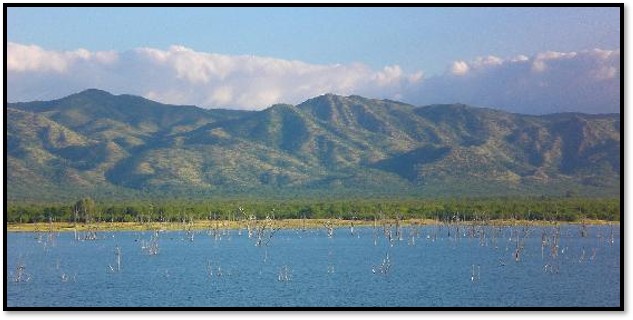
Matusadona Hills from Lake Kariba
Biodiversity Conservation – A Temminck’s ground pangolin research and monitoring project, the first in the park, was established in collaboration with the Tikki Hywood Foundation, with the aim of collecting sufficient data to learn about this little known, secretive species in the wild, while educating surrounding communities on the importance of its conservation. The movements of the nine elephant collared in 2021 have proven conclusively that seasonal dispersal still takes place through several surprisingly intact corridors.
The conservation law enforcement team grew to 90 members with the recruitment of a further 34 rangers (all residents of the four neighbouring chiefdoms). A new field operations manager was appointed who will begin preparations for the reintroduction of roan and black rhino. A new tented Forward Operating Base was built in the Sanyati Gorge area to provide conservation law enforcement coverage along the vulnerable eastern boundary. This has had positive results, as the 2022 and 2023 tigerfish spawn in the Sanyati Gorge went ahead unhindered by illegal nets for the first time in over 25 years.
Community development – In 2023, over 13,000 children were reached through the Reading Around the Reserve Programme in collaboration with Book Aid International, 28 disadvantaged students at risk of leaving school were granted bursaries and 113 students visited the park through the Environmental and Young Rangers programme. Over 200 students are members of seven wildlife clubs. Of Matusadona’s employees, 62% hail from the four chiefdoms with 163 of the staff complement of 164 being Zimbabweans.
A key goal for the department is to kick off the ”Fish to Fork” pilot scheme in King’s Camp, a fishing community residing within the park. The project’s objective is to see better, more equitable returns of US$567,000 generated by sustainable community fishing groups for the local fishing community and once realised, to expand to fishing camps outside of the park.
Park revenue generation – From an average of US$80,000 per annum preceding 2019, the generation of US$351,246 in 2023 clearly shows that the park’s profile with regional and local visitors is rising. Several new campsites were opened, including one with a game-rich inland spring and a campsite with a spectacular viewpoint on the escarpment. The newly built 12-bed Jenje Bush Camp hosted its first group of guests in August to favourable reviews. Two additional game drive vehicles were purchased, increasing the tourism fleet to two pontoon boats and four vehicles for game drives and cruises, with the opportunity to capitalise on the many houseboat visitors. Four Learner Guides, qualified to take game drives and boat cruises, were recruited into the Tourism Department.
Park management and infrastructure development – The road network was expanded, and the old road map reviewed and redesigned, to include newly opened roads and new camps. The installation of a 115 kVA solar plant and inverter system ensured that the Headquarters is able to function 24/7, including the conservation office, operators’ room, administration, technical services and the clinic. Staff housing completed during the year included duplexes for middle management as well as a renovated tuck shop and recreation room for the Tashinga Staff Village, while refurbishment of a senior management house and the Umbabala housing complex is underway. The newly purchased ferry offers reliable and affordable transport between the park and the nearby town of Kariba and will help solve the park’s accessibility issues.
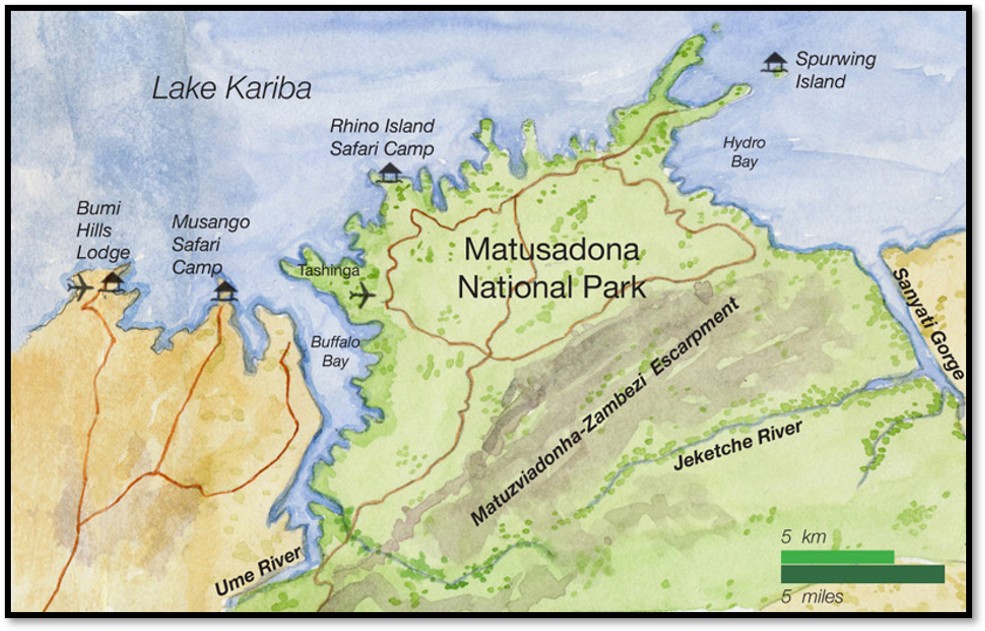
Matusadona National Park
Nyaminyami Integrated Land Use Plan (2025–2035)
The Nyaminyami Integrated Land Use Plan (2025–2035) was officially signed into law on 28 July 2025. It stands as a landmark "social contract" designed to manage one of Zimbabwe's fastest-growing rural landscapes, ensuring that human development and wildlife protection can coexist. Funded with US$130,000 by PWMA via the Matusadona Conservation Trust, the creation of this plan was a massive collaborative undertaking.
The Consultative Process
Rather than being dictated from the top down, the two-year planning process focused heavily on local buy-in
1,696 Stakeholders Engaged: The plan incorporated direct input from local farmers, fishermen, teachers and health workers who experience the daily realities of the landscape.
Traditional Leadership: Four major area chiefs—Chiefs Masambakaruma, Mola, Nebiri, and Negande—spearheaded the community workshops alongside local district councillors.
Academic Grounding: Researchers from the University of Zimbabwe provided critical scientific data, mapping out wildlife movement corridors and identifying geographical hotspots for human-wildlife conflict.
Core Objectives of the Plan
The plan functions as a blueprint to resolve competing pressures between a growing population and the surrounding ecosystem through strict zonation:
Securing Wildlife Corridors: The framework formally opens up 1,754 square kilometres of wildlife corridors on communal land. This connects Matusadona National Park to adjacent protected zones, allowing elephants and other translocated species room to roam without wandering into human settlements.
Mitigating Conflict: According to University of Zimbabwe research, elephants cause over 40% of the area's human-wildlife conflicts, while hyenas account for 25%. The plan maps out distinct zones for agriculture and sets up infrastructure—like electric-fenced community gardens—to safeguard crops.
Preventing Unregulated Growth: As a rapidly developing district, the plan curbs illegal land clearing, prevents settlements from occupying fragile wetlands and riverbanks, and stops random infrastructure (like fuel stations) from encroaching onto vital farmlands.
Economic Empowerment: It designates specific areas for sustainable agriculture, legal fishing along Lake Kariba, and community-led eco-tourism conservancies, ensuring locals directly profit from preserving their natural environment.
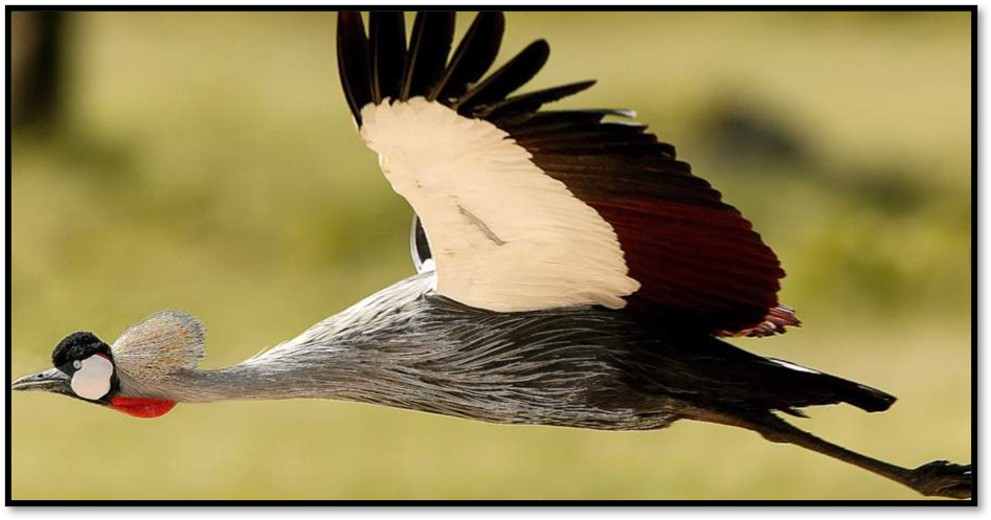
Amazing birdlife at Matusadona National Park
The Land-use plan states under ‘Ancient Routes still matter:’ The elephant don't wander aimlessly. They follow ancient pathways, routes their ancestors travelled, seasonal corridors predating human settlement, passages connecting water sources, feeding grounds, and breeding territories. Despite increasing pressure from human expansion, many of these routes remain functional.
During the planning process, communities identified and recognised many of the same corridors, choosing to place them under conservation within the district's development framework. They have also advocated for community-led wildlife conservancies where four of the most critical corridors connect, in a move that safeguards these corridors for the future.
Information for Visitors
Matusadona National Park, which was proclaimed a National Park in 1975, was originally an important stronghold for black rhino and elephants. In the recent past this remote wilderness area was the subject of extensive poaching, illegal fishing particularly in the Sanyati gorge and gold mining with most of the wildlife wiped out and the rangers outclassed due to a lack of resources and the sheer inaccessibility of much of the National Park. Many of the animals captured during Operation Noah from 1958 – 1964 were released into the Matusadona area. With good management and enhanced resources things are now changing and thankfully the Matusadona is gradually reawakening after coming to the edge of ruin and now offers excellent game viewing and bird watching (over 240 bird species recorded) with opportunities to see the big four (elephant, lion, buffalo and leopard), plains game such as impala and kudu. The last black rhino was lost to poachers in 2019, but now black rhino have been reintroduced into Matusadona.
The future for Matusadona is looking positive. An aerial survey of Matusadona in October 2020 revealed approximately 700 elephants, 470 buffalo, 4,000 impala and 1,000 hippos in the National Park. In 2021 PWMA in partnership with African Parks successfully translocated 223 zebras to Matusadona.
This partnership is proving to be the key to the rehabilitation of Matusadona with African Parks providing the funding solutions required to effectively manage the Park while PWMA are the owners of the Park and are responsible for legislation and policy.
Chief Operations Manager at Matusadona, Michael Pelham, said their success was due to confronting the challenge of illegal fishing, gold mining and bushmeat poaching with an increased law enforcement presence, as well as community engagement and development initiatives.
How to get there
By road
From Karoi via the Binga road and entry to the park through its southern boundary at Chifudze substation, 68 kilometres from Tashinga (Matusadona HQ) or from Victoria Falls via Binga. Travel should be by 4x4.
By air
There is an airstrip at Tashinga (Matusadona HQ) for private / charter aircraft although prior permission to land must be obtained from Tashinga. Kanjedza refers to another airstrip located at Matusadona.
By boat
Through Lake Kariba either from Lake Harvest or Chawara harbour (about 20 kms)
Weather
Summer is hot and wet (September – March) and travel should be by 4X4. Note Game viewing roads are closed during the rainy season. Winter and autumn (April – August) is dry and hot with cold nights.
Note: no supplies (food or fuel) are available within the National Park and all visitors must be self-sufficient.
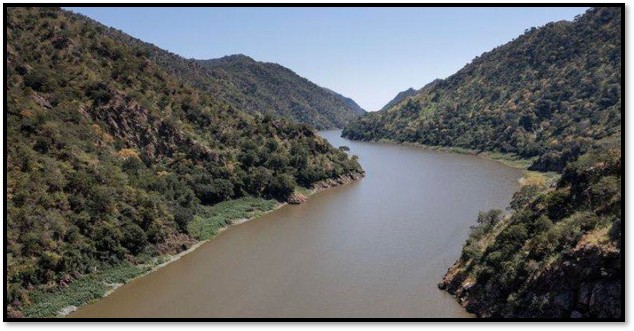
Sanyati Gorge navigable from Lake Kariba and forms the eastern boundary of Matusadona National Park
Accommodation
The renaissance at Matusadona National Park by PWMA and African Parks has breathed new life into its luxury and semi-luxury safari offerings. The following locations cater for visitors:
Fothergill Island has been reopened as a premier luxury eco-destination. It is split into two distinct, interconnected camps: the Lake Suites (seven suites tailored for couples and families situated along the mopane forest or lakeshore) and Little Fothergill (three exclusive-use suites designed for private groups).
Bumi Hills Safari Lodge has ten rooms sleeping a total of twenty people
Changa Safari Camp has six standard tents which accommodate two people each and two family tents
Musango Safari Camp has six safari tents which accommodate two people each and two honeymoon suites
Rhino Safari Camp has six twin-bedded rooms
Spurwing Island with six stone cabins, three chalets and eleven tents
PWMA offer the following camping sites for visitors:
Changachirere camping site caters for a maximum of ten persons within one party and has a mini-ablution block and shelter.
Sanyati Camp has six sites, each with a braai stand. There is an ablution block with hot and cold water and laundry trough.
Tashinga Camp is located on the Lake Kariba shoreline. It has an ablution block with hot and cold water, showers, toilets, wash basins and baths. Firewood and braai facilities are available.
Jenje Bush Camp is operated by the Matusadona park authorities for a maximum of 10 persons. Visitors must be self-sufficient with 4x4 vehicle for access. Jenje is a seasonal, semi-luxury tented camp designed for purists craving an authentic, deep-wilderness experience. It has five spacious, solar-powered en-suite tents and rotates locations seasonally: moving to the confluence of the Jenje and Biriwiri rivers in the dry season (May to October) and shifting to the baobab groves of Shenga Bay in the green season. It is set squarely on an active "wildlife highway" where elephant herds and the resident Jenje lion pride frequently pass by and offers multi-day escarpment backpacking treks, guided bush walks and river fishing.
Exclusive Campsites are at:
• Ume close to Tashinga airstrip on the east bank of the Bumi River, 55 kilometres from Kariba by boat.
• Muuyu at Elephant Point, 44 kilometres from Kariba by boat.
• Mbalabala also on the Bumi River upstream around 300 metres beyond Ume Camp.
• Maronga close to the Chifudzi substation
• Kautsiga sited on the escarpment which is ideal for hikers and climbers.
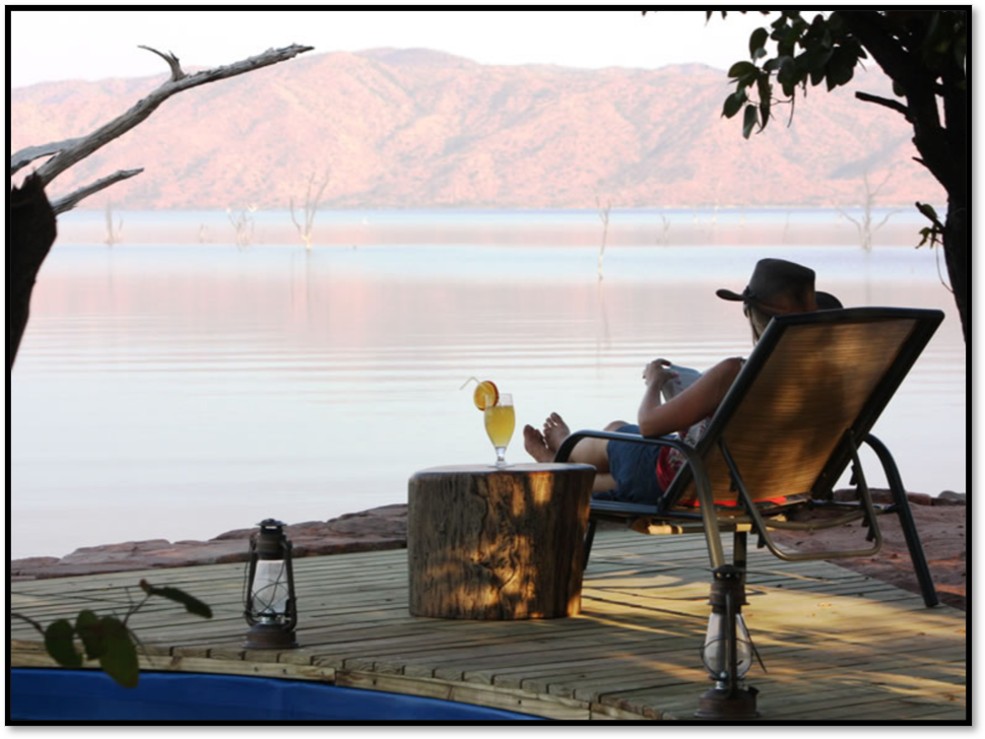
Photo courtesy of Changa Safari Camp, Matusadona
Modern Security & Monitoring Measures
To ensure this new population does not suffer the fate of its predecessors, the project has implemented strict security and technology frameworks:
Real-Time Tracking: Each rhino is fitted with satellite foot collars and tracking devices to provide real-time location data.
Advanced Surveillance: The park utilizes drone surveillance, infrared sensors, and steep natural topography (the Lake Kariba shore and a sharp escarpment) to detect and deter poachers.
Enhanced Boots on the Ground: The project added 46 new rangers to the staff, boosting the local economy by creating over 100 jobs.
Anti-Poaching and Security Boosts
New K9 Units Deployed: To safeguard the vulnerable new rhino and wild dog populations, the park significantly bolstered its canine counter-poaching units. Specialized conservation tracking dogs Vega and Kuda (two Belgian Malinois arrived at the park following a flight from London.
Technology Frameworks: Anti-poaching units have ramped up patrols using real-time spatial monitoring, digital control rooms, and improved tracking technology to keep the park’s revitalized borders secure.
Collaborative Framework
The monumental shift was managed via a co-management partnership between PWMA and the conservation non-profit African Parks (via the Matusadona Conservation Trust) Funding and support were pooled globally from the European Union, the Global Wildlife Fund, the Wyss Foundation, and private philanthropists.
Socio-Economic and Community Programs
Sustainable Fisheries: The park has rolled out cooperative programs along the shores of Lake Kariba. These initiatives empower registered local community fishermen by granting legal, managed access to specific fishing waters, combining local livelihood support with strict measures against illegal commercial fishing.
Human-Wildlife Zonation: Following the implementation of the Nyaminyami Integrated Land Use Plan, crews are actively building and maintaining solar boreholes and electric-fenced community gardens. This infrastructure is successfully keeping elephants and predators away from local community crops and livestock.
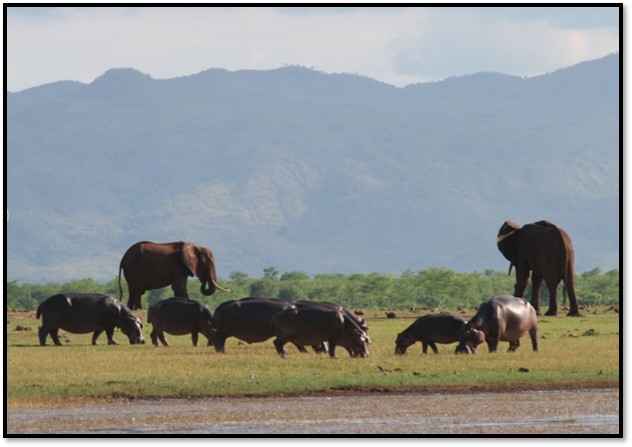
Photo courtesy of Changa Safari Camp, Matusadonha
Matusadonha National Park
Local conservationists are surprised and delighted; Blondie Leatham general manager of the Bubye Valley Conservancy and a Zimbabwe wildlife expert said: “This is one of the most exciting things that has happened for wildlife in Zimbabwe for a very long time.”
Frances Read, a spokesperson for African Parks, said Matusadonha was one of the country’s flagship and most valuable wildlife areas with potential to become a leading safari destination. She said “We will then be working with the local community so they start to see that this is for them and that this is an asset. Matusadonha is a very special place for Zimbabwe and has a lot of potential for tourism and socio-economic development.” [From The Telegraph by Victoria Ward and Peta Thornycroft on 3 November 2019]
This is African Parks first wildlife project in Zimbabwe and they hope to repopulate the Matusadona National Park as poachers have all but wiped out its once abundant black rhino population, whilst its elephant herds have been drastically reduced and they hope to transform the park into a leading safari destination. In Malawi, the organisation embarked on one of the most ambitious translocations of seventeen black rhino between South Africa and Malawi, supplemented by translocations between Liwonde National Park and Majete Wildlife Reserve and hopes to replicate this effort in Zimbabwe.
Initial efforts will concentrate on building up the anti-poaching teams and bolstering the numbers of Game Rangers in co-operation with PWMA to allow the wildlife to recover. A program of improved infrastructure, law enforcement, conservation and community development programmes are planned to unlock the National Park’s ecological, social and economic value and aid local communities to gain from tourism [From an article by Andrea Smith at Lonely Planet on 6 November 2019]
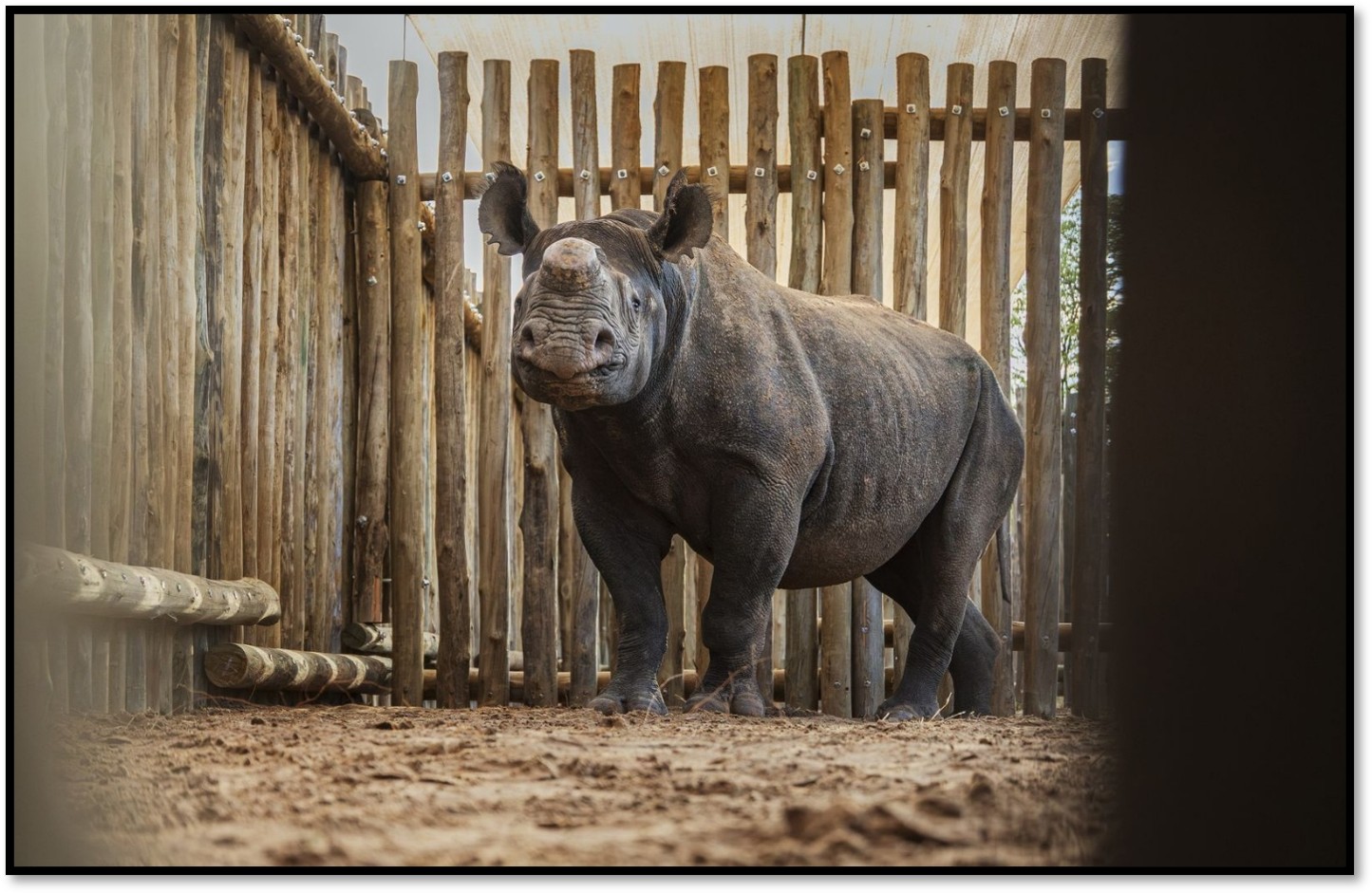
Photo: Wiki West: An adult black rhino, with its horns removed for security reasons, contemplates its new surroundings. The animals are being kept in a temporary holding facility prior to being released into Matusadona National Park.
References
African Parks 2023 Annual Report. https://www.africanparks.org
Zimbabwe Parks and Wildlife Management Authority (PWMA) https://www.zimparks.org.zw
Independent Newspaper. 16 Feb 2023. Govt partnership reawakens former stronghold for black rhino in Zimbabwe. https://www.independent.co.uk/voices/campaigns/giantsclub/black-rhino-zimbabwe-b2283781.html
[1] African Parks (https://www.africanparks.org/) is a non-profit NGO with Peter Fearnhead as its chief executive and works with governments and local communities.