
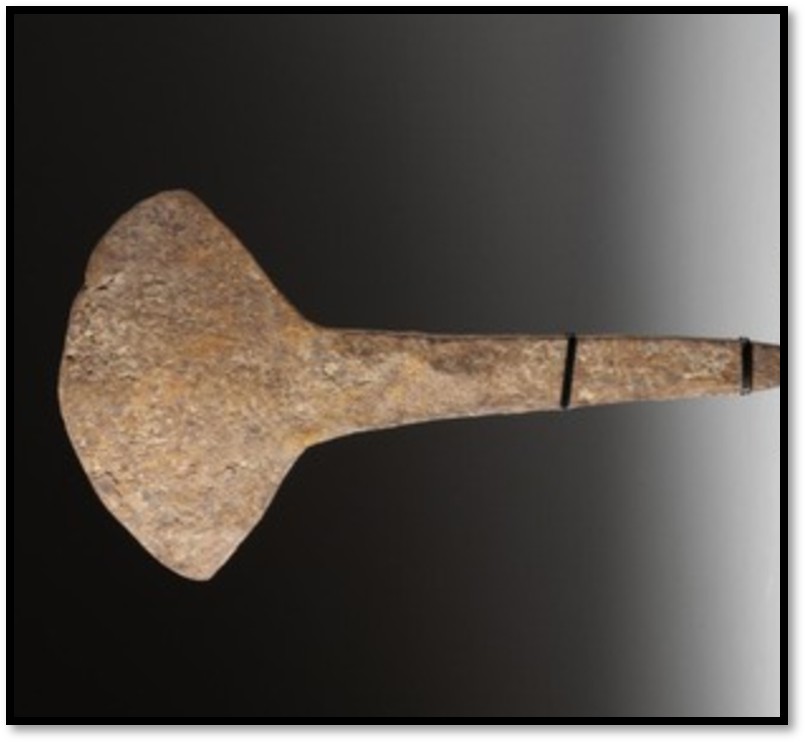
Iron-ore smelting in furnaces was a 1500 year old technology in Zimbabwe – this article a tribute to the late Martin Prendergast
- Entry fee
- n/a
Introduction
Martin Prendergast believes that iron-mining and metallurgy in Zimbabwe lasted from the 6th century until the arrival of the Pioneer Column in 1890 – a 1,500 year period of technical tradition.[1] The country has abundant iron ore sources and iron-ore smelting was extensively practiced on the plateau between the Limpopo and Zambesi Valleys during the winter season when agricultural activities were low. This activity was carried out in addition to other economic activities such as growing crops of sorghum and millet, cattle herding, ivory hunting, salt extraction and the mining of gold, copper and iron.
Throughout the Iron Age, iron ore extraction, smelting and smithing were widespread, highly skilled crafts that remained economically vital well into the onset of the colonial era. Iron products such as hoes, axes and knives provided tools for clearing lands, tilling fields, mining ore, weapons for hunting and war, symbols of a chief or headman’s authority[2] and as tribute.[3]
Almost all of the technical references are from Martin Prendergast’s original article.[4]
Shadreck Chirikure writes that Roger Summers in his book on ancient mining on the Zimbabwe plateau gave extensive coverage to gold and copper while arguing that the abundance of iron at almost every Iron Age site meant that it was of no economic value. This thinking created a research bias towards gold and copper. For example, there are two books (Summers 1969[5] and Swan 1994[6]) that comprehensively cover copper and gold working in the country while published works on iron tends to be unconnected reports of chance discoveries of furnaces and slag. This somewhat belittles the important role that iron production and use has played in the development of past societies.[7]
Martin’s Obituary is at the end of this article.
Pre-colonial iron technology was not static
The Prendergast article view is that pre-colonial African iron technology was not static; it underwent a profound technological shift around the 15th-16th centuries, moving from large-scale, communal smelting operations using large natural-drought furnaces with multiple tuyères holes to smaller, decentralized production using smaller bellows-powered, forced draught furnaces.
The table below highlights the main changes that Prendergast suggests that the technology underwent:
Feature | Pre-15th Century Period | 19th Century (Late Pre-Colonial) |
Primary Technology | Natural-draught furnaces | Forced-draught furnaces |
Air Supply Method | Convection / "Chimney effect" via 5–10 multiple tuyères holes | Animal skins / Pot bellows pumped by hand into 1–2 rear tuyères |
Furnace Dimensions | Large and tall (>1.5–2.0 metre high, 1 metre diameter) | Short and squat (<1 metre high and diameter) |
Labour needs | Low labour required due to automated airflow | High labour required; one or more men needed to continuously pump bellows. |
Fuel efficiency | High fuel consumption (intensive charcoal use) | Efficient fuel consumption |
Process Control | Slow and difficult to control, but yields even carburization | Faster and highly controllable, but yields uneven carburization |
Capacity | Large batches | Small batches |
Distribution | Widely used; dominant across the vast, sparsely populated miombo savannah woodlands | More scattered and localized |
Political Context | Controlled by Zimbabwe Culture elites (tribute/redistribution) | Decentralized, run by independent clans (e.g., the Njanja) |
The Iron extraction and smelting Process
Pre-colonial Zimbabwean smiths operated within a "bloomery" process, producing solid-state iron rather than molten cast iron that featured:
High-grade ore mining: Miners focused heavily on rich, surface-level iron formations including banded ironstones, magnetite and haematite that are found in the country's greenstone belts. Because they selected exceptionally high-grade ores, their smelting produced less waste (slag)
The Bloomery process: Smelting was conducted at roughly 1,200°C and liquid slag separated from the iron and trickled down, leaving a porous mass of solid sponge iron ("bloom") in the charcoal bed of the furnace hearth.[8]
Forging: The crude bloom was repeatedly reheated and hammered to expel remaining impurities and shape tools (like hoes, axes, and knives) Notably, they did not practice water-quench tempering that was not used in Zimbabwean iron manufacture.[9]
“The technology of early iron production was universally through the direct process in which iron ore was reduced to metallic iron by carbon monoxide gas to form a solid but spongy mass of metal bloom and slag by-products. It comprised two separate and successive operations: smelting to extract the metal from the ore and smithing to refine the bloom and to forge tools. The bloom from the furnaces contained impurities and therefore had to be refined by smithing to consolidate it into usable iron.
Although a wide range of methods of producing iron using the direct method existed in pre-colonial Africa, they all thrived on the same fundamental metallurgical principles utilising similar raw materials for their success. The needs essential for the successful smelting of iron are ores, carbon, suitable clay for making combustion chambers, tuyères/blowpipes and air. The addition of heat to these variables during smelting initiated reactions which led to the eventual production of the metal bloom. Overall, the smelting and smithing of iron resulted in a variety of residues such as slag, collapsed furnace fragments, hammerscale and finished products.”[10]
Evidence from archaeological excavations within Zimbabwe
Archaeological evidence traces the deep history of iron production in Zimbabwe back to the mid-to-late 1st millennium AD, showing a long-standing reliance on large-scale natural-draught smelting technology prior to the 15th century.
Early 1st Millennium Evidence
The earliest documented ironworking traces appear at Gokomere near Masvingo and Kwali Camp in the south-east Lowveld, with the latter site yielding furnace rubble, slag, tuyères, iron blooms and local magnetite ore that confirms continuous smelting from the 6th to 8th centuries.
The Evolution of Natural-Draught Furnaces
Every investigated furnace site in Zimbabwe dating before the 1400’s points to the exclusive or highly probable use of natural-draught technology, often characterized by larger dimension furnaces, multiple air-intake holes, and high-volume production:
· Gilnockie (near Harare): Holds the record as the oldest excavated furnace hearth in Zimbabwe, radiocarbon-dated to approximately AD 1030. Its massive 1.2-metre hearth diameter and minimum of seven tuyères holes strongly indicate a natural-draught design.
· Goose Bay (Lake Mutirikwi): Dating to roughly AD 750–1050, this large, multi-hole natural-draught furnace featured an extraordinarily unique narrow, elongated hearth shape. Similar small-bore, fused natural-draught setups were active during this exact era across the border in eastern Botswana.
· Swart Village (North of Harare): Though no standing structures remain at this AD 800–1200 site, the presence of heavy tap slag and wide 40mm tuyères bores led excavators to conclude that natural-draught technology was utilized.
· Chigaramboni & Mhangula: Chigaramboni features an undated, massive 1.39-metre hearth with fused bundles of tuyères. Meanwhile, an early 15th-century site at Mhangula in the south-east Lowveld uncovered furnace remains exceeding 0.50 metres in diameter, marks the tail end of this technological era.
Between the 12th and late 14th centuries, metallurgical sites across Zimbabwe consistently feature these oversized, multi-hole natural-draught configurations, with several sites displaying distinct features of ritual significance. No definitive evidence of a forced-draught (bellows-powered) furnace has ever been identified in Zimbabwe's early archaeological record preceding the 15th century.
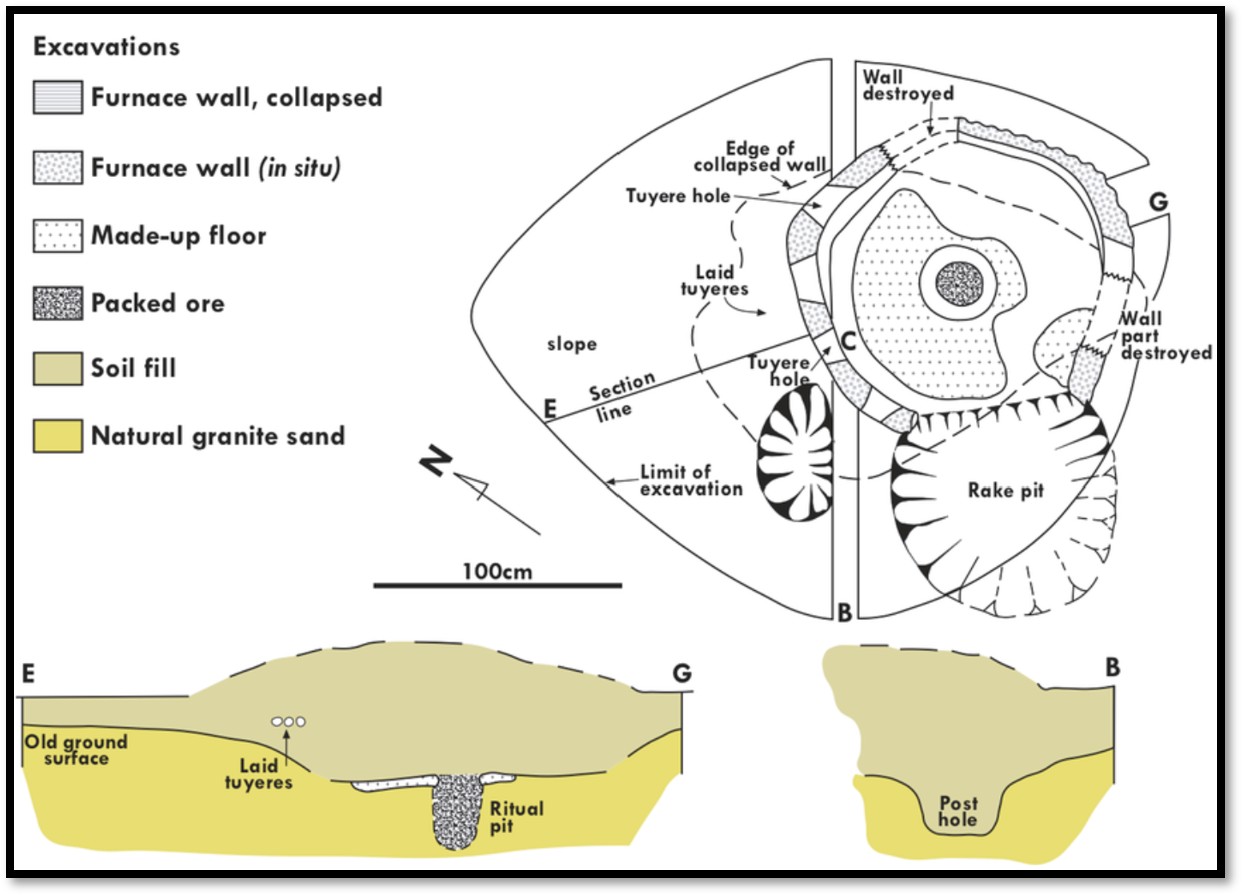
Adapted from M. Prendergast: simplified plan and section of a excavated natural draught furnace at Tarnaguilla Farm, near Darwendale
Research into Shona Iron smelting technology
Much of what we know about Iron Age iron technology on the Zimbabwean plateau comes from archaeology. Researchers rely on locating and excavating furnace ruins, clay air pipes (tuyères) and smelting slag. They also look for evidence of ore preparation, such as grinding hollows ("dolly holes") rock anvils and hammers and the use of radiocarbon dating of charcoal embedded in the iron slag.
Historical accounts from Arab[11] and Portuguese[12] documents offer some insight into Shona iron technology from the 11th century onward. However, the bulk of our knowledge regarding the late pre-colonial period relies heavily on 19th-century records left by European travellers, missionaries, soldiers, colonial officials, miners and geologists. In more recent decades, this knowledge has been significantly expanded by the research of academic researchers and oral historians.[13]
The Portuguese were fixated on gold, but their documents do mention iron. Chirikure writes, “The locally produced iron was made into hoes which were traded not only with the Portuguese but also amongst the African societies themselves. Portuguese documents allude to the fact that iron hoes became a medium of exchange and some form of currency in which value was measured. It is therefore not surprising that the successive kings of the Mutapa kingdom levied tribute in the form of iron hoes.”[14]
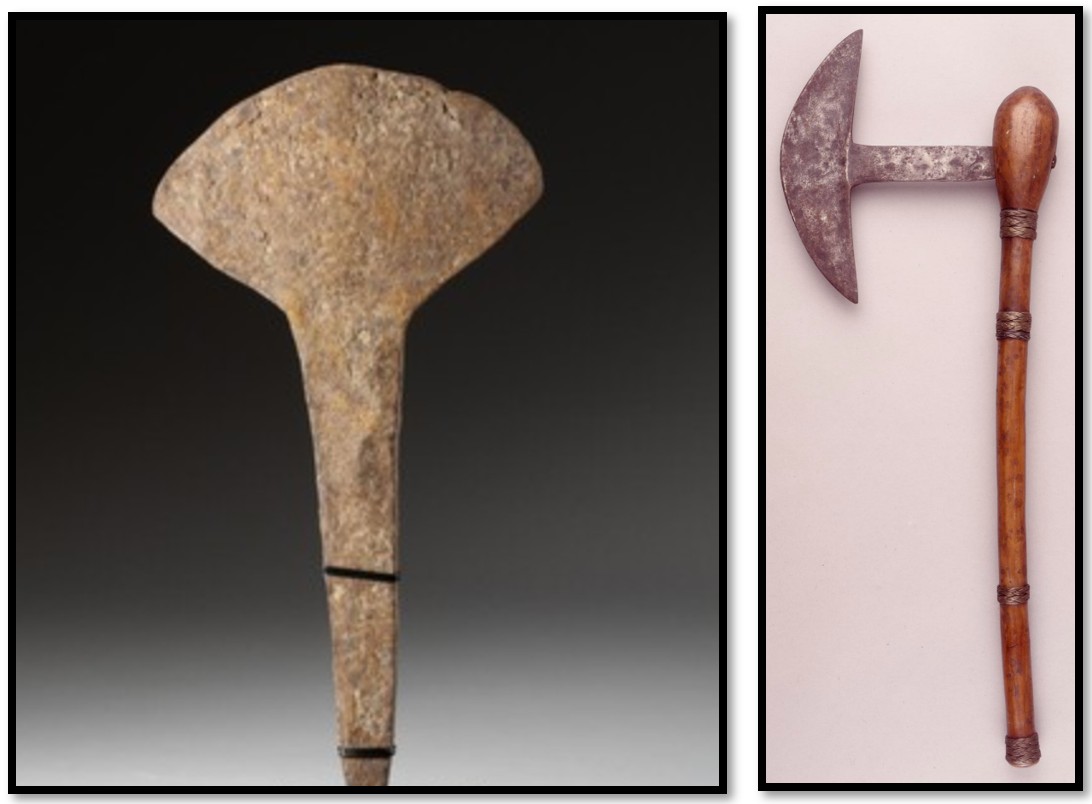
Traditional Shona hoe Shona axe
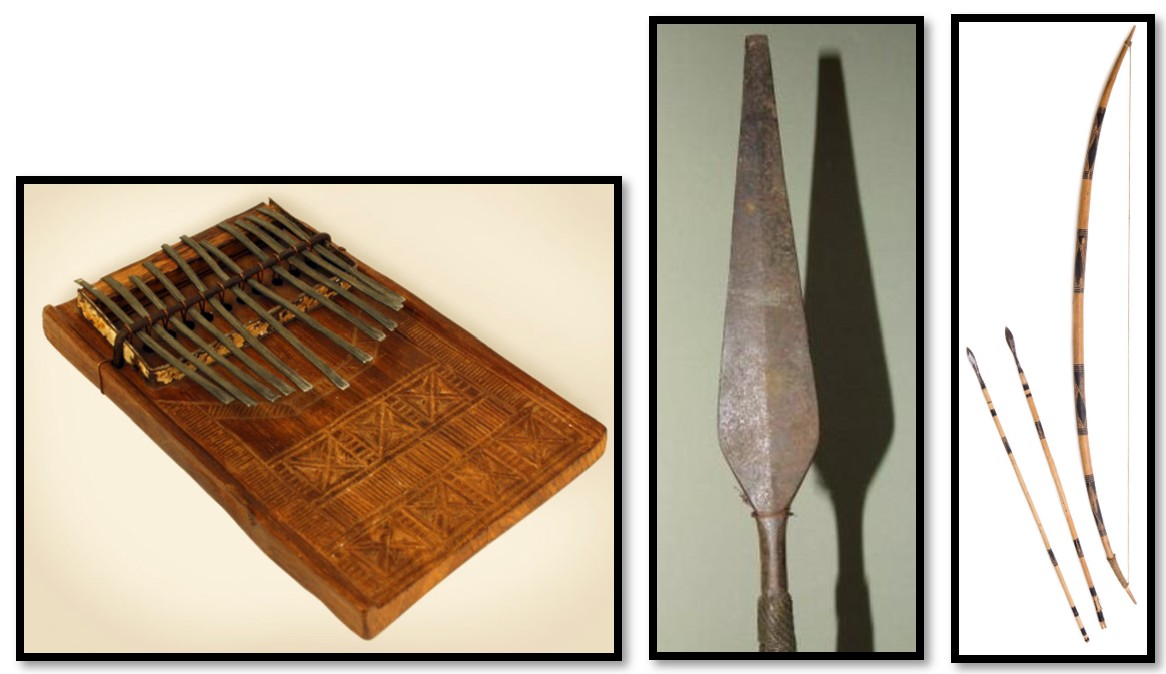
Shona Mbira or thumb piano Shona wire-work spear and bow
Sources of iron ore in Zimbabwe
Most of these historical iron mines operated as open quarries. While some were expansive - such as the 45-metre-long, 15-metre-wide, and 9-metre-deep quarries at Mwenezi (Worst 1962) - others were remarkably continuous, like the unbroken 20-mile stretch of ‘ancient workings’ documented near Mberengwa (Hall & Neal 1902)
The Hwedza (or Wedza) mountains (Gandamasunga) have been known as "a place of wealth" for over a millennium. The Gandamasunga Quarry on Hwedza mountain remains one of the most famous archaeological pre-colonial quarries. As early as the 9th to 12th centuries, the early Mbire people of the Soko Clan established surface pits and quarries to extract high-purity iron ore. In the 19th century, the quality of Hwedza’s iron ore sparked armed conflicts and the neighbouring Njanja people would routinely launch expeditions to the mountain, mine the ore, and beat off attacks long enough to smelt iron hoes, axes, and weapons right on the spot.
Geological Formations and Ore Types
The majority of recorded mines were linked to iron-formations, or "banded ironstones" which frequently occur across the region's Archaean greenstone belts and within sections of the southern Limpopo belt.[15]
However, miners also exploited less common geological formations:
· Carbonatite complexes: The Dorowa site utilized a magnetite-bearing carbonatite complex (Summers 1969)
· Magnetite sands: The Anwa deposit consisted of loose magnetite sand created by weathered dolerite (Bent 1893) a resource type also used as iron ore in Nyanga.
· Surface laterite: Smaller, low-grade laterite deposits were collected directly from the surface in areas like Nyanga and by the Manyubi in Matobo (Cooke 1966)
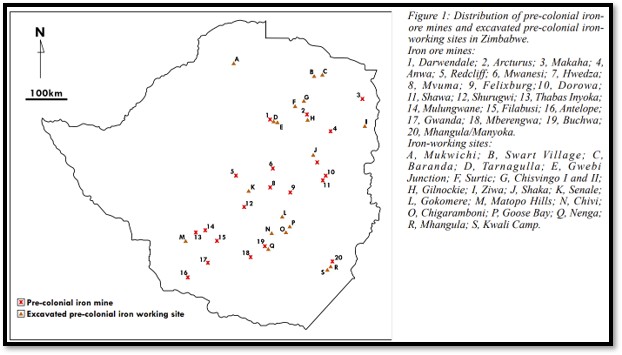
M. Prendergast: Iron production in pre-Colonial Zimbabwe
Ore Characteristics and Selection
During the Iron Age in Zimbabwe, smelters consistently preferred high-grade iron ores to maximize yields and minimize slag, which explains the relatively small slag heaps found at local pre-colonial sites in Zimbabwe compared to other parts of Africa.[16]
Texture and Accessibility: Early miners likely targeted surface haematitic ores (such as those at Mwenezi) which were more decomposed and friable (crumbly) than the tougher deposits mined more recently at Mt Buchwa.
Proximity of Varieties: At sites like Hwedza Mountain[17], both primary magnetite and secondary haematitic ores were extracted close together demonstrating that different ore types were accessible within the same locality.
Smelting Performance: While high-grade ores were ideal for Shona furnaces, hard and impermeable haematite performed poorly. Conversely, low-grade lateritic ores required intense labour to yield iron.
Chemical Compositions: Miners selected or rejected ores based on specific mineral traits. For instance, the soft Arcturus ore was manganese-rich and the powdery Thabas Inyoka limonite was likely altered haematite. Meanwhile, Dorowa's magnetite was avoided entirely due to its high phosphorus content.
Because Zimbabwean Iron Age smiths successfully selected these superior, high-grade ores, their smelting operations were highly efficient. This efficiency produced far less waste, leaving behind significantly smaller slag accumulations than the massive 10,000-tonne slag heaps seen in other African regions such as Sudan, Faso, Nigeria, Togo and Mali.
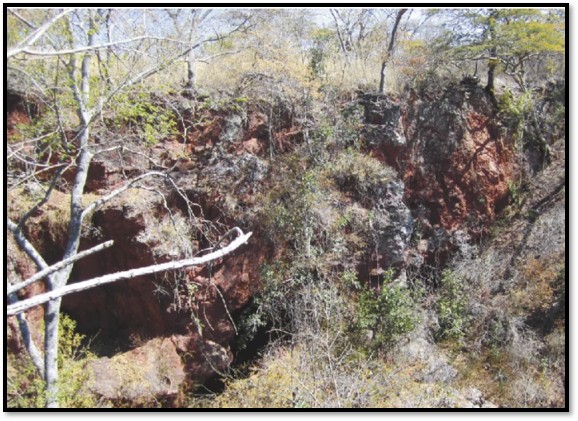
Martin Prendergast: part of the large, heavily overgrown Shona iron ore quarry at No 4 Body, Berlena farm, Mwenezi
Because viable iron ore was so highly accessible across Zimbabwe, every village was either located within a few days' march of a deposit or maintained trade contacts with a neighbouring village that was. Ultimately, a community's choice of a specific ore source depended on geographical distance, territorial ownership and the metallurgical quality of the material. While many groups successfully mined their local deposits, others chose to travel long distances to secure their preferred ore.
The Bloomery Process in Zimbabwe and sub-Saharan Africa
Iron was produced in its solid state using the bloomery process; this batch-style method involved heating a mixture of iron ore and charcoal inside a clay shaft furnace, with air blown into the chamber through clay tubes called tuyères.[18]
The history of metalworking in Zimbabwe
Chirikure, like Prendergast, suggests this took place within two successive chronological periods: the early to late first millennium AD (Early Iron Age) and the beginning of the second millennium AD to 1900 (Late Iron Age) although there could well be overlap.
In the Early Iron Age (EIA) smiths exploited iron and copper resources and iron was produced from a wide variety of ores, but the apparent rarity of the metal seems to have restricted its use to small implements such as arrowheads and objects of personal adornment. There is evidence that the production of larger utilitarian objects such as hoes, spears and axes increases towards the end of the first millennium.
In the second millennium AD, new metals including gold, tin and bronze were added to the range of metals exploited by indigenous metallurgists. Principally extracted from alluvial deposits and hard rock surfaces on the Zimbabwe plateau, the gold dust was subsequently smelted in small ceramic crucibles with a portion exported via the Indian Ocean coast initially via Swahili middlemen and later through the Portuguese. Limited amounts of the metal were used locally for making objects such as beads and elite regalia.[19] There is also evidence of the use of tin and tin bronzes.[20]
Core Metallurgy
· Self-Fluxing Ores: The iron ores used were typically high-grade enough that no added fluxing agents were required; the ferrous iron naturally combined with silica in the ore to form a fayalitic slag.
· Temperature Dynamics: Operating at roughly 1,200°C, the temperature was high enough to melt the slag, but too low to melt the iron into liquid cast iron.
· Bloom Formation: The liquid slag drained away, leaving a porous, solid mass of "sponge" iron, trapped slag and unburned charcoal (the bloom) in the hearth just beneath the reducing zone.
· Refining: Periodically, the furnace was paused to pull the bloom out through a front rake hole. Once cooled, the bloom was shattered, heated and continuously hammered to expel impurities and weld the crude "wrought" iron into its final form.
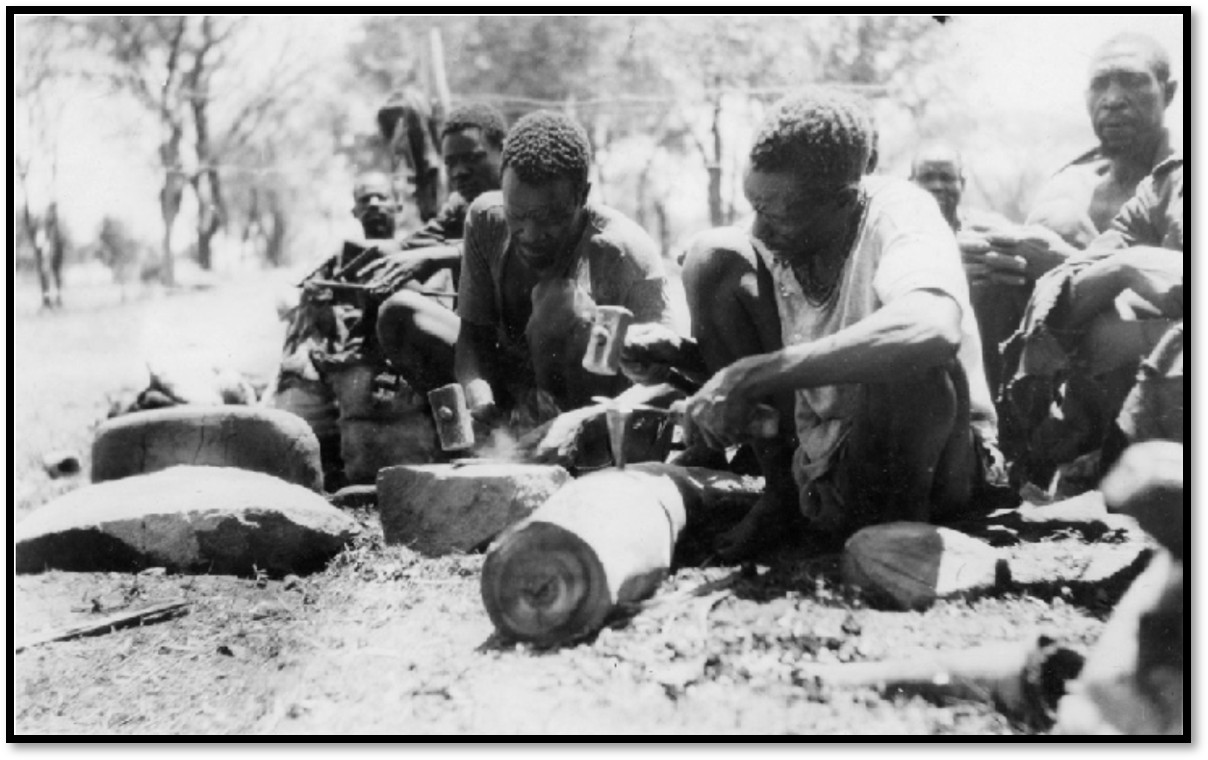
NMMZ: Njanja smiths using modern hammers, a bellows-blown forge on the left
In the mid-second millennium the Shona shift to the forced-draught furnace
The causes of such a remarkable change are probably related more to social and economic trends than to environmental factors and the need to conserve fuel. During the 14th – 15th Centuries political elites of the Zimbabwe Culture controlled the non-agricultural production including gold, copper, iron and ivory and oversaw a redistributive system involving long-distance trade to the East African coast and beyond. Iron was valued as a symbol of authority and often sent in finished form to sites such as Great Zimbabwe as tribute, which the rulers redistributed to maintain power.
However the Zimbabwe Culture and its state system was in steady decline from the end of the 17th century (Pikirayi 2001) as the gold mines became depleted above the water table and elephant numbers decreased due to over-hunting. The economic decay of the Changamire and Mutapa states into the 19th century was accompanied by Portuguese interference (in the north) and internal succession conflicts, disease, migration and general disturbance. The demand for agricultural ironware in these unstable conditions must have been significantly reduced and so the productive advantage of large-capacity natural-draught furnaces fell away. This may explain the declining use of large natural-draught furnaces and a new preference for forced-draught technology on the Zimbabwean plateau around the mid-2nd millennium,
Evidence of the shift in Shona metallurgical technology
While the evidence of the shift in Shona metallurgical technology remains limited to a few investigated sites, the evidence points toward a transition to smaller, bellows-driven smelting operations. Key archaeological evidence from Zimbabwe includes:
· Chisvingo I (c. 1700): This exceptionally well-preserved furnace featured an unusual stone reinforcement. Despite its small hearth diameter (0.55 m) it utilized four tuyère holes (one of which was blocked) positioned around the rear and sides. Its compact size relative to the high number of tuyères indicates it was a forced-draught furnace.
· Mukwichi (Hurungwe): Though highly fragmented, this furnace featured an egg-shaped hearth measuring roughly 0.46 m wide by 0.56 m long. While no tuyère holes survived, its small dimensions strongly imply a forced-draught design. Pottery styles link it to a nearby settlement radiocarbon-dated to 1565.
· Baranda (Northern Zimbabwe): Dated between 1500 and 1700, this site yielded minor iron-smelting debris. The recovered tuyères featured narrow bores (20–30 mm), a characteristic trait of small, forced-draught furnaces. While Baranda lacks stone walling, other artifact discoveries indicate it served as a provincial capital for the Mutapa State.
Forced-draught technology was not unknown in southern Africa even before the mid-second millennium, and has been reported, for example, from Early Iron Age contexts in eastern Botswana (Huffman 2016), so the appearance of this smelting tradition in Zimbabwe by the mid-second millennium would not be surprising.
Pre-Colonial Zimbabwean Iron Production: Process and Technology
Pre-colonial Zimbabwean iron production relied on bloomery technology to reduce iron ore into a usable solid mass, or bloom. This metallurgical process involved a continuous sequence of smelting, refining, and forging, utilizing two distinct furnace traditions adapted to specific environmental and social conditions.
The Smelting and Refining Process
The transformation of raw iron ore into finished tools followed a coordinated three-stage sequence:
· Smelting: Ore and charcoal were continuously fed through a narrow top opening into a deep hearth. The hearth collected viscous slag and ore fines at the base, keeping the airflow nozzles (tuyères) clear and allowing air to circulate around the growing bloom.
· Extraction: Smelting was paused periodically so ironworkers could pull the hot bloom out through a front rake hole. Once cooled, the sponge-like iron mass was broken apart by hand to separate it from the surrounding slag.
· Consolidation: The crude sponge iron was reheated and hammered repeatedly to expel remaining charcoal and slag impurities.
· Forging: the smiths worked the iron and shaped the final product using further hammering,
The resulting bloomery iron was characteristically varied and featured highly variable carbon levels and residual slag inclusions. Yields were relatively low and the chemical composition of the by-product slag closely resembled the original ore.
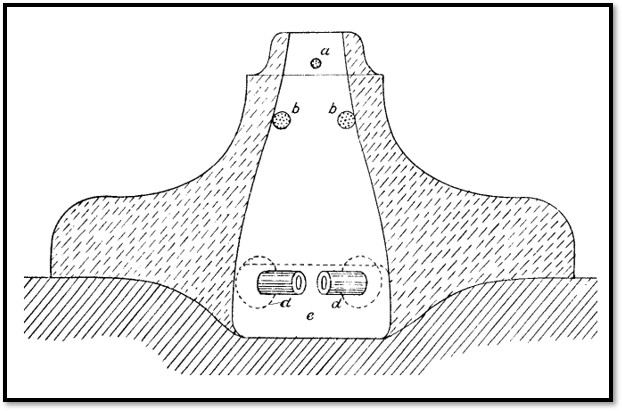
Section through Njanja iron-smelting furnace. There is a general anthropomorphic shape with lateral projections and a pronounced shoulder and ‘eye-hole’ (a) directly beneath the charge hole at the top, breasts (b) two tuyères and tuyères holes (d) at approximately 90° at rear and charcoal bed (e) Internal height 0.86 metres; hearth diameter 0.43 metres (Sawyer 1894)[21]
Iron production required the approval of ancestral spirits
Traditional African iron-smelting relied on a combination of technical expertise plus a spiritual association and for many smiths, success required the approval of ancestral spirits. This approval depended on strict rules: the crew had to remain celibate, acting as temporary "husbands" to the furnace and menstruating women were excluded to prevent ritual pollution.
To maintain these standards, operations were hidden from public view and built far from villages. This physical separation preserved technical secrecy and prevented sexual or ritual indiscretions, though women were still permitted to gather wood for charcoal, mine ore and transport materials. When necessary, smiths used protective charms and regular offerings to ward off jealous sorcerers and counter the presence of menstruating women.
Njanja smiths adopted a more relaxed approach. While they preserved the traditional sexual symbolism and continued to use charms, they abandoned many of the strict cultural restrictions. They constructed their furnaces close to local villages and allowed women to participate much more freely in the process.
19th-Century Shona Iron production and resource rivalry
In pre-colonial Zimbabwe, the choice of technology and access to raw materials drove both intense socio-economic specialization and regional conflict.
Ore Procurement & geopolitics
The Hwedza Deposits: The high-grade, highly permeable magnetite deposits of Hwedza mountain were renowned across the region. Regional groups travelled up to 200 km (such as from Gutu, Seke, and Shurugwi) to mine it.
On-Site Beneficiation: Miners sorted and concentrated the ore directly at the mine site to separate high-grade magnetite bands from heavy, silica-rich bands, saving significant weight before transport.
Territorial conflict: While the Hwedza mines sat within Mbire territory,[22] the Njanja people[23] to the south regularly challenged them for access. The Njanja frequently sent armed expeditions to mine Hwedza mountain, fighting off local rivals and smelting the iron on-site at locations like the Gandamasunga quarry before returning home with finished hoes. At other times, they paid for access peaceably and hauled the raw ore back to their villages.
The Njanja clan, Shona-speaking ironsmiths
Prendergast studied the Njanja clan[24] of east-central Zimbabwe who were using forced-draught furnaces in the 19th Century and found their production methods were highly organized:
Production was on a large scale: Working in the agricultural off-season, the Njanja were the best-known ironsmiths functioning in east-central Zimbabwe. They operated small furnaces with two rear tuyère holes and concentrated 10 to 20 furnaces at one site running on shift systems. Each furnace could produce 3–4 blooms a day (each equivalent to 4–5 hoes or axes or knives)
Iron products were distributed through wide-spread networks: Large trading parties travelled hundreds of kilometres to barter iron goods for livestock, salt or even wives (e.g., a bride wealth payment of 20 hoes)
Furnaces were constructed with anthropomorphic features:[25] Iron production was associated with human reproduction and furnaces were physically decorated with clay mouldings depicting breasts and female genitalia, a pronounced shoulder and "eye-hole" air vents directly below the top charging opening. The Njanja maintained this sexual symbolism and also used protective charms. A furnace was considered female; but the Njanja saw bellows and tuyères as male reproductive organs, which penetrate the female body of the furnace, the resulting iron bloom is seen as the result of this sexual intercourse.
Theodore Bent reported that at Chivi and at Kunzvi’s kraal near Harare the existence of iron smelting furnaces which were built in the form of seated women and were breasted and decorated with scarification’s resembling shallow furrow patterns. According to Bent (1892), iron smelting was metaphorically linked with human reproduction and it was thus practised in private far away from non-smelters and social groups such as women and children.[26]
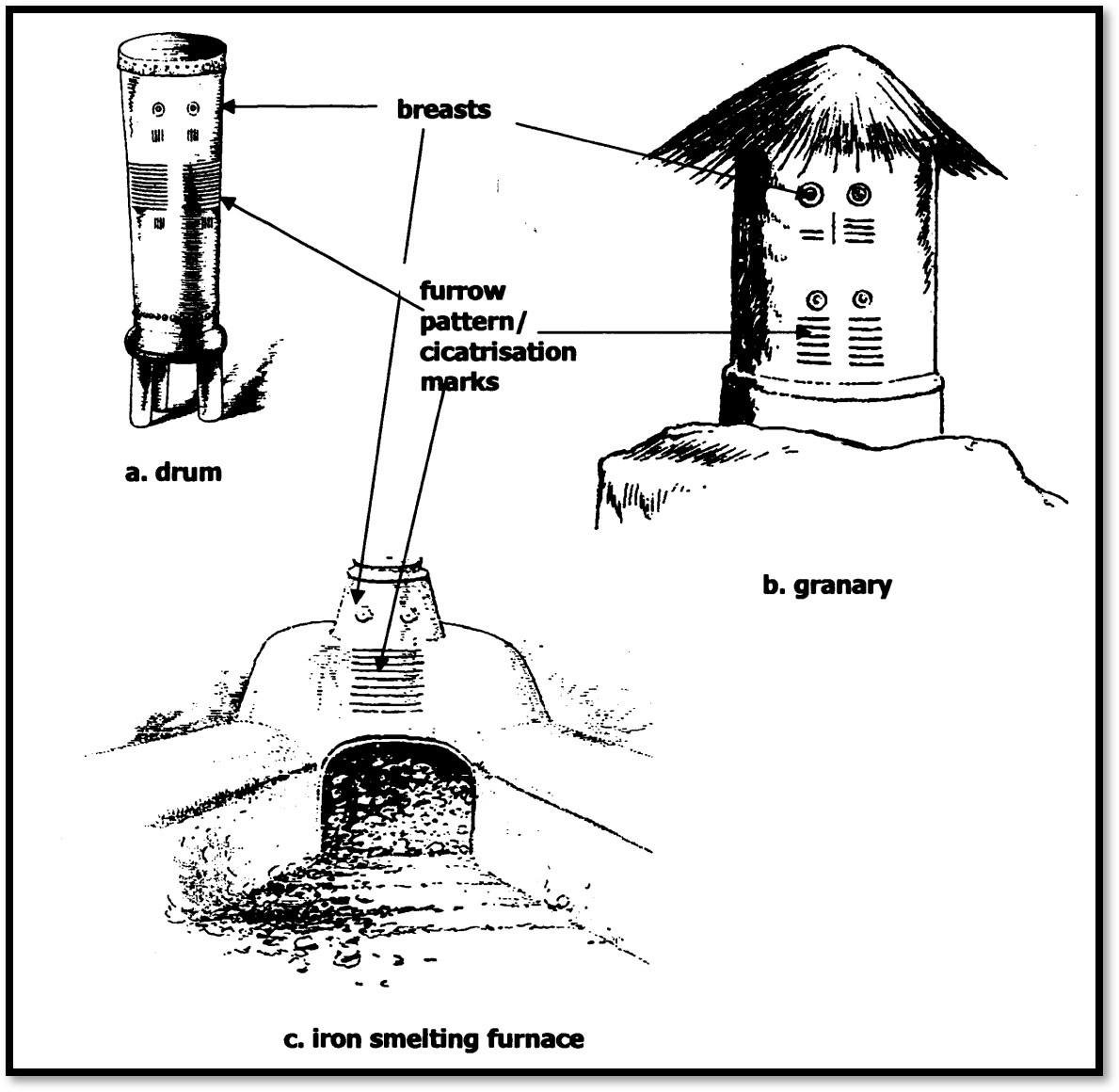
Chirikure: most Shona furnaces as well as drums and grain bins were decorated with human features[27]
By the 19th Century the Njanja broke away from earlier strict traditions of siting furnace sites close to rockart sites or sacred sites and began building furnaces close to villages and involving women in mining and fuel porterage.[28]
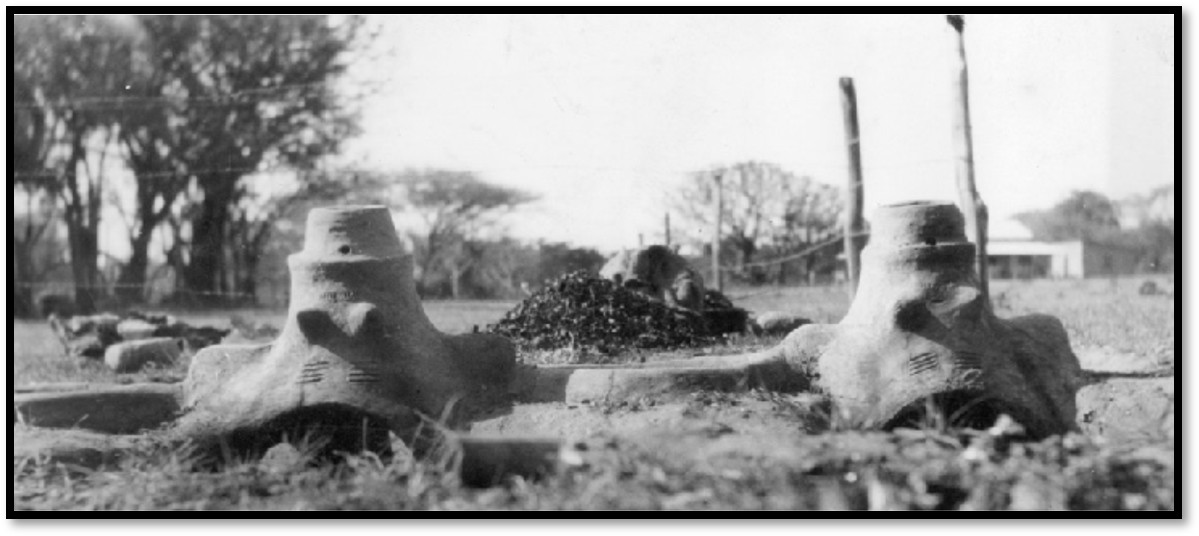
NMMZ: Two Njanja iron-smelting furnaces constructed at Charter Range (now Chikomba) for the visit of the Prince of Wales. Note the cicatrization marks below the breasts, the front rake hole beneath a low arch and the charcoal stockpile in the rear. The air blast was provided by two men operating four goatskin bellows though two horizontal tuyères in holes at the rear of each furnace
In his doctoral thesis Shadreck Chirikure considered iron working among the historical Njanja, Karanga and Kalanga.[29] Archaeological studies were conducted at Swart Village, Baranda, Nyanga and Wedza. He writes, “While the principles of the technology were identical, some modifications were apparent which were peculiar to each group in areas such as the scale of production, trade and the socio-spatial organisation of technology.” Also, “Again, there were some major outward discrepancies exhibited in aspects such as furnace types, symbolism and spatial location of production episodes.”
Description of Njanja furnaces
Overview and Dimensions
· Njanja iron-smelting furnaces (Shona: vira) were traditional, sub-circular structures used by the Shona people.
· Internal hearth diameters measured approximately 0.45 metres.
· Internal heights reached about 0.90 metres.
Furnace Architecture and Design
· Superstructure: Features a sub-vertical shaft with a pronounced shoulder and an "eye hole" located just beneath a narrow, top-facing charge hole.
· Rear Openings: Equipped with two low openings to accommodate fired-clay tuyères (nyengo) with 25–35 mm bores.
· Front Openings: Built with a broad, low rake hole situated below ground level at the front.
· Anthropomorphic Embellishments: Designed with a slightly backward-slanting front facade decorated with moulded female breasts, sexual organs and cicatrization marks.
· Ritual Elements: Included a small hole in the hearth floor specifically intended to hold charms.
Structural Accessories
· Lateral Projections: Clay projections that enhanced the anthropomorphic appearance while acting as heat shields and steps to observe or load materials.
· Depressions: Small built-in indents used to hold hand-measured amounts of charge.
· Preparation Floor: A small, low-walled clay area dedicated to preparing the ore.
Personnel and Operation
· Smelting Crew: Comprised a minimum of four operators, including a supervisor or iron-master (mhizha), two bellows operators and a charge assistant.
· Bellows (mvuto): Crafted from the skins of goats that were traditionally flayed alive to ritually ensure a successful smelt.
· Cultural Rituals: Operations and bellows-pumping were frequently accompanied by communal drumming and singing.
· Knowledge Gaps: Exact metallurgical details—such as ore composition, pre-roasting, ore-to-fuel ratios, and blast control—remain largely undocumented.
Forging and Refining
· Slag Production: Produced very little tap slag due to the high grade of the ore; most slag remained trapped inside the charcoal bed.
· Initial Processing: Blooms (hona) were first worked using rock anvils and hammers.
· Secondary Forging: Refined in small, open hearths using a single tuyère.
· Final Smithing: Completed using iron hammers and iron spikes set into wooden baulks.[30]
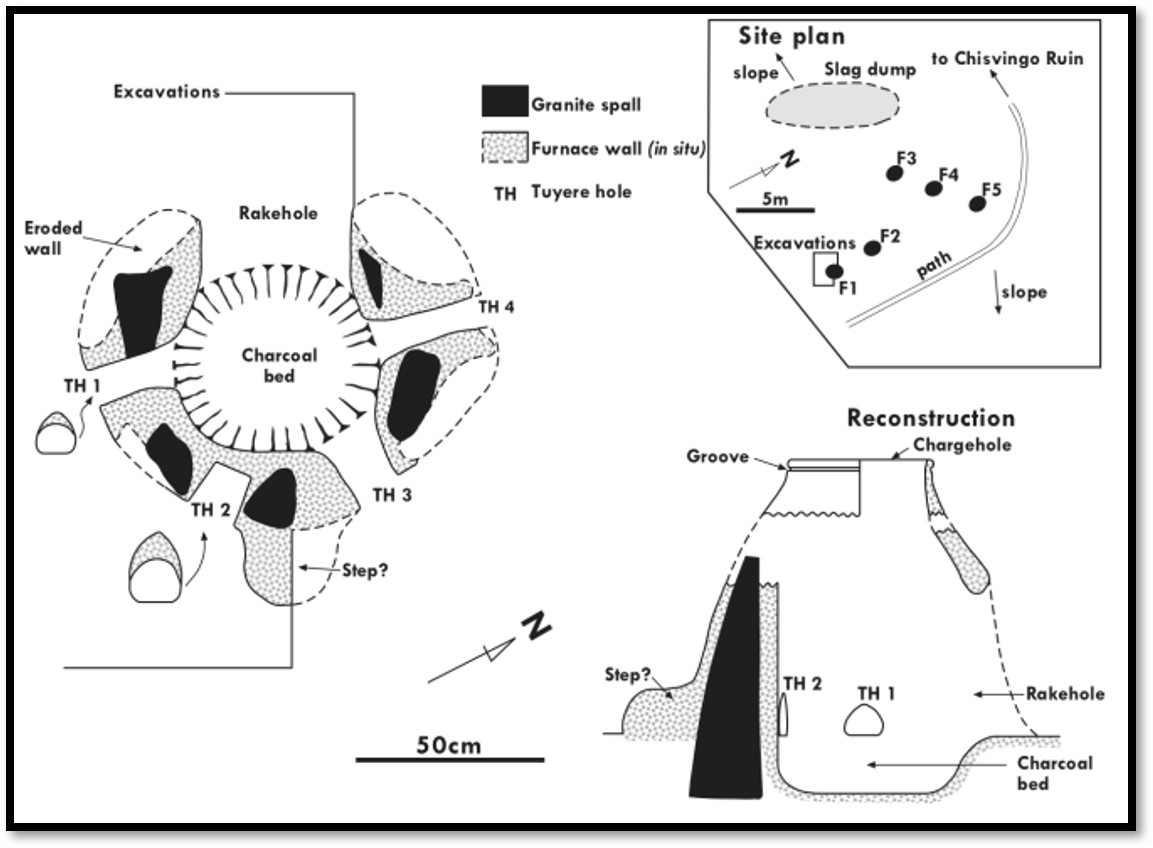
M. Prendergast. Plan and section of an excavated forced-draught furnace from Chisvingo, Masembura[31] that had a battery of five furnaces (F1-F5)
Njanja production methods
Because Njanja mining, charcoal-burning and smelting required extensive labour, these operations were conducted during the dry, agricultural off-season. Large teams of men and women travelled to Gandamasunga on Hwedza Mountain to mine the ore, which oxen then transported home in sacks.
The industry required large amounts of charcoal. Njanja smelting operations consumed an estimated 1,400 to 2,000 medium-sized trees annually, leaving the surrounding land completely cleared - resembling the barren bush visible in early 20th-century photographs of Zimbabwean gold mines.
Production was highly organized:
· Central situated sites housed ten to twenty furnaces.
· Shift systems kept these sites running continuously throughout the dry season.
· Daily output produced enough iron for four or five hoes (badza) with each furnace actively producing three or four finished hoes per day.
· Year-round forging allowed smiths to shape the iron into tools long after the smelting season ended.
· Surplus storage ensured that extra stock could be held over for future years if access to the iron ore at Hwedza was ever blocked.
Agricultural hoes were the primary product, but Njanja metalworkers manufactured a wide variety of items. They produced essential tools and weapons like axes, knives, adzes and spears, alongside smaller goods such as razors and ornaments. They also crafted keys for the mbira; a musical instrument deeply tied to Shona society.
Sale of Njanja iron products
To distribute their products, large Njanja trading parties of fifteen to twenty men travelled hundreds of kilometres across the south and south-east of the country. They targeted regions like Bocha, Gutu, Chirumhanzu, Ndanga, Chivi, Nyashanu and the Ndau territories beyond the Save River. Demand for Njanja hoes was especially intense in areas where recent settlers were actively clearing and opening up new farmland.
Trading occurred in organized markets established by local chiefs, where prices increased the further the traders travelled from home. Items were bartered for highly valued goods and livestock:
· A wife could be betrothed for 20 hoes.
· Cattle were valued at 10 to 20 hoes.
· Goats, salt and other essentials were regularly bartered.
The traders also took custom orders to secure future sales. Beyond local regional networks, the Njanja traded with Portuguese merchants and other coastal traders arriving from the east, allowing them to acquire prestige goods such as cloth, firearms, beads and shells.
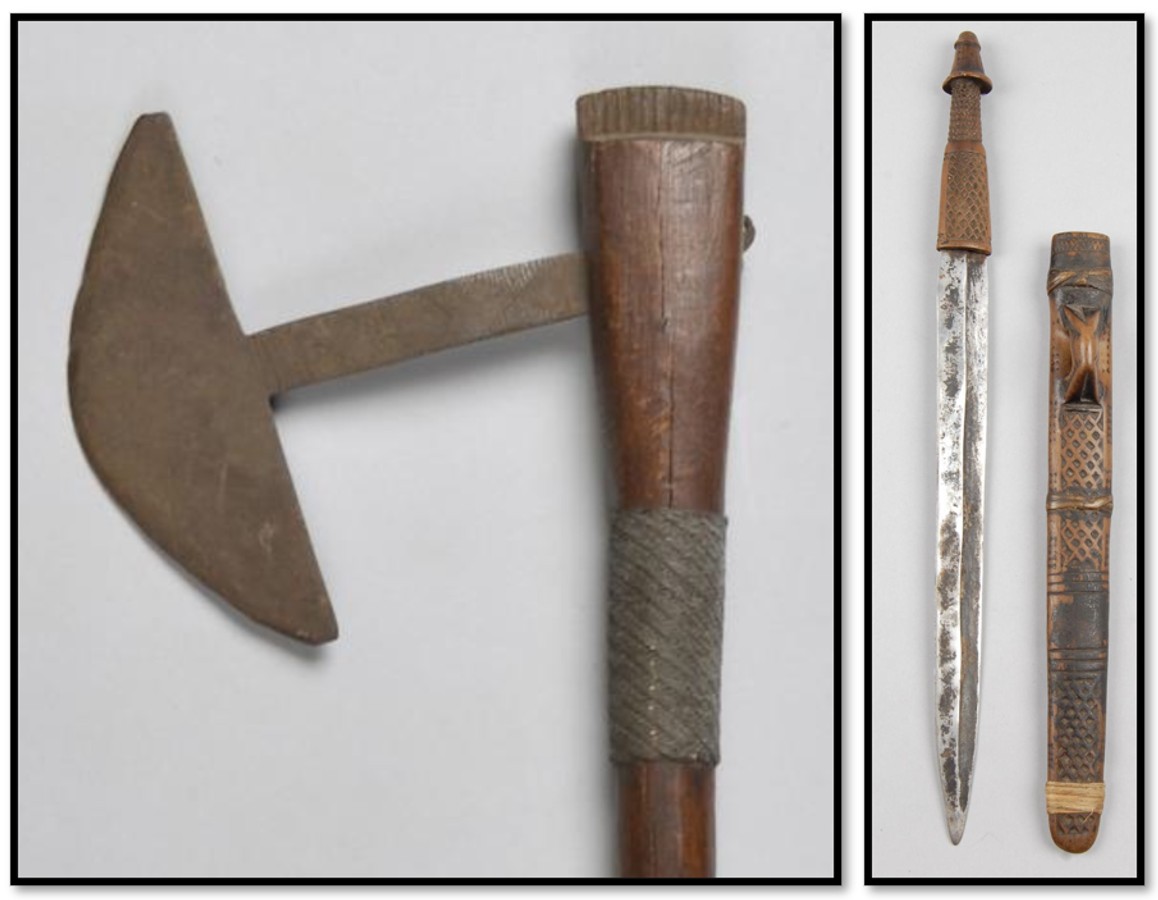
British Museum Collection: Shona iron axe and knife both given by James Theodore Bent after their Zimbabwe visit in 1891
Njanja organisation
Pre-colonial Njanja iron production in Zimbabwe was organized around independent iron-masters who managed large, family-linked labour pools. Highly respected for their technical skills and ritual supervision, they converted their expertise into significant wealth, political influence and larger kin groups by acquiring multiple wives. Their elevated social status frequently led to them becoming village headmen. This success created a powerful incentive for young apprentices, who provided vital labour in exchange for learning the trade and securing marriage alliances with the iron-master's daughters.
Despite their industrial output, the Njanja remained primarily farmers. Operating as part-time iron-masters, their remarkable economic and political success was driven by several core factors:
· Technological Expertise: Mastery of bellows-powered, forced-draught smelting technology.
· Resource Adaptation: Seamless utilization of metallurgically ideal iron ore from local sources they routinely accessed but never legally owned.
· Kinship Labour: Access to a large, highly loyal, family-based workforce.
· Rational Organization: Strategic centralization of furnace sites at a multi-village level and the deliberate easing of restrictive, traditional taboos.
· Market Savvy: Consistent production of high-quality goods backed by a deep understanding of regional consumer demand.
Other tribal groups that understood the technology of iron-smelting
While the Njanja were the most famous ironworkers in pre-colonial Zimbabwe, 19th-century observers recorded several other thriving ironworking communities across the region:
· Chivi (Masvingo Province): Described as a major industrial hub where entire villages dedicated their time and energy exclusively to iron-smelting.
· Mberengwa (formerly Belingwe in Midlands Province): Likened by early colonial observers to Britain's industrial manufacturing hubs, calling it the "Birmingham, Walsall, and Wednesbury" of the region's historic and contemporary iron production.
· Chirumanzu & Mbire (Midlands and Mashonaland East Provinces): Noted for large-scale operations, with the Mbire operating just north of Hwedza Mountain.
· Kalanga (Matabeleland South Province): Active producers in the Matobo produced iron weapons for the amaNdebele during the Matabele Rebellion (Umvukela - Hatton 1967)
Archaeological excavations of 19th and early 20th century furnace sites reveal that these groups used forced-draught furnace similar to those of the Njanja. Their sites often featured clusters of six or more furnaces arranged in a line, with ore-preparation zones, bloom-working areas and extensive mounds of slag and broken clay pipes (tuyères) indicating long-term use.
The collapse of the indigenous iron-ore smelting industry
The arrival of cheap mass-produced ironware flooded the market and killed off the indigenous industry. Following the Matabele (Umvukela) and Mashona (First Chimurenga) rebellions of 1890 various colonial regulations were issued that restricted local smelting activities that might result in weapons.
The underlying technical mastery of iron-ore smelting was rapidly lost. Within two generations, the ancestral knowledge required to successfully build the exact furnace dimensions and reduce Hwedza iron-ore into quality blooms was entirely lost.
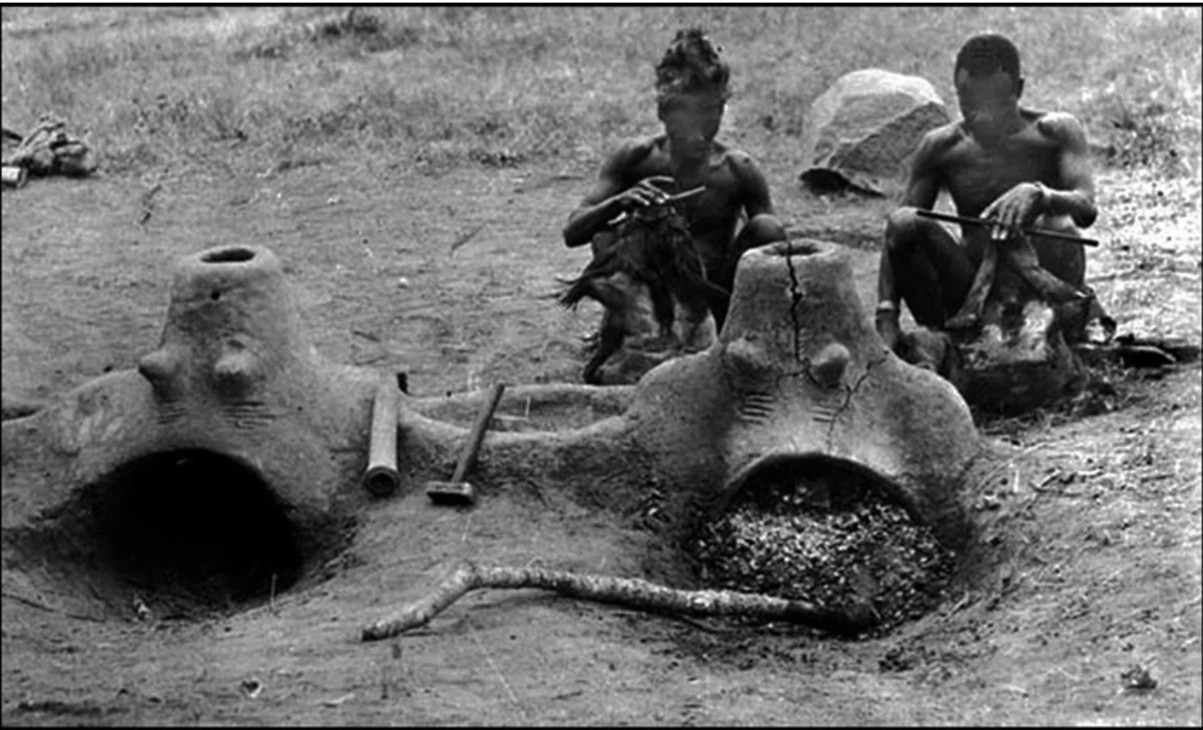
NMMZ: Two Njanja iron-smelting furnaces constructed at Charter Range (now Chikomba) for the visit of the Prince of Wales in the early 1920’s
African societies and technologies such as iron working were thought to be in a “deep and perpetual slumber” without any advancement[32]
Chirikure quotes the anthropologist Seligman (1930) who argued (falsely) that the Hamitic or Semitic races migrated from the Egyptian Nile into east and west Africa and introduced smelting technology. Also Karl Mauch, a German explorer, the second European visitor to Great Zimbabwe in September 1871 and stated that it was the forgotten land of Ophir.[33] Theodore Bent in 1892 came to the conclusion after excavating at Great Zimbabwe that Africans had neither the capacity to build in stone, nor to govern a state despite the abundance of indigenous artefacts he unearthed.[34] This view was accepted by the majority of Rhodesian settlers until the 1970’s despite the existence of important scholarly researches by archaeologists such as Randall-Maclver (1906) Caton-Thompson (1931) Keith Robinson (1961) Roger Summers (1971) Anthony Whitty (1961) and Peter Garlake (1973) The prevailing belief was that human technological and cultural developments in the last 1,000 years came from outside the continent via Egypt, after which they remained in inertia until the industrialisation introduced during colonial rule.[35]
In the Chapter in the book ‘Africa, the cradle of Human Diversity' entitled ‘Diversity and Variability in the Preindustrial Iron-Smelting Technologies of Great Zimbabwe, Southern Africa,’ Dr Ezekia Mtetwa challenges what he calls long-standing colonial and Eurocentric stereotypes regarding precolonial African technology. He writes that early European writers and 20th-century scholars dismissed sub-Saharan African metalworking as stagnant, uniform and primitive.
When early Europeans travellers came across advanced metallurgy —such as the Benin bronzes they did express doubt that indigenous Africans were capable of creating them. They often adopted one of two approaches:
· They thought the Portuguese, ancient Egyptians, Arabs, or even lost Phoenician and Roman legions had brought the technology that local smiths simply adopted
· They downgraded African metallurgy of its technical status writing that it was merely "decorative" or "ritualistic" rather than true technology.
Between 1945 and the late 1960’s the prevailing theory was that all complex metal technology originated in a single, superior geographic core, usually the Near East or Europe and slowly rippled outward. Scholars insisted that iron smelting could not have been independently invented in sub-Saharan Africa and argued it must have trickled down from Carthage across the Sahara or from Meroë down the Nile. In addition, because sub-Saharan Africa bypassed a distinct Copper or Bronze Age and went straight from stone tools to Iron-Age they believed the development of an iron-smelting technology was "unnatural" or a complete anomaly.
This narrative was overturned with the development of Radiocarbon dating in the late 1950’s that allowed archaeologists to date the charcoal used in African furnaces. Sites in Niger, Nigeria and sub-Saharan Africa that returned dates as early as 1000–2500 BCE, thus proving African ironworking was remarkably ancient and developed independently.
In addition, archaeometallurgy revealed that African metalworking was anything but uniform. African smiths designed a wide range of furnace designs - from tiny slag-pit furnaces to massive 21-foot-tall natural draft furnaces.[36]
Mtetwa records 42 preindustrial iron production sites in Zimbabwe and in his article analyses the data from eight key locations demonstrating a wide variety of metallurgical types:
Archaeological Site | Core Visual & Material Attributes Observed | Implied Technology & Significance |
Chigaramboni | Large furnace bases (1.4m diameter), massive heaps of tuyères fused in clusters of 2 to 10 pipes. | Natural-draft technology; indicates large-scale industrial output situated near raw fuel resources rather than residential hubs. |
Mashava | At least 20 visible furnace features, magnetite iron ore quarries, tuyere-moulded slag, and wrinkled flow/tap slag. | Evidence of slag tapping (draining liquid waste out of an operating furnace), proving longer smelting windows and highly sophisticated quality control. |
Mutevedzi | Slag with plant impressions; unique 2x1 metre rectangular furnace base with vitrified walls and finger impressions. | A rare rectilinear/linear furnace design in sub-Saharan Africa, structurally similar to advanced ancient wind-driven furnace setups found in South/Southeast Asia. |
Boroma | Multiple-fused tuyères, smithing hearth remains, granite crushing platforms, and cake-like slag blocks containing bone inclusions. | Co-location of primary smelting and secondary smithing. Yielded a groundbreaking early radiocarbon date. |
Veza (A & B) | Circular furnace bases, double-fused tuyères, and highly magnetic, curved smithing slags. | Captures the full spatial lifecycle of metallurgy from raw extraction to metal fabrication. |
Goose Bay & Sviba | Flared/funnel-shaped tuyères found directly within domestic contexts (hut floors). | Forced-draft technology (bellows-operated); highlights smaller-scale or transitional production styles. |
Martin Prendergast’s archaeology at Surtic Farm, Mazowe
Prendergast made a detailed study of the iron pyrometallurgical remains from possible slag tapping furnaces at an Early Iron Age site (dating to c. AD 1000) situated at Surtic Farm adjacent to the Ndoba Hills in the Mazowe valley about thirty kilometres north of Harare.[37] As a professional archaeometallurgist, Prendergast described in detail the processes represented by the material scattered on the site.
The ferro-metallurgical debris at the Surtic site comprised extensive concentrations of broken tuyères, slag heaps and collapsed furnaces. Constructed from clay panels embedded with large quartz clasts, these furnaces featured internally flared air nozzles with an average internal diameter of 40 mm and an external diameter of 60 mm. The associated slag was black, dense, and exhibited a characteristic lava-like flow texture indicative of tapped slag. Prendergast noted that the morphology of certain tap slag specimens, alongside the presence of sand grains, suggested that the liquid slag had cooled within shallow trenches. Based on these findings, he concluded that the "quantity and size of the blocks of tap slag from the Surtic site shows that these furnaces had a large capacity and that temperatures sufficient to produce tap slag were attained in them."
Chirikure writes, “While these macro-physical observations are compelling, they would have been significantly strengthened by detailed laboratory analyses. Empirical testing remains necessary to definitively confirm a tapping technology, as non-slag-tapping furnaces are also capable of generating highly fluid slag. Nonetheless, Prendergast’s primary observations remain highly credible; beyond his background in mineralogy, he possessed extensive field experience evaluating bloomery slags.”
The site used haematitic banded ironstone, likely gathered from a nearby ore outcrop. Based on the dimensions of the collapsed structural remains, Prendergast estimated that the Surtic Farm furnaces were exceptionally large, measuring approximately one metre at the base. Because these substantial dimensions contrast sharply with the smaller, localized furnaces widely utilized throughout the Late Iron Age (LIA) he postulated that Early Iron Age (EIA) furnaces were systematically larger than those of the subsequent period.
Conclusions
For this I have largely relied on Shadreck Chirikure’s final conclusions
Methodological Gaps: Past research in Zimbabwe was largely conducted by non-specialists focused on ceramics rather than metallurgy. Because conclusions rely heavily on visual macro-analysis rather than laboratory testing, current interpretations of technological evolution remain speculative.
Technological Shifts: Evidence suggests a shift in furnace design over time. The Early Iron Age (EIA) featured larger furnaces that may have used natural draught and early slag-tapping techniques (e.g., Surtic Farm) By contrast, post-15th-century sites show a predominance of smaller, low-shaft furnaces driven by forced-draught bellows.
Missing Data: There is a critical shortage of intact first-millennium AD furnace remains, undocumented primary smithing sites and data regarding raw ore selection.
Research Objective: To understand whether technological changes stemmed from localized trial-and-error or external cultural borrowing, metallurgy must be studied in tandem with socio-political contexts. For this Chirikure used ethnographic and archaeological data from three groups (Njanja, Karanga and Kalanga) to map these historical variations, however I will halt this short article at this point.
Martin Prendergast (1948–2025)[38]
Dr Martin Prendergast (1948–2025) was a premier independent expert on Zimbabwean geology, best known for his definitive research on the Great Dyke and his lifelong dedication to the country's mining history.
Early Life & Move to Africa
· Origins: Born 6 December 1948 in Chislehurst, England, to an Irish father and a Scottish mother.
· Formative Gap Year: After performing poorly in his A-levels at Stonyhurst College, he took a gap year in 1968 to travel to Rhodesia (now Zimbabwe).
· Missionary Work: He served as a missionary teaching assistant at St Peter’s Kubatana, where he became fluent in Chishona and met his future wife, Susan Kasiyamhuru.
Personal Life
· Marriage & Family: Married Susan in 1979. They raised two daughters, Miranda and Catriona—both of whom went on to achieve PhDs and successful academic careers.
· Later Years: The couple moved to Scotland in 2002 to be closer to their family. Martin passed away from cancer on 18 November 2025 at Ninewells Hospital in Dundee.
Academic & Professional Career
· Education: Turned his academic trajectory around by earning a first-class Special Honours degree in geology from the University of Rhodesia (1977), a Master's with Distinction from Imperial College London (1981), and a PhD from the University of Zimbabwe (1989).
· Fieldwork Legend: Began his career at Union Carbide in 1978, where his legendary dedication saw him stay behind alone to map the Wedza South Hill platinum deposit (now Mimosa Mine) even when security conditions forced the mine to close.
· Independent Consultant: After working for Cluff Resources and Anglo American, he became an independent consultant in 1991, working across Africa and South America for over four decades.
Scientific Contributions & Accolades
· Prolific Author: Published 38 scientific papers, largely without institutional funding, alongside works on pre-colonial African iron and tin smelting.
· Major Volumes: Co-edited two landmark books: Magmatic Sulphides – The Zimbabwe Volume (1989) and Mining in Zimbabwe from the 6th to the 21st Centuries (2019)
Key Awards: Honoured as an Honorary Life Member of the Geological Society of Zimbabwe, delivered the prestigious 2016 A.M. Macgregor Memorial Lecture, and won a record seven A.E. Phaup Awards for his scientific papers

Notes
[1] Iron Production in Iron Age Zimbabwe: Stagnation or Innovation? P26
[2] Ironware was valued by Zimbabwe Culture elites above other metals (including gold) as a potent symbol of power and authority (Chirikure 2007; Herbert 1996)
[3] A large caches of ironware was discovered in a cave in the Eastern Enclosure at Great Zimbabwe—including wire, hoes, axes, chisels, spears, and knives—were likely sent as tribute from outlying smelting sites. Researchers suggest these centralized hoards were stored by the ruling elite to be systematically redistributed as a means of maintaining political clientship and strengthening regional kinship networks.
[4] Prendergast: Iron mining and metallurgy in pre-colonial Zimbabwe: A review
[5] Ancient Mining in Rhodesia and adjacent territories.
[6] Swan, L. 1994. Early gold mining on the Zimbabwe plateau. Uppsala: Societa Archaeologica Upsaliensis.
[7] Iron Production in Iron Age Zimbabwe: Stagnation or Innovation? P82
[8] Chirikure writes Iron Production in Iron Age Zimbabwe: Stagnation or Innovation? (P44) “tapped slag exhibits a clearly defined flow structure. In contrast, slag which solidified in the furnace contains charcoal impressions and at times has got pieces of vitrified furnace wall attached to it.”
[9] Water quenching is only used in steel making – the red-hot material at 800°C to 950°C is quickly plunged into water and this sudden drop in temperature traps the carbon atoms in place before they can rearrange themselves making the material much harder.
[10] Iron Production in Iron Age Zimbabwe: Stagnation or Innovation? P31
[11] The 12th-century Arab geographer, cartographer and traveller Muhammed al-Idrisi referred to Sofala, an important east-coast trading port in that period (Ducène 2011; Theal 1964) as a source of quality iron products as well as gold, possibly implying the export of iron from the Zimbabwean plateau (e.g. Beach 1994).
[12] The Portuguese missionary Fr. M. Barreto in 1667 (in Abraham 1961) records that iron-mining and smelting was carried out in many parts of the country
[13] Prendergast mentions the following as having contributed to the research: Karl Mauch 1871; Bent 1893; Shimmin 1893; Sawyer 1894; Baden-Powell 1897; Knight-Bruce 1896; Hall & Neal 1902; Hall 1909; Theal 1964; Burke 1969; Summers 1969, Mackenzie 1975; Beach 1977; 1980; 1984; 1994
[14] Iron Production in Iron Age Zimbabwe: Stagnation or Innovation? P83
[15] Maufe et al. 1919; Maufe 1920; Phaup 1932; 1933;Ferguson 1934; Macgregor 1935; 1937; Amm 1940; Worst 1962; Stowe 1968
[16] Located on the east bank of the Nile River at Meroë, Sudan, the capital of the ancient Kushite Empire (ruling from roughly the 6th century BCE to the 4th century) the slag heaps weigh an estimated 10,000 tons. Other sites of large-scale iron ore smelting include Burkina Faso, the Nsukka plateau of southeastern Nigeria and the Bassar region in northern Togo
[17] Situated at 18°44′43″S 31°34′40″E, Gandamasunga has an elevation of 1,642 metres and located in the Hwedza district of Mashonaland East Province, Zimbabwe
[18] Ironworkers deliberately selected self-tempered clays that were rich in silt and fine sand. This particular composition helped the pipes survive the thermal shock of intense furnace temperatures.
[19] Iron Production in Iron Age Zimbabwe: Stagnation or Innovation? P77-8
[20] Ibid, P79
[21] The author, A.R. Sawyer noted the internal area of the furnace was 3.5 cubic feet and was filled with charcoal and about fifty hand0fills of iron ore that had been broken up small and dropped in from the furnace top. The furnace was sited at the Munyati (formerly Umniati) river between Charter and Masvingo. The iron ore, which was very pure, had been obtained from Iron Mine Hill (Ntabasinsimbe mountain) which is some 40 kms away
[22] The Mbire people are recognized as the earliest recorded inhabitants of the Mt Hwedza region. Oral traditions trace their arrival and settlement in the central plateau of Zimbabwe from "Guruuswa" back to between the 9th and 12th centuries. By the 15th century, the Mbire dynasty had established territorial control over the Hwedza hills and the iron-ore resources. Today, the Mbire District is located in the northernmost part of Zimbabwe within Mashonaland Central Province
[23] Today the highest concentration of the Njanja people is in the Chikomba District (formerly Charter District) located in the Mashonaland East province mainly around Chivhu. This area is traditionally regarded as the Njanja heartland, but also in the upper Northern part of the Buhera District up to the Save river, but also in Sadza, Makumbe, Nharira and Manyene
[24] The earliest studies of the Njanja were oral interviews carried out by Franklin (1945) Mackenzie (1974) Posselt (1924, 1926) – See Iron Production in Iron Age Zimbabwe: Stagnation or Innovation? P27
[25] Interpreting the world strictly through human values, experiences, and interests.
[26] Iron Production in Iron Age Zimbabwe: Stagnation or Innovation? P84
[27] Ibid, P85
[28] The Native Commissioner of Charter District (now Chikomba) F. W. Posselt took a keen interest in recording aspects of Njanja iron working from ore preparation through smelting to smithing in the mid 1920’s. Posselt encouraged the Njanja to continue with their craft which was in decline among most African societies partly because of the availability of cheap scrap iron and partly because of missionaries discouraged people from smelting due to their use of ritual. Posselt had a positive attitude towards African technologies and crafts even if the Njanja used medicines. Iron Production in Iron Age Zimbabwe: Stagnation or Innovation? P86
[29] Iron Production in Iron Age Zimbabwe: Stagnation or Innovation? P2
[30] Iron Production in Iron Age Zimbabwe: Stagnation or Innovation? (P45) “Smithing was done in two phases, primary and secondary smithing. Primary smithing involved the repeated hammering of the mass of bloom in a forge to expel the included slag and charcoal thus freeing the metal from inclusions and producing a dense ingot or billet (Crew 1998, Miller and Killick 2004, Pleiner 2000). The tools of the smiths included anvils and hammers which in most pre-colonial African societies were made of either wood or hard igneous rocks. Primary smithing was sometimes conducted in the vicinity of the smelting furnaces to take advantage of the residual heat. After this refining exercise, the ingot was then hot and cold worked during the process of secondary smithing and forged into a wide inventory of objects for local consumption or for trade”
[31] See the article Chisvingo and Nhunguza monuments, Masembura Communal Lands under Mashonaland Central on the website www.zimfieldguide.com
[32] This quote from Shadreck Chirikure’s article Iron Production in Iron Age Zimbabwe: Stagnation or Innovation? P12
[33] See the article Karl Mauch, explorer and geologist and the man who claimed to be the first European to visit Great Zimbabwe under Masvingo Province on the website www.zimfieldguide.com
[34] See the two articles The Bent’s archaeological expedition to Great Zimbabwe in 1891 and the prominent part played by Mabel Bent and James Theodore Bent and Mabel Virginia Anna Bent gave many artefacts to the British Museum from Southern Rhodesia (present-day Zimbabwe) collected during and after their excavation at Great Zimbabwe in 1891 under Masvingo on the website www.zimfieldguide.com
[35] Iron Production in Iron Age Zimbabwe: Stagnation or Innovation? P14
[36] Chirikure in Iron Production in Iron Age Zimbabwe: Stagnation or Innovation? P38 writes: “Iron smelting furnaces in sub-Saharan Africa came in many forms: bowl furnaces consisting of a pit and very low wall above the ground, low shaft furnaces which were either slag tapping or non-slag tapping and very large shaft furnaces which were powered by natural draught using the principle of convection (van der Merwe 1980). These furnace types had different diameters, with the natural draught furnaces being very large while the low shaft and bowl furnaces were comparatively small.”
[37] Early Iron age Furnaces at Surtic Farm near Mazowe River, Zimbabwe P 31-32.
[38] Prepared by Tony Martin with contributions from many of Martin’s colleagues. Thanks to his family for the photograph)