
Are ASM chrome miners and their Chinese sponsors in Zimbabwe being pressured at all by the government to rehabilitate dangerous, abandoned open-cast mining pits?
- Entry fee
- n/a
Background
On Sunday, 2 March 2025, a tragic accident occurred in Zimbabwe when a Honda Fit vehicle veered off the road and plunged into a 30-metre-deep, water-filled disused chrome mining pit. The disaster happened at the 53km peg in the Gakaka area of Shurugwi South[1] located in the Midlands Province, while the vehicle was en route to Zvishavane.[2] Five occupants lost their lives in the submerged pit.
Initial police investigations pointed to poor visibility and the extreme, unsafe proximity of the open pit to the main road as the primary causes for accident. The incident sparked widespread outrage among local residents and environmental groups, renewing urgent demands for the rehabilitation and closure of thousands of dangerous, abandoned open-cast mining pits scattered across Zimbabwe's mining regions.
While the accident was tragic, it is not an isolated case. Unsecured and unrehabilitated mining pits pose a significant threat to communities near mining areas. Once mining activities have been abandoned their pits are often left disused turning to death traps for both humans, domestic stock and wildlife.
Mining companies and artisanal miners should be facing significant and intensifying pressure from the government - driven by local community anger - to rehabilitate the land after their mining operations cease. As part of a broader, nationwide crackdown on environmental degradation, the Zimbabwean government needs to shifted from soft warnings to aggressive regulatory enforcement, legal actions and policy overhauls directly targeting mining operators.
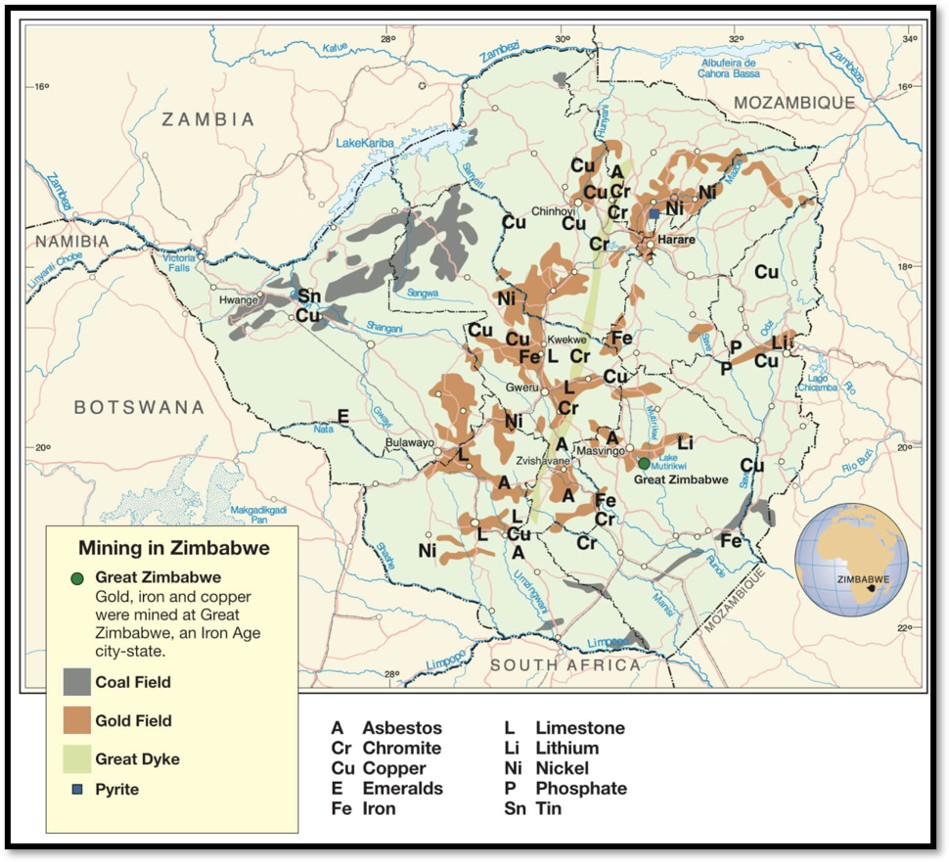
Map highlighting the importance of mining in Zimbabwe
Does legislation exist to require miners to rehabilitate mining areas?
Yes, all miners in Zimbabwe are legally required to rehabilitate mining areas and open pits through the Environmental Management Act (EMA) (Chapter 20 - 27):. However, a historic gap between what the law says on paper and how it is enforced has allowed thousands of abandoned open pits to remain open and dangerous across the country.
Under EMA Section 97, no miner can legally begin mining without undergoing an Environmental Impact Assessment (EIA) and receiving an Environmental Management Agency (EMA) certificate. The EIA requires miners to submit an Environmental Management Plan (EMP) which explicitly details how they will carry out "progressive rehabilitation" - restoring the land continuously while mining is active - and how they plan to seal shafts and fill open-pits upon closure.
Under EMA Section 92, these strict sub-regulations specifically command miners to ensure backfilling, pollution control and re-vegetation during operations and immediately at the cessation of mining.
That is the theory, but in reality the legislation is largely ignored except by a few of the ethical miners
Why are there still so many dangerous disused pits around Shurugwi?
The surge in global chrome prices led to an alarming spike in reckless open-cast mining, particularly along vital infrastructure like the Shurugwi - Zvishavane highway. Unregulated miners left massive, uncovered pits just metres from main roads, creating death traps for local livestock, causing severe soil erosion and physically threatening public road and rail networks. This triggered an immense backlash from local communities which has prompted a government crackdown; at least in the media.
Despite these laws, enforcement of mining legislation has historically been weak, creating a massive environmental crisis. Why? Because there is:
· No Prescriptive Financial Penalties or Upfront Funds: The older legal framework did not legally force miners to put up financial bonds or cash reserves into a dedicated fund before they started digging. If a company goes bankrupt or simply abandons a mine overnight, the EMA has historically lacked the immediate capital or logistical muscle to step in and fix the site.
· "Legacy" Exploitation: Thousands of open shafts were dug decades ago under archaic colonial-era mining rules (like the original 1961 Mines and Minerals Act) before modern environmental laws even existed.
· Artisanal and Illegal Miners: While large, registered corporations generally face stricter audits, a vast network of informal or artisanal and small-scale miners (ASM) dig pits rapidly and vanish without a trace, leaving behind deep, water-filled death traps.
Shurugwi, a case study
An article from Makanday highlights the problems that Shurugwi faces currently.[3] Residents and civic leaders are frustrated over the government’s inaction on long-standing complaints, particularly about Zimbabwe Chenxi Investments (Private) Limited.[4] Chenxi has cleared large tracts of land for gold mining at the Boterekwa Escarpment (Wolfshall Pass) which is the town’s famous natural attraction and has been blasting near residential areas.[5]
Much of the vast network of tunnels beneath Shurugwi dates back to operations by ferrochrome producer Zimasco, which has mined the area since 1926. Zimasco is now owned by the Chinese state conglomerate Sinosteel Corporation.[6]
Zimbabwe Chenxi Investments (Private) Limited is chaired by Collins Mnangagwa, son of President Emmerson Mnangagwa and most residents and civic leaders believe the company’s political connection enables it to operate with impunity. Collins Mnangagwa’s association with the company was publicly confirmed in 2024 by Chenxi’s then general manager, Simon Karimanzira, during a handover ceremony in Shurugwi. The company has renovated the local offices of the ruling ZANU-PF party and makes donations at events attended by senior party and government officials.
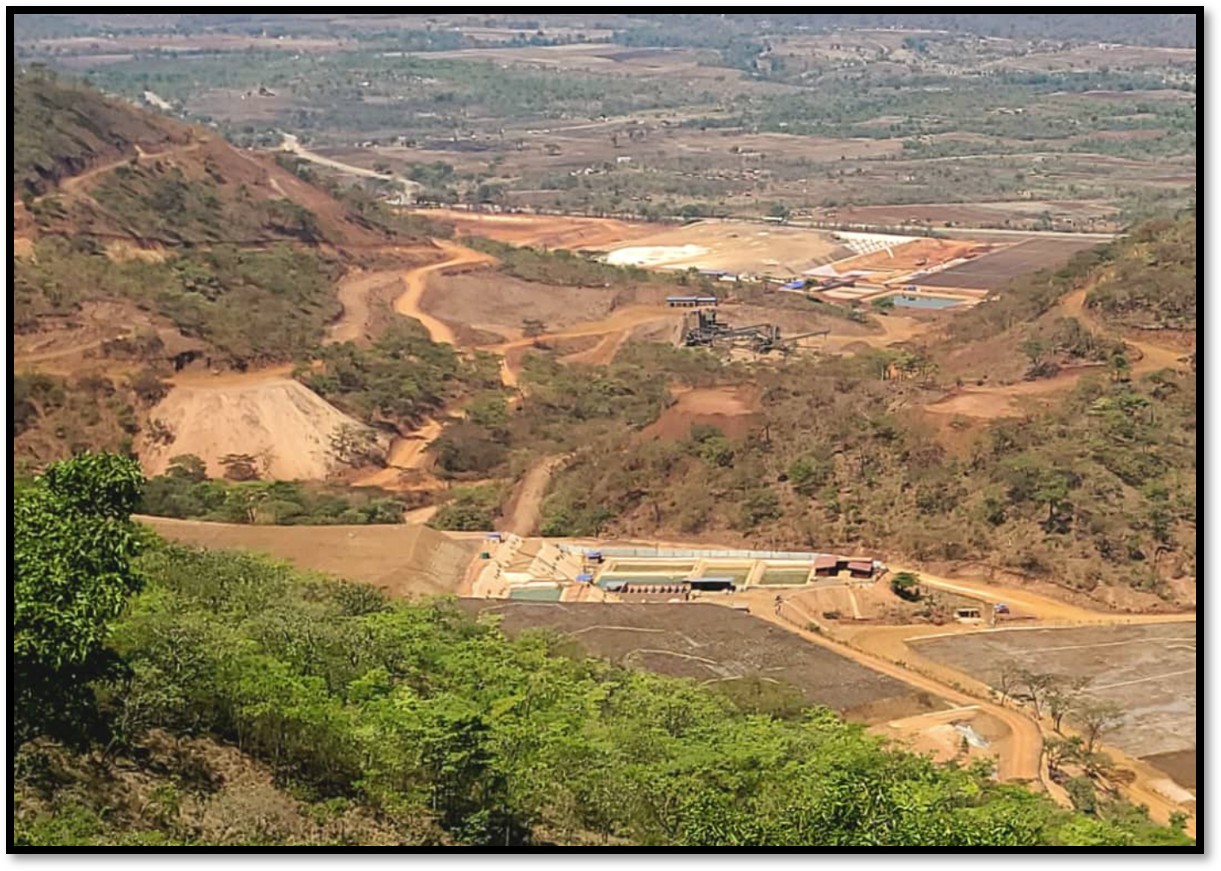
Makanday photo: Chenxi’s operations in Shurugwi
Bulle Madzitire, a former mayor of Shurugwi and now chair of the town’s Residents and Ratepayers Association (SRRA), warned that the entire town is under threat because of tunnels and continued blasting by Chenxi and artisanal miners. He said, “We are all under threat. It is not just homes – it is also hospitals like Shurugwi District Hospital and White Maternity Hospital. It is a crisis.”
The journalists visited the Sebanga Extension, Motel Plots and Ironsides areas and found ten severely damaged houses, but believe the actual number is far higher, as many residents declined to be interviewed or allow access to their homes, citing fear of victimisation or jeopardising hopes of their homes being rehabilitated.
In 2009, Anna Mazvovere was swallowed alive when her bedroom, in a house in Shurugwi town that she was renting from Zimasco, collapsed into an underground shaft. Despite rescue efforts, her body was never recovered. A resident recalled, “They said it was too dangerous. “Then the story just died.”
Mazvovere’s daughter, Nicia Ketara, said Zimasco paid US$3,500 in compensation. Access to the site remains heavily restricted.
Chenxi director Simon Karimanzira said claims that the company’s blasting operations were damaging homes were being exaggerated by “enemies of progress” concerned about the company’s success. He also said the company had not received any complaints linking its operations to cracked houses and had not been approached by the Ministry of Mines and Mining Development.
But SRRA residents’ association representative Machocho said complaints had been formally raised with the company. He said, “That’s why we called for meetings with them. The blasting is causing cracks and threatening properties and lives. In response the company agreed to reduce the intensity and depth of the blasting.”
Zimasco spokesperson Margaret Mukumbi declined to comment. She said company manager, Pindukayi Musarandega, would respond, but no comment was provided. Shurugwi’s current mayor, Fanuel Machiya, and Midlands provincial mining director, John Makandwa, both declined to comment. Permanent secretary in Mines, Pfungwa Kunaka, also did not respond to questions about the tunnels, or the risks facing the town.
Are the Chinese responsible for much of the current environmental damage?
The global scramble for strategic minerals has led to an increased involvement of Chinese mining companies and individual Chinese nationals in resource extraction across Africa with this trend mirrored in Zimbabwe. There has been a corresponding rise in mining equipment imports from China. This upsurge in the mechanisation in the chrome mining areas of the Great Dyke has not only boosted productivity, but also transformed the dynamics of artisanal small-scale mining (ASM)
In 1980 when Zimbabwe gained independence Zimasco (a subsidiary of Union Carbide) and Zimbabwe Alloys (a subsidiary of the Anglo-American Corporation) operated the largest chrome mines in the country. However depletion of the higher grade chromite resources has meant the sector ‘has evolved over the years from highly mechanized, deep underground operations to relatively shallow workings of mostly low-grade ores.’[7] Seam deposits tend to be of low quality, but they are accessible to artisanal miners, who use rudimentary tools in their mining operations.
However, the low-grade-ores produced by ASM tend to be unsuitable for local smelters who prefer high-grade ores that are suitable for their old submerged electric arc smelters. They are designed for the consumption of lumpy ore and can only consume a limited quantity of fines although some smelters, like Zim Alloys, resorted to processing chrome fines into briquettes before feeding them into their furnaces. The dominance of Zimasco and Zim Alloys forced ASM chrome producers to rely on Chinese companies to buy their low-grade ores for export to China where they can be processed.
The ‘kubhomba’ practice allowed ASM to operate outside the exploitative tribute mining arrangements dominated by large-scale mining companies. ASM would secretly mine dormant chrome claims and ferry the ore to a safe place before selling the chrome to registered tributors who would, in turn, sell it to large-scale mining companies, or to Chinese companies who never asked questions about the origins of the ore.
According to Mkodzongi and Mujere a combination of land reform discourse, indigenization policies and economic sanctions became fertile ground for Chinese participation in the ASM chromite sector. As more and more ASM chrome miners got access to independent claims (special grant claims) that had been ceded to the government by Zimasco and Zim Alloys, Chinese companies stepped in to provide contract mining services, hiring mining machineries such as excavators and haulage trucks as well as providing a market for the chrome ore.[8]
Most ASM cannot afford to hire machinery and are thus forced to sub-lease their claim area to a Chinese sponsor on profit-sharing arrangements of 70 – 30% who becomes responsible for all the costs of production and gets the lion's share of the profits. As a result, ASM chrome mining along the Great Dyke is increasingly controlled by the Chinese, who are now dominating the sector to the detriment of artisanal miners.[9]
Chinese buyers will buy all types of chrome regardless of quality, even those ores below 45.5 % chrome content that Zimasco will not buy. While tributary mining arrangements benefit the Chinese, ASM chrome miners say this provides them with a market for low-grade chrome, that they could not sell to major buyers.
Chinese individuals and companies have been accused of criminal activities involving the illegal export of chrome[10] and operating without the requisite paperwork by employing locals as a front for their illicit activities. Most tributors or their Chinese sponsors operating on land leased from large companies such as Zimasco cannot or do not rehabilitate the land damaged by their mining operations.
Will new radical regulatory overhauls change things?
Following public outrage over mining-related deaths, the Zimbabwean government has promised to enact reforms to aggressively target extending loopholes including:
· The Mines and Minerals Amendment Bill: This sweeping policy overhaul explicitly legally mandates miners to contribute cash directly into a centralized land restoration and rehabilitation fund, stripping companies of their mining titles if they hold unresolved environmental liabilities.
· Mandatory ESG Compliance: The Ministry of Mines and Mining Development has made Environmental, Social and Governance (ESG) compliance a legal prerequisite. If a company fails to progressively backfill its open-cast pits, its mining rights and operating licenses will be completely revoked or denied renewal by the authorities.
· Corporate Accountability: In response to tragedies, some state-backed and private enterprises (such as ZimAlloys / Kuvimba Mining House in Shurugwi) have launched aggressive backfilling campaigns under the pressure of these stricter regulations to manually seal old shafts before further loss of life occurs.
· Enforcement Blitzes: In direct response to the recent tragedies, state regulators say they have launched strict enforcement campaigns, pressuring both private and state-backed mining enterprises to manually seal and backfill old shafts to prevent further loss of life.
The effect of the implementation of the Mines and Minerals Amendment Bill and the introduction of the mining rehabilitation fund is designed to ensure that mining companies restore their mined areas lessening the risk of the presence of abandoned pits and ensuring that mining is conducted in a more responsible and sustainable manner.
That is the theory, but in practice Zimbabweans know that Ministers can be compromised with backhanders or given paid non-executive company positions; mining inspectors and ZRP can be bribed, local Mayors promised cash for pet projects, political parties paid off.
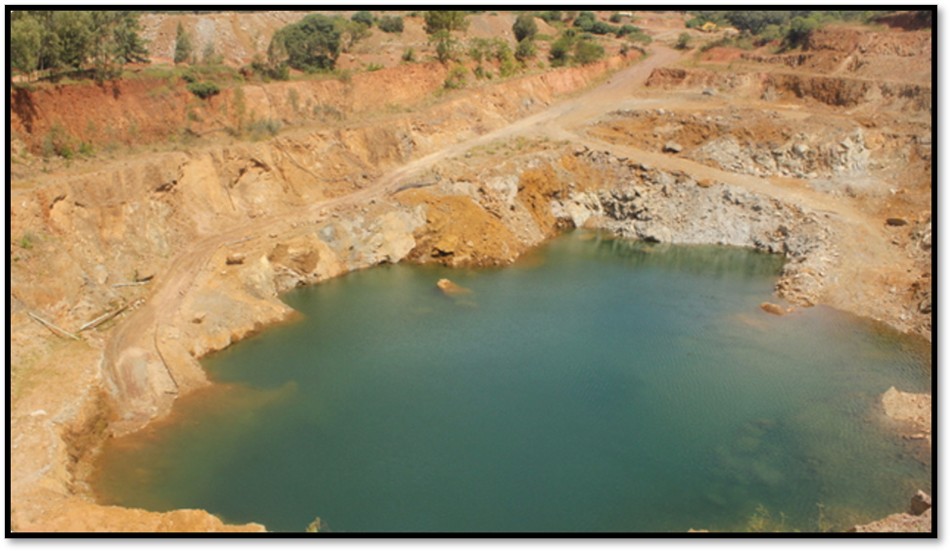
The Herald: Zimasco’s Railway Block East Mine lies abandoned and unsecure in Shurugwi
Rehabilitation of old mining areas not only prevents accidents, but reduces environmental damage
The problem in the past, and currently, is that without a mandatory rehabilitation fund, mining companies can leave abandoned mining pits that often fill with water, without any responsibility to solve the risks that come from disused pits. Around Shurugwi, local communities, domestic stock and wildlife face the constant hazard of unmarked and unprotected mining pits, as well as causing soil erosion and contaminated water sources.
The Shurugwi incident is a stark reminder of the need for mining companies to take responsibility for their environmental and social impacts that are leaving local communities exposed to unnecessary risks and the environment to long term damage.
At what stage is the Mines and Minerals Amendment Bill?
The bill was officially gazetted on 25 June 2025 under General Notice 1243A of 2025, reviving a reform process that had been delayed for over a decade.
It is currently undergoing parliamentary debate and public review. The Ministry of Mines and Mining Development has issued notices that the finalized text is still being prioritized for adoption to repeal and replace the 60-year-old Mines and Minerals Act [Chapter 21:05] It proposes to:
· Introduce a Mining Cadastre Registry: basically a computerised system to trace, record and transparently manage mining titles, which aims to eliminate boundary disputes and curb corruption.
· Strategic Minerals: Formal designation of high-value national assets (like lithium, uranium, and copper) that require specific state-miner agreements.
· Use-It-or-Lose-It Policy: Provisions to stop individuals or entities from speculatively holding onto mining claims without actively working them.
· Local Beneficiation: Stricter rules promoting local processing and "value addition" of minerals before export to secure domestic job growth.
· Environmental Accountability: Forcing mining companies to contribute directly to mandatory land restoration funds. The Mining Industry Environmental Protection Fund is formally established under Section 185 with its purpose to finance the remediation of environmental damage caused by mining operations, particularly where a responsible party is unable or unwilling to do so. Its funding sources include levies from non-compliant miners, insurance proceeds and other approved sources.
· Environmental Liability and Security: Miners are required to obtain insurance, financial guarantees, or other security to cover the cost of repairing environmental damage caused by their activities. Where a miner fails to secure such coverage, they must contribute to the Mining Industry Environmental Protection Fund by paying 0.1% of the gross value of their mineral production based on their latest royalty return.
What actions is the Ministry of Mines and Mining Development taking to tackle the problem?
The Ministry said it is applying pressure through several major channels:
· 1. Nationwide Enforcement Blitzes
In late 2026, the Ministry of Mines and Mining Development launched an aggressive, nationwide blitz targeting alluvial chrome mining operations and processing plants. They state the initial phases have zeroed in on major chrome-producing hubs in the Midlands, Mashonaland West and Mashonaland Central provinces. Under these inspections, operations that fail to comply with strict environmental and regulatory frameworks face immediate suspension and heavy financial penalties.
However, although the Ministry spokesman said the measures were designed to bring increased scrutiny to mining rights that have remained irregular, as well as operations extracting minerals without the requisite legal authority, the author of this article found no actual examples in the press of actual enforcement.
· 2. The Mandatory "Rehabilitate-Before-Moving" Rule
The government has explicitly mandated a strict sequence for mining operations: miners are legally required to reclaim and backfill all open pits before they are permitted to move to a new area. Provincial mining directors now require every chrome miner to appoint an official manager specifically tasked with overseeing the rehabilitation of the excavated landscape.
· 3. Threat of License Revocation
Under the newly introduced Responsible Mining Initiative, the government is tightening the legal framework to make environmental violations a ground for losing extraction rights. The Ministry of Mines has explicitly warned chrome operators that failure to abide by land rehabilitation directives will result in the immediate shutdown of operations and forfeiture of their mining claims. Furthermore, all miners with outstanding statutory obligations have been given strict deadlines—such as 31 December 2026—to fully regularise their rights or face closure.
· 4. Financial Accountability for Damage
The government has stated that all costs of land rehabilitation must be entirely borne by the individual or company that caused the degradation. High-profile interventions have already taken place; for instance, the government issued stoppage and rehabilitation orders against major operations—including foreign-backed firms like San He Mining—demanding total ecosystem restoration under the strict supervision of the Environmental Management Agency (EMA)
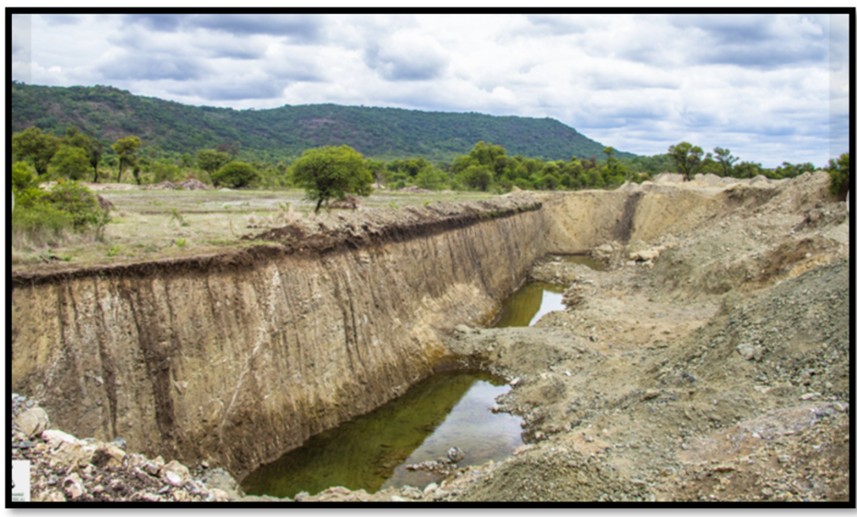
An abandoned chrome pit on the northern Great Dyke and the danger they represent
How do local environmental agencies (like EMA) enforce these laws on small-scale as well as large-scale miners?
The Zimbabwe Environmental Management Agency (EMA) states it takes a split approach to regulating chrome mining, tailoring its enforcement strategies to a miner's operational scale, financial capacity and legal status.
EMA states it divides its enforcement into two distinct paths balancing its approach between strict legal penalties for large corporations and simplified "carrots and sticks" to formalise small-scale operations:
1. Large-Scale Miners: Institutional Audits & Legal Stoppages
In theory large-scale chrome miners (corporate concessions, smelters and large open-cast foreign joint ventures) are monitored via corporate compliance, formal documentation, and aggressive legal penalties.
· The EIA Mandate: Large corporations are required to submit comprehensive, multi-volume Environmental Impact Assessments (EIAs) and deploy progressive, ongoing rehabilitation plans before a single shovel hits the ground.
· Quarterly Compliance Audits: EMA inspectors conduct routine, rigorous audits to review dust monitoring, waste disposal, and pit backfilling schedules.
· Environmental Protection Orders (EPOs): When large miners violate regulations, EMA issues formal EPOs that can instantly halt specific segments of an operation. For example, in a major nationwide crackdown, EMA slapped prominent operators like African Chrome Fields with immediate EPOs over dust emissions, completely stopping ore-truck movements until strict corrective measures were met.
· Financial and Claims Penalties: Because large companies have the capital to comply, EMA imposes heavy financial penalties for negligence. Under the government's latest mandate, failure to comply with an EMA order feeds directly back to the Ministry of Mines, risking the total forfeiture of their mining claims.
2. Small-Scale & Artisanal Miners: Simplified Tracks & "Blitz" Inspections
Enforcing laws on artisanal and small-scale miners (ASMs)—who often mine chrome along highway strips like the Shurugwi - Zvishavane road using open-cast methods - presents a different challenge because small-scale miners often operate informally and lack capital. EMA states it balances simplified legal requirements with incentives ("carrots and sticks") to bring them into the regulated framework. Historically, uniform rules pushed these capital-strapped operators into the illegal underground. EMA has shifted its strategy toward a mix of simplified compliance and targeted sweeps.
· The "Simplified" EIA / ESMP Document: Recognizing that small-scale miners cannot afford expensive environmental consultants, EMA slashed red tape. For miners with capitalisation under $25,000, EMA replaced the heavy EIA with a simplified Environmental and Social Management Plan (ESMP) Miners now fill out a template document and the review fee has been slashed to just $254 to lower the barrier to legal formalisation.
· Solid Waste & Hazardous Licences: Despite relaxing the paperwork, EMA strictly mandates that small-scale operators obtain Solid Waste and Hazardous Substance Licences. When miners tried to argue that their operations are too small to justify solid waste pricing, EMA flatly denied exemptions, stating that environmental protection is non-negotiable regardless of the business scale.
· Nationwide Inter-Ministerial "Blitzes": Because small-scale mines are highly scattered and often operate informally, routine auditing is difficult. EMA heavily relies on joint compliance sweeps conducted alongside the Ministry of Mines and Mining Development and local police (ZRP) Operators found using unapproved eluvial or alluvial mining techniques without proper setup authorizations face immediate site seizures, equipment confiscation and closure.
· The "Manager" Mandate: To tackle the epidemic of abandoned open pits left by small-scale chrome extractors, EMA and provincial mining directors now legally require small, registered syndicates to appoint an official manager. This manager is personally held liable for overseeing pit reclamation before the collective is permitted to move to a new mining area.
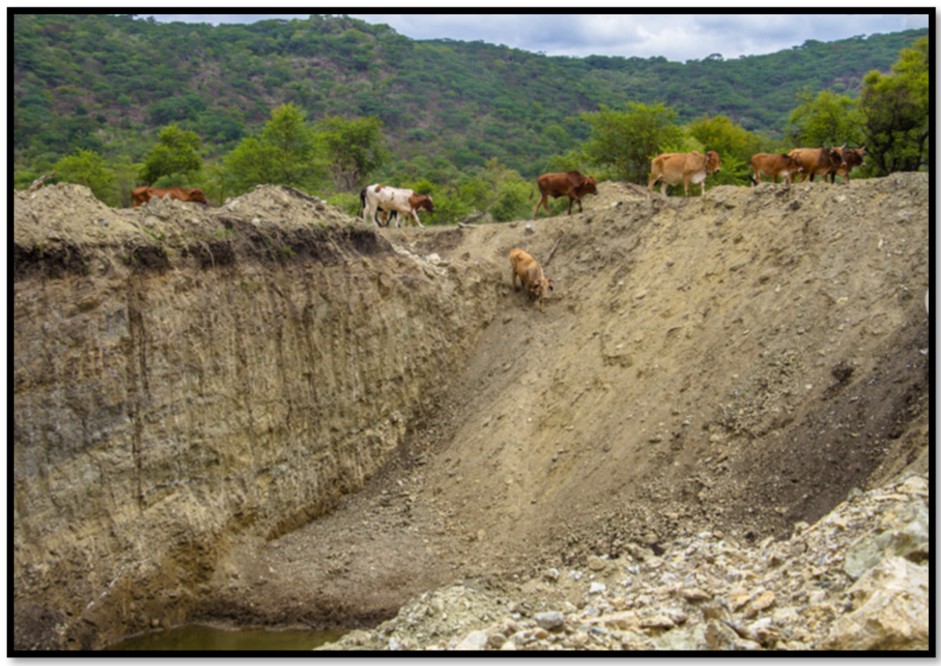
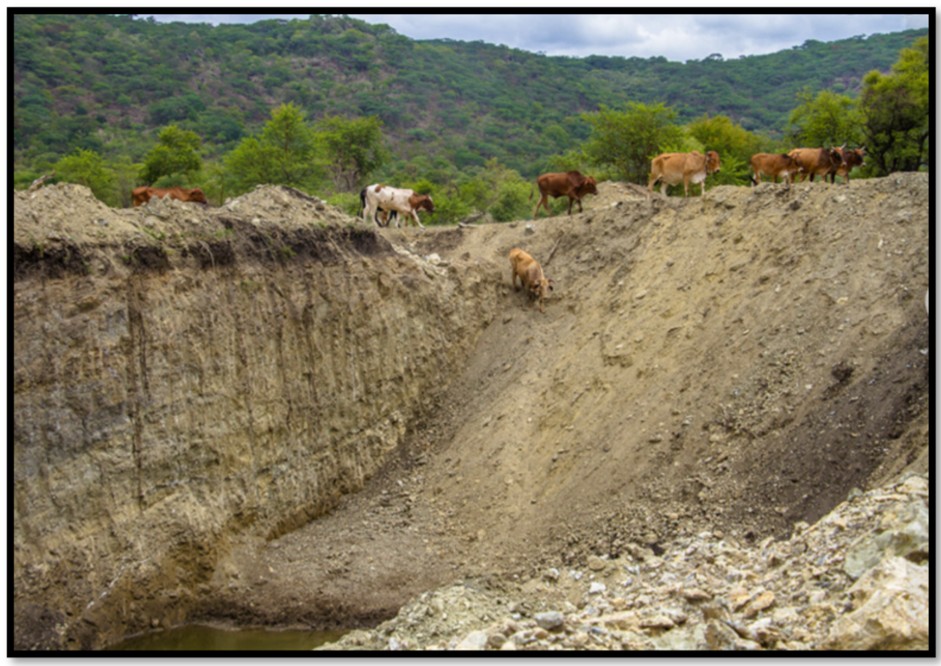
Cattle are drawn down the steep slopes of abandoned chrome pits in the Great Dyke in search of water
How do local communities use community monitors to blow the whistle on un-rehabilitated chrome pits?
In Zimbabwe's chrome-rich regions, local communities have shifted from passive victims of land degradation to active enforcers. Because the Environmental Management Agency (EMA) cannot be everywhere at once, residents in hubs like Shurugwi and Zvishavane use organized Community-Led Monitoring (CLM) networks to act as the ground-level whistleblowers against reckless mining.
They are actively encouraged and supported by civil society organizations like the Centre for Natural Resource Governance (CNRG)[11] and the Zimbabwe Environmental Law Association (ZELA)[12] these community monitors bridge the enforcement gap through specific, structured tactics:
1. Digital "Ground-Truthing" and Evidence Collection
Historically, when a community complained about an abandoned chrome pit, it was easy for a mining company to deny responsibility or for regulators to ignore the report due to a lack of data.
· GPS and Photo Tagging: Now trained community monitors can use smartphones to document un-rehabilitated sites in real time. They log the exact coordinates of open pits, map their proximity to critical infrastructure, like the Shurugwi - Zvishavane highway or local schools, and photograph the specific machinery or ore trucks tied to the offending syndicate.
· EIA Verification: Whistleblowers use a process called "EIA Ground-Truthing." Under Zimbabwean law, every major mine must display or possess an Environmental Impact Assessment (EIA) certificate. Community monitors engage directly with mining personnel to demand proof of these certificates; if a company or individual miner cannot produce them, monitors compile an immediate red-flag dossier for EMA.
2. Direct-Line Reporting to EMA
EMA officials openly acknowledge that community monitors make their jobs significantly easier by providing high-quality, actionable data.
· Voluntary Environmental Watchdogs: Rather than acting as hostile vigilantes, monitors act as local eyes and ears. When a chrome miner attempts to leave an area without backfilling a pit, monitors send their documented evidence directly to provincial EMA directors.
· Triggering Rapid-Response Audits: Because the community provides ready-made proof of violation, EMA can bypass prolonged preliminary investigations and immediately deploy inspectors to issue Environmental Protection Orders (EPOs) or site-stoppage directives.
3. Strategic Legal and Parliamentary Petitions
When local chrome operators ignore both the community and the low-level regional regulators, community monitors can escalate the whistleblowing to a national level.
· Parliamentary Petitions: Working with legal networks, community watchdogs exercise their rights under the Zimbabwean Constitution to submit formal petitions directly to Parliament. For example, residents in Shurugwi successfully petitioned the Parliamentary Portfolio Committee on Environment, detailing how unchecked artisanal and corporate chrome extractors were destroying local ecosystems.
· Public Litigation Threat: By systematically documenting the damage, community groups build tight legal cases. If EMA or the Ministry of Mines delays enforcement, watchdogs threaten to take the mining companies to court for violating Chapter 4 of the Constitution, which guarantees every citizen the right to a clean, safe and healthy environment.
4. Joint "Carrot and Stick" Negotiations
Whistleblowing isn't always about getting miners arrested - it is frequently used as leverage to force physical rehabilitation. Community watchdogs leverage their data to bring miners, traditional leaders (chiefs and headmen) and the EMA to the table. In successful cases, monitors have mobilised both the community and the miners to work together—forcing companies to supply the heavy machinery required for backfilling while locals assist in re-planting trees.
Are there any specific case studies in Zimbabwe where community evidence successfully forced a chrome mine to shut down?
Local communities frequently conflict with chrome miners over severe land degradation, livestock loss through abandoned open cast mining pits and pollution (such as in the Mhondongori and Mapanzure communities in Zvishavane, or in Shurugwi) the most definitive legal and community-driven shutdowns involve specific rural resistance campaigns channelled through legal challenges, local mobilization, alliances with traditional leadership and the assistance of NGO’s such as CNRG and ZELA.
The Chiromo Village Case (Zaka District)
In 2025, a landmark case of successful community action occurred in Chiromo Village, Zaka, where local villagers collectively mounted a direct legal and grassroots challenge against Bailzone Mining (Pvt) Ltd.
· The Action: The mining company held 60 mining certificates covering massive stretches of land around the rural village. Rather than accepting the encroachment, four local villagers—Gideon, John and Million Rushinga, alongside Pride Garauzive - mounted a legal challenge acting on behalf of the community. They meticulously documented and presented evidence showing that the company’s heavy opencast operations directly encroached upon their homesteads, agricultural fields, grazing lands and sacred ancestral graveyards
· The Outcome: Justice Zisengwe sided with the villagers, ruling that the community’s evidence proved the chrome miner was directly violating their constitutional rights to property, culture, and a safe, clean environment and ordered the chrome mining company to shut down operations and down tools immediately.
The Mavuradonha Wilderness Resistance (Muzarabani/Guruve)
Another high-profile instance involved intense community and environmental advocacy targeting San He Mining, a company that established chrome mining operations along the Utete River within the protected Mavuradonha Wilderness.
· The Action: In the protected Mavuradonha Wilderness Area, local communities, conservationists, traditional leaders and local safari operators partnered with civil society organizations like the Zimbabwe Envoronmental Law Association to fight opencast chrome mining. They provided community evidence of land degradation, severe river siltation resulting in flooding risk, damaged wildlife fencing and destroyed eco-tourism infrastructure.
· The Outcome: The localized uproar and direct complaints successfully forced the Office of the President and Cabinet (OPC) to issue an official eviction and stop-work order. Although enforcement challenges occurred with the miner attempting to defy orders, the direct community push successfully stripped the operation of its local legitimacy and forced government intervention. Finally San He Mining was forced to halt operations and ZRP police impounded their heavy machinery.
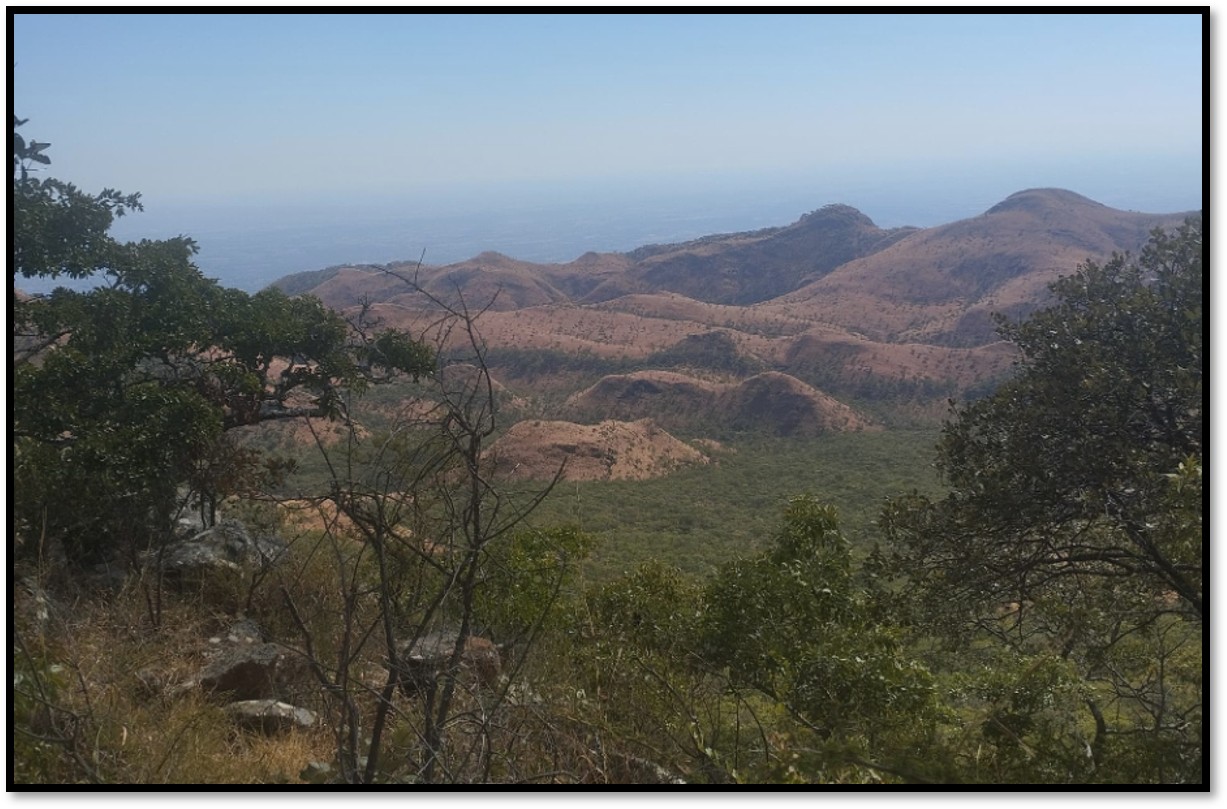
Mavuradonha Wilderness Area
The Uzumba Granite Mining Case (2021–2022)
Heijin Mining Company, a Chinese firm was awarded a lease to mine black granite across a 300-hectare concession in Uzumba, Mashonaland East. This concession threatened to displace nearly 90 families, desecrated local graves and destroyed grazing land without proper community consultation.
· The Action: The Uzumba - Kaseke community fiercely resisted the development. Local leaders and villagers refused to sign compensation agreements and actively documented the lack of an initial Environmental Impact Assessment (EIA) or legitimate community engagement. They brought heavy local media attention to the project and physically blocked attempts to clear the land.
· The Outcome: Following a massive public outcry and political pressure, the Ministry of Mines and Mining Development officially cancelled Heijin’s mining claim in late 2021. The mine was forced to stop operations and withdraw entirely, marking a rare, absolute victory for rural land rights.
Goromonzi Lithium Mine Closures (2023)
Following the global lithium boom, dozens of small-to-medium scale operators flooded the Goromonzi district, setting up open-pit lithium mines and processing hubs near residential areas without obtaining legal approvals.
· The Action: Local residents banded together to report structural damage to their homes from blasting, severe dust pollution and heavy truck traffic ruining local roads. They engaged the EMA, presenting photographic evidence and logs of illegal mining expanding directly onto their communal farmlands.
· The Outcome: The EMA carried out rapid enforcement inspections based directly on the public outcry. They issued immediate prohibition orders, shutting down two major lithium mines and issuing heavy fines for operating without valid EIA certificates
Oxidise and Botha Mines Shutdown, Bindura (2024)
Oxidise Mine and its joint-venture partner, Botha Mine had a medium-scale processing plant and mining operation causing extreme environmental degradation, producing excessive dust, destroying public roads and introducing chemical risks to the local water supply.
· The Action: Surrounding communities petitioned the local government and environmental regulators, providing evidence of damaged infrastructure and showing that the mine lacked a sustainable rehabilitation plan.
· The Outcome: The government intervened directly based on these community safety and environmental compliance reports. The Ministry of Local Government ordered an immediate suspension of all operations, stating explicitly that economic expansion could not occur at the expense of public health and safety.
Mutorashanga "Green Pool" Petition
In Mutorashanga, community members organized and submitted formal petitions to parliament when a firm, Amazon (Pvt) Ltd, was granted rights to mine chrome in the historic "Green Pool" area. The community's evidence that the mine would destroy invaluable local heritage and tourism facilities forced a rare joint investigation by the Ministries of Mines and Mining Development, Environment, and Home Affairs to stall the project.
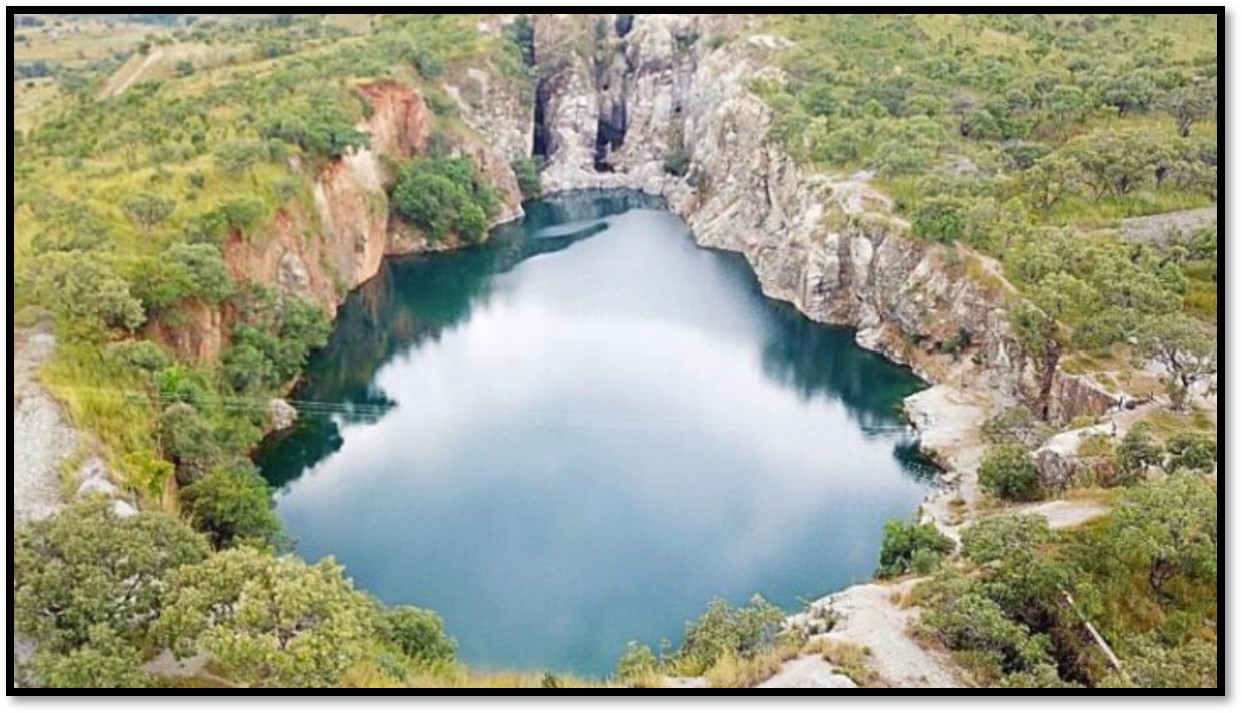
Mutorashanga Quarry ‘the green pool’ – chrome deposits turn the water green
Are there structural barriers to Community Action?
Yes, While these above case studies highlight victories, community efforts face systemic hurdles across Zimbabwe in the main chrome mining areas of the Great Dyke including Zvishavane, Shurugwi, Lalapanzi and Mutorashanga:
· The Tribute System: Large multinationals like Zimasco (backed by Sinosteel Corporation) lease out narrow seams to small-scale contractors or Chinese firms under a "tributary system." When communities complain about specific open-cast pits being hazardous, operations are often simply abandoned without rehabilitation, leaving open hazardous pits.[13]
· Policy Gaps: While the Environmental Management Act (EMA) exists on paper, operational enforcement remains weak unless communities organize proactive legal actions or draw direct media attention.
· Gaping Alluvial Trenches: As highlighted by documented findings in the northern Great Dyke and Darwendale, miners frequently dig straight down into the shallow chromite seams, creating vertical walls that can stand several metres deep without any protective barriers or fencing.
· Water Traps & Siltation: These pits rapidly fill up with stagnant water during Zimbabwe's rainy season. As shown in the field evidence, they create severe drowning hazards for local livestock and children while cutting off natural riverine flows.
· Massive Waste Rock Dumps: The extraction process leaves behind extensive mounds of overturned topsoil and rock piles. Because operators under the "tribute system" often abandon the claims once the easiest seams are depleted, these areas remain barren and completely un-rehabilitated, makiing the surrounding land useless for local agricultural communities.
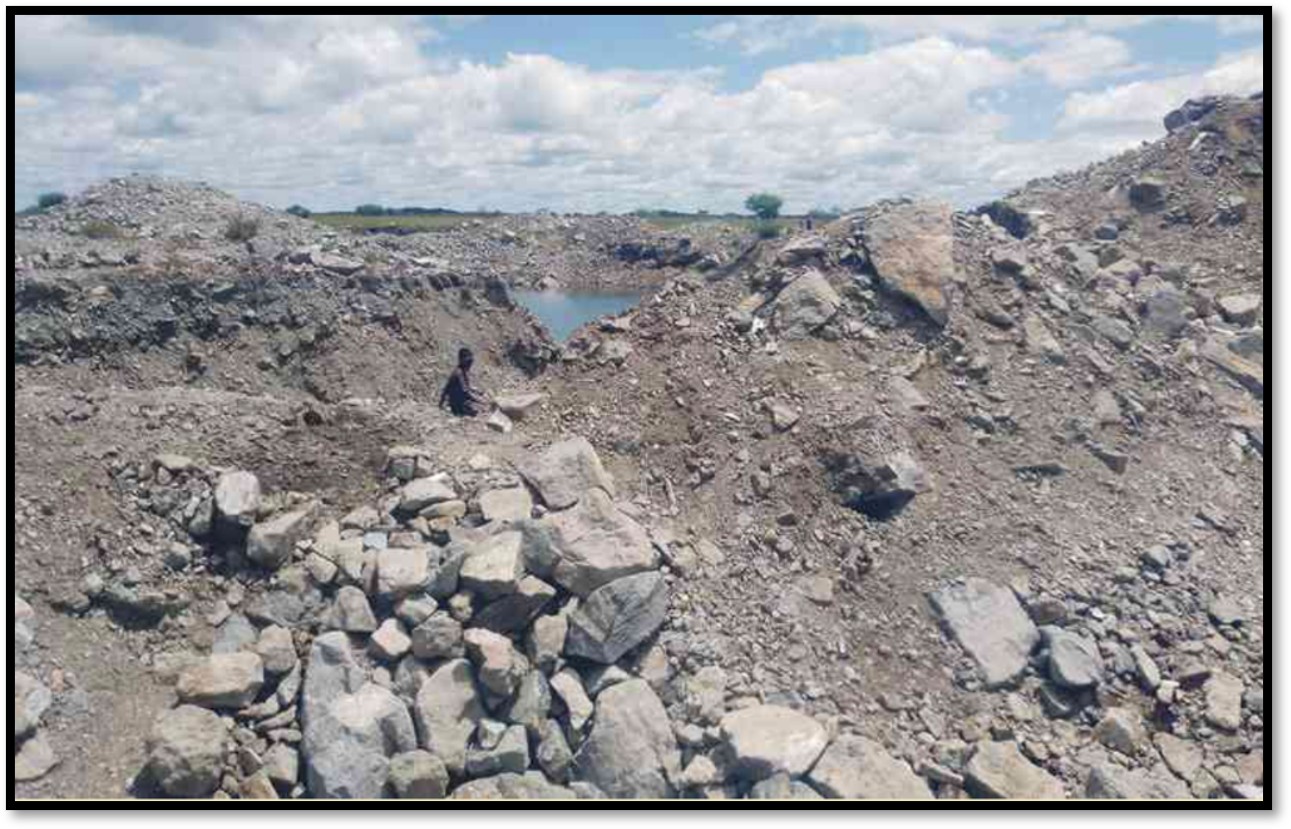
Zimbabwe Independent newspaper: massive waste rock dumps
The limits of success: The Shurugwi (Boterekwa) stalemate
While some communities have managed to achieve temporary shutdowns, long-term enforcement remains difficult. For instance, in Shurugwi, local residents, traditional chiefs and environmental groups actively protested and used satellite evidence to show that Chengxi Investments had destroyed 12 square kilometres of a pristine tourist attraction via open-cast mining.
Although the EMA initially declared the mining illegal and ordered a shutdown, the company successfully bypassed the local order by obtaining specialized permissions directly from the Ministry of Mines and Mining Development.
This highlights the ongoing battle between community-backed environmental evidence and high-level political backing as Zimbabwe Chenxi Investments (Private) Limited is chaired by Collins Mnangagwa, son of President Emmerson Mnangagwa.
Have there been any success in prosecuting small-scale miners on the Great Dyke?
Enforcement along the 550km Great Dyke is historically challenging due to complex subcontracting "tribute" systems, several prominent case studies demonstrate how the government has successfully secured convictions and penalties against small-scale and artisanal chrome operations. When prosecutions of small-scale operations take place they often relate to environmental devastation (specifically along transit corridors) and mineral smuggling / under-declaration.
The Shurugwi-Zvishavane Highway Crackdown
One of the most widespread clampdowns occurred along the Zvishavane-Shurugwi highway, a vital transport corridor cutting right through the Great Dyke.
· The Action: Small-scale chrome miners using rudimentary, rapid extraction methods dug deep open-cast trenches directly adjacent to the highway reserve. This caused structural instability to public roads and created massive pits that filled with water, killing local livestock.
· The Outcome: Following a cabinet directive, the Environmental Management Agency (EMA) partnered with local police to freeze all highway extraction. Miners who ignored the 21-to-30-day structural repair orders were systematically prosecuted under the Environmental Management Act (Chapter 20:27). The Zimbabwe Miners Federation (ZMF) conceded the criminality and multiple small-scale operators faced severe state fines and immediate asset seizures to force compliance.
The Mvuma-Zvishavane Rail Line Sabotage Cases
Artisanal chrome and gold miners have repeatedly targeted the railway reserves of the Great Dyke, leading to high-stakes criminal convictions.
· The Action: Small-scale operators frequently use heavy earth-moving equipment or manual digging tools directly underneath or adjacent to National Railways of Zimbabwe (NRZ) tracks to access shallow chrome seams and gold deposits, destroying track stability.
· The Outcome: In landmark cases prosecuted through the Mvuma Magistrates Court, the state began charging artisanal miners under the strict Railways Act rather than just basic mining infractions. In one case the state secured a five-year mandatory imprisonment sentence for a miner caught extracting minerals beneath the tracks. This strategy of treating small-scale encroachment as economic sabotage has significantly increased the severity of gaol sentences.
Claim encroachment and illicit ore seizures
The High Court and regional magistrates courts regularly prosecute small-scale operators who use fraudulent contracts or lack registration to siphon chrome ore from legitimate concessions.
The Darwendale Encroachment Case
In Darwendale (middle Great Dyke) independent operators frequently attempt to strip chrome ore from registered concessions.
· The Action: a small-scale distributor siphoned unauthorized chrome ore from concessions designated as VAN 17 and DIVIDE leaving behind deep, un-rehabilitated pits that permanently ruined previously arable land and created safety hazards for local livestock and residents.
· The Outcome: The state invalidated the defensive claims and upheld a major financial judgment, holding the illegal extractors fully accountable.
The Darwendale Massive Seizure
· The Action: The single largest operational case currently in the legal system involves a 1,500-tonne stockpile of chrome ore concentrate discovered in the Darwendale region of the Middle Dyke.
· The Outcome: The stockpile was legally embargoed by state inspectors and the operators are facing prosecution for unauthorized loading sites, lack of valid consignment notes and attempting to move bulk strategic minerals outside of the mandatory "mine-to-market" traceability system.
The Current State Focus: Crackdown on Unregistered Wash Plants (2026)
The Minerals Marketing Corporation of Zimbabwe (MMCZ) and police inspections (ZRP) have identified 36 completely unregistered chrome wash plants operating along the Dyke. Driven by high international demand for ferrochrome - particularly from Asian markets - unscrupulous miners syndicates deploy makeshift processing infrastructure under the radar, triggering severe environmental degradation and regulatory evasion.
Chrome wash plants utilize a low-capital process to upgrade raw eluvial or alluvial chromite ore into high-grade concentrates. Because the investment cost is relatively low, unregistered operators easily bypass state oversight. These unvetted wash plants typically process ore extracted via rudimentary hand-digging by local artisanal miners. The high-grade concentrate is then funnelled to local smelting plants or mixed into registered supply chains.
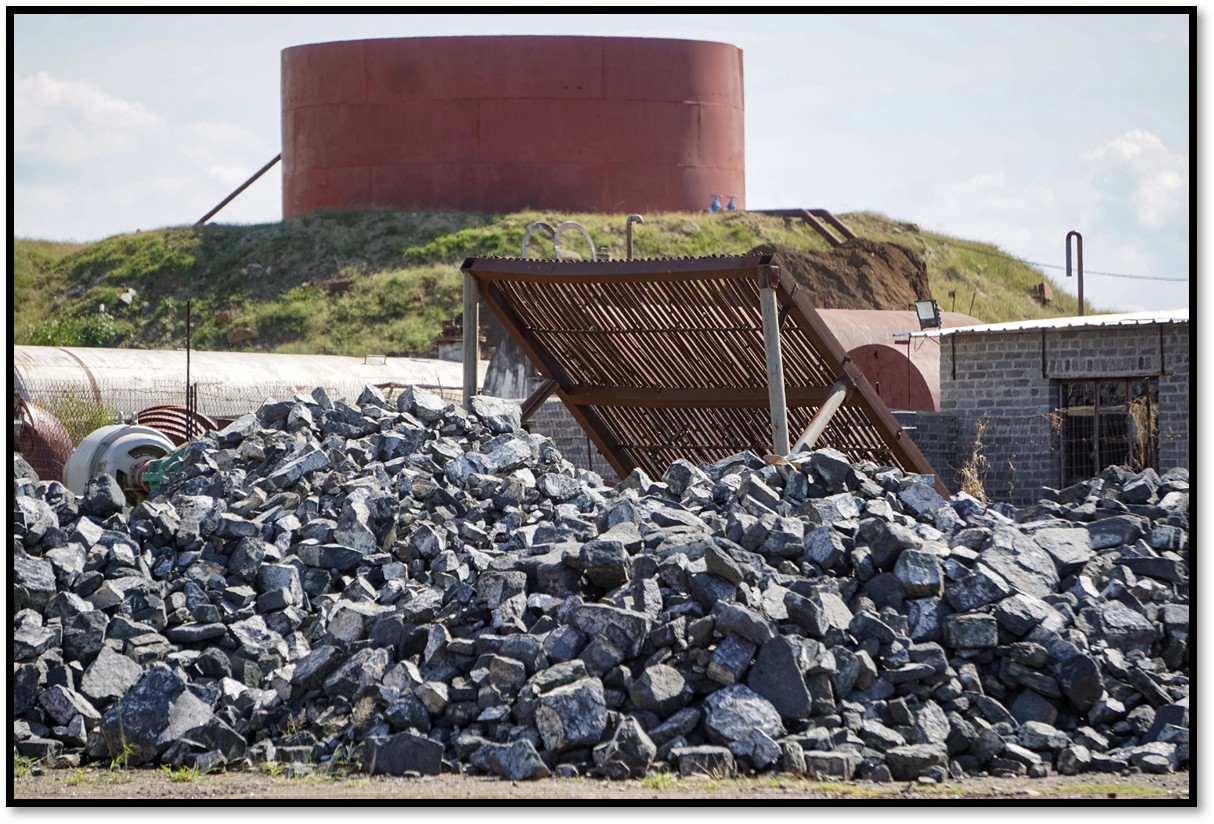
Vimbai Chinembiri, GPJ Zimbabwe: section of a Chinese chrome-washing plant
Mineral-export violation cases
The Minerals Marketing Corporation of Zimbabwe (MMCZ) and the Ministry of Mines and Mining Development are currently processing 19 active mineral-leakage and export-violation cases through the courts. According to The Herald 13 of these 19 active cases involve lithium and chrome. Small-scale processing operators are being prosecuted for under-declaring the presence of high-value associated minerals (like platinum group metals found within the Great Dyke's chromite) during export documentation. The actual mechanics and specific case details being processed through the courts include:
Quota-hijacking and forgery heist
Because Zimbabwe banned the export of raw chrome (both lumpy and concentrates) to promote local processing plants, companies must secure strict export quotas from the Ministry of Mines. But court filings exposed a scheme where corrupt border officials and syndicates targeted lapsed export licences belonging to legitimate, law-abiding chrome concentrate exporters.
The "Missing Assay" under-declaration scheme
The active cases involve small-scale processing plants and wash plants located in chrome-bearing areas such as Lalapanzi, Ngezi and Mutorashanga.
Syndicates have been declaring export shipments as low-value base chrome or silica. However, mineral assays conducted by the MMCZ revealed that the shipments secretly contained high-value associated minerals such as Platinum Group Metals or PGMs naturally found within the Great Dyke's chromite. By omitting these metals, exporters avoided paying the true royalties and taxes owed to the state.
The "Photocopied Paperwork" border con
· The Action: A cluster of cases processing through the regional magistrate courts stems from interceptions at transit checkpoints and borders such as Beitbridge. Independent transport operators have been caught attempting to cross the border using missing export documents, duplicated / photocopied paperwork or fake invoices to move bulk lithium and chrome concentrates.
· The Outcome: Closer integration between the Zimbabwe Revenue Authority (ZIMRA) and police (ZRP) to review and examine the paperwork relating to mineral shipments and the rooting out of corrupt Customs officers who are willing to take bribes.
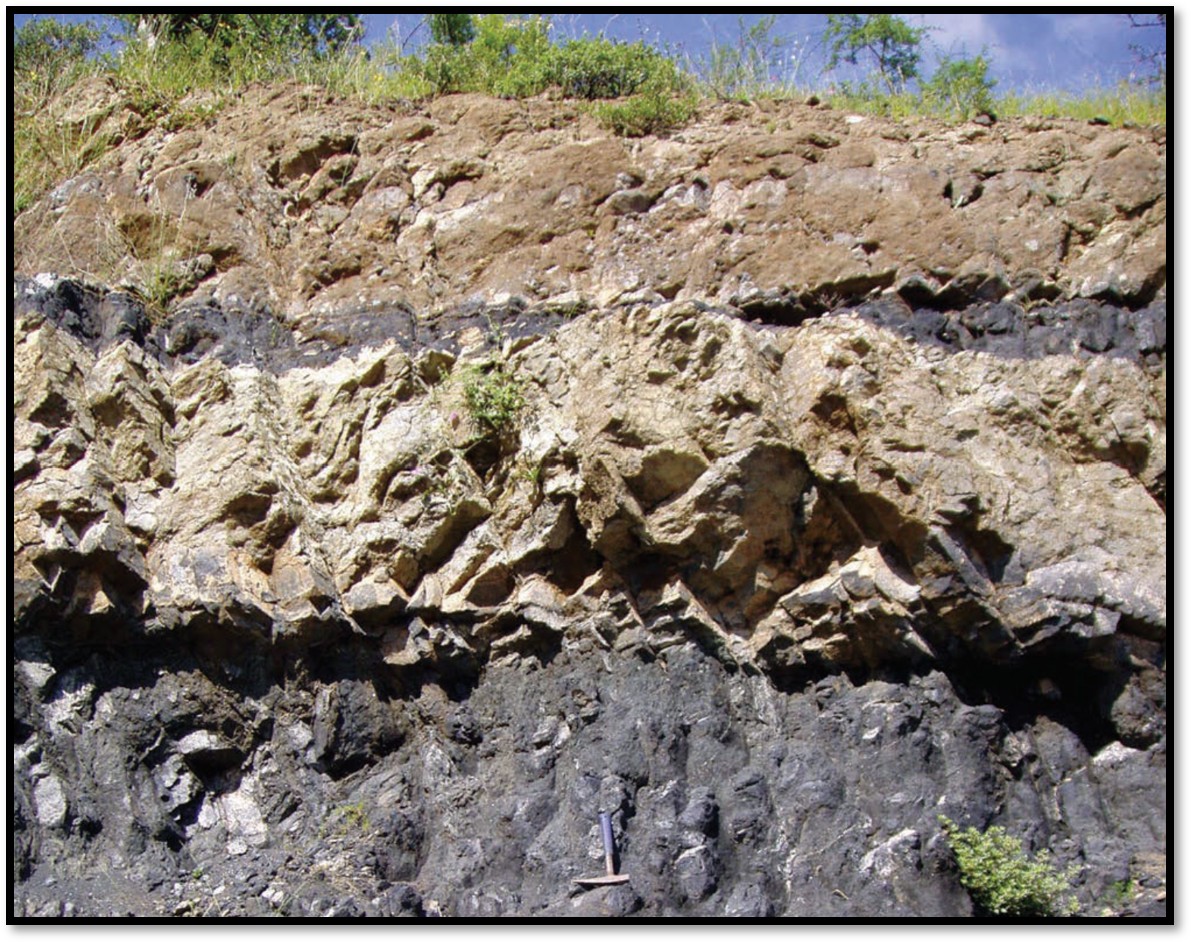
Cross-section of a chrome seam with overburden in an open-pit
What are Zimbabwean citizens constitutional rights used by rural Zimbabwean communities to win these court battles against chrome miners?
Currently when rural communities in Zimbabwe challenge chrome miners in court, they have to bypass the outdated Mines and Minerals Act which historically prioritized mining extraction over surface rights. To do this, public interest lawyers and communities use the Declaration of Rights in the Constitution of Zimbabwe.
The primary constitutional rights used by communities, as seen in landmark rulings like the Bailzone Mining case in Chiromo Village, include:
1. The Right to a safe environment (Section 73)
This is the most powerful tool for halting open-cast chrome mining. Section 73 guarantees every Zimbabwean the right to an environment that is not harmful to their health or well-being and orders the prevention of pollution and ecological degradation.
Chrome mining leaves deep, dangerous alluvial pits that trap livestock and children and causes toxic runoff into local rivers. In court, villagers argue that a company operating without a valid Environmental Impact Assessment (EIA) or failing to rehabilitate land is a direct, actionable breach of Section 73.
2. Property and land rights (Section 71)
Historically, communal lands were treated as government land leaving rural villagers with weak legal standing against mining claims. However, Section 71 protects against the arbitrary removal of property.
Villagers use Section 71 to protect their homesteads, agricultural fields and grazing lands. In the Bailzone ruling, Justice Zisengwe confirmed that a miner’s paperwork cannot automatically override the customary surface rights of the communities living on the land, establishing that mining cannot proceed without community consent.
3. Cultural and traditional rights (Sections 16 and 63)
The Constitution directs that the government and all citizens preserve Zimbabwe’s cultural heritage (Section 16) and guarantees the right to choose and participate in a cultural life (Section 63)
Chrome seams can cut straight through rural graveyards and sacred ancestral sites. In the Zaka district case, the four lead villagers successfully argued that encroaching on ancestral burial grounds violated their spiritual and cultural rights, weaponizing heritage to legally restrict the mining boundary.
4. The Right to food and water (Section 77)
Section 77 protects the right to safe, clean and potable water and sufficient food. Often heavy machinery used in chrome mining diverts streams or dumps silt into community water points. Communities argue that ruining pastureland destroys their livestock (food security) and polluting local rivers cuts off their primary water source, directly infringing on this right.
5. The Procedural Win: administrative justice (Section 68)
In addition to the above rights, communities use Section 68 (Right to Administrative Justice) to prove that the mining permits themselves were issued unlawfully. This allows villagers to challenge the Provincial Mining Directorate for issuing certificates without a proper community consultation process or local Rural District Council approval, rendering the mining claims procedurally invalid.
Conclusion
Clearly there is an urgent need for large mining companies and small-scale and artisanal miners (ASM) to take responsibility for the environmental and social impacts of their operations leaving dangerous, abandoned open cast mining pits.
If implemented, the Mining Rehabilitation Fund could provide a systematic approach to ensuring that mining companies restore mined areas, reducing the risk associated with abandoned pits. By making rehabilitation mandatory and holding companies financially accountable, Zimbabwe can prevent future tragedies and ensure that mining activities are conducted in a responsible and sustainable manner. The Mines and Minerals Amendment Bill, with the inclusion of provisions for a Mining Rehabilitation Fund, is a critical step in this direction.
References
Sydney Kuwadza. 4 March 2015. The Herald. Shurugwi’s pits of death and despair. https://www.heraldonline.co.zw/shurugwis-pits-of-death-and-despair/
Rudairo Mapuranga. 6 March 2025. Five Bodies retrieved from Disused Chrome Pit: Highlighting Need for Rehabilitation. Mining Zimbabwe. https://miningzimbabwe.com/five-bodies-retrieved-from-disused-chrome-pit-highlighting-need-for-rehabilitation/
Brenna Matendere/Mary Taruvinga. 25 March 2026. Makanday. On hollow ground: Zimbabwean town on the brink of collapse. https://makanday.org/on-hollow-ground-zimbabwean-town-on-the-brink-of-collapse/
By Elma Zhoya | Mar. 17, 2023. The struggle for survival leaves Darwendale environs scarred. https://staging.thestandard.co.zw/theindependent/local-news/article/200008943/the-struggle-for-survival-leaves-darwendale-environs-scarred
New Zimbabwe. 13 March 2022. Chinese scramble for Zim’s Chrome leaves Communal Lands Scarred. https://www.newzimbabwe.com/feature-chinese-scramble-for-zims-chrome-leaves-communal-lands-scarred/
Notes
[1] Shurugwi formerly Selukwe
[2] Zvishavane formerly Shabani
[3] Founded in 1899, Shurugwi lies on the southern edge of the Great Dyke, a striking geological formation running north–south for about 550 km through the heart of Zimbabwe, just west of Harare. It consists of narrow ridges and hills that rise higher towards the north, reaching up to 460 m above the Mvurwi Range.
This ancient structure, formed over 2.5 billion years ago, is one of Earth’s most remarkable features. Geologically, it is a lopolithic, Y-shaped layered intrusion, stretching 3–12 km wide, and divided into four main sub-chambers: Musengezi, Darwendale, Sebakwe, and Wedza.
The Great Dyke is loaded with minerals, hosting vast deposits of:
• Platinum Group Metals (PGMs): platinum, palladium, rhodium, iridium, osmium.
• Chromium: world-class chromite with high chromium-to-iron ratios.
• Nickel, Copper, Cobalt, Gold, Silver, Iron, Vanadium.
• Industrial minerals like asbestos and mica.
The most important zone is the Main Sulphide Zone (MSZ), which contains rich concentrations of PGMs and base metals, making it a strategic global resource.
A large number of mining companies are located along the Dyke, including Zimplats, Mimosa, and Unki Mine, exploiting its high-grade ores. It passes through key mining towns such as Zvishavane, Shurugwi, Kwekwe, and Chegutu, providing infrastructure and labour.
The Great Dyke is both a geological wonder and the backbone of Zimbabwe’s mining industry, ranking among the world’s most important sources of platinum and chrome.
[4] On hollow ground: Zimbabwean town on the brink of collapse
[5] Chenxi is also gold-mining at Dunraven Falls area nearby and also in the Wanderer Mine area
[6] Zimasco has chrome mining operations at Shurugwi, Mashava, Guinea Fowl, Lalapanzi, Ngezi and Mutoroshanga
[7] Agrarian transformation and artisanal and small-scale chrome mining on Zimbabwe's Great Dyke geological formation
[8] Agrarian transformation and artisanal and small-scale chrome mining on Zimbabwe's Great Dyke geological formation
[9] The Mkodzongi and Mujere article was based on the Mapanzure area, but this business model is widely applicable in Zimbabwe
[10] The Independent Newspaper, 12 October 2020
[13] Mkodzongi and Mujere in their article ‘Agrarian transformation and artisanal and small-scale chrome mining on Zimbabwe's Great Dyke geological formation’ write that tribute mining arrangements were the dominant contract mining arrangement in the 1980s and 1990s, and these arrangements were at the core of artisanal and small-scale chrome mining. These arrangements were exploitative because they tied the tributors (individuals and cooperatives) to the grantors (large-scale mining companies that owned the claims). The contracts restricted tributors’ access to other markets since they were contractually obligated to sell their ore exclusively to the grantor (ZIMASCO or Zim Alloys)