
- Entry fee
- n/a
This article follows an earlier one (Alfred Beit 1853 – 1906) on his life and career.
Sir Alan Munro, past chairman of the Beit Trust wrote in the foreword to Alfred Beit: the Hamburg Diamond King that “Alfred Beit’s most notable act of philanthropy was the provision through his will, following his death in 1906, of a generous endowment to be dedicated to the establishment of a trust fund for the development and well-being of the territory then known as Rhodesia. Described as being ‘for the benefit of the people’ this bequest was, particularly for its time, an enlightened act, consistent with what Alfred Beit regarded as Britain’s beneficent imperial mission in Africa. In accordance with his wishes this endowment, known as the Beit Trust, continues to play a significant role in Zimbabwe, Zambia and Malawi. In its initial years of operation the Trust concentrated its activities upon the provision of communications systems – railways, telegraphs, bridges and river causeways, and in due course aviation facilities. These works created the foundations of a transport network, much of which, such as the spectacular bridges over the Limpopo, Zambesi and Sabi rivers, continues to serve today.”
What follows is a brief summary of Beit’s career and then a look at his legacy that continues to the present time. Although one of the richest men of his generation he always kept out of the limelight even as a Randlord probably because he was regarded as nouveau riche by the establishment and also because of his German and Jewish origins. The scale of his benevolence has been overlooked, this maybe because after his death in 1906 the two World Wars tended to obscure the scope of his legacy to not only present-day Zimbabwe, but also to England and Germany.
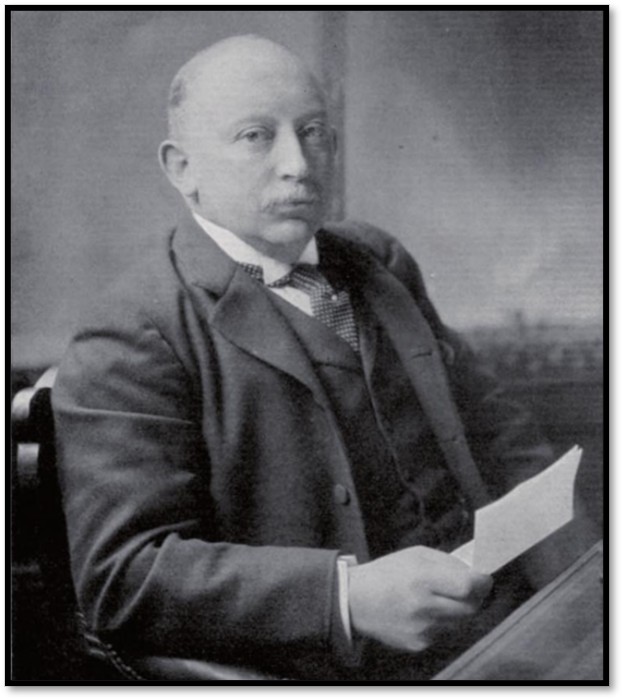
Alfred Beit (1853 – 1906)
Lionel Phillips writes, “Rhodes could never have achieved what he did at Kimberley nor in Rhodesia without Beit, and Beit in turn might have landed himself in terrible financial troubles but for the wise head, the cool judgment, and the clear vision of Wernher.”[1]
Alfred Beit’s success starts at Kimberley
Alfred’s father, Siegfried Beit, a silk merchant and his wife, Laura Hahn Beit, had six children, of which Alfred was the second oldest born on 15 February 1853. He was not an inspired student, described as average,[2] generally quite shy and retiring, physically quite small[3] and seemed destined for a career in business. At eighteen years old he was apprenticed to Lippert & Co, diamond merchants in Hamburg for three years and after a year’s military service spent a further year with a diamond merchants firm in Amsterdam. In 1875 David Lippert, who owned a diamond and wool trading business in South Africa, sent him to source diamonds at the recently discovered diamond fields at Kimberley in Cape Colony.[4]
By 1872 at Kimberley between 28,000 - 50,000 people crowded in to what had been open country as recently as 1869.[5] Knowing what price diamonds fetched in Europe gave Beit a good reputation for buying diamonds fairly, quickly, and accurately. In 1879 with borrowed money from his father he set up his own diamond firm, initially in a tent. He became firm friends with two other diamond traders - Cecil Rhodes and Julius Charles Wernher. In 1880, the French diamond dealer Jules Porgès recognised Beit’s talents and gave him a position in Porgès & Cie before moving to Kimberley himself.
At the same time Beit was organising the finance behind Rhodes’ plan to amalgamate the Kimberley mines into De Beers Consolidated Mines Ltd with Beit investing £250,000 of his own money. Only with Beit at his elbow did Cecil Rhodes find it possible to work out the last financial details of his gigantic plan and to prepare for every contingency.[6] Dr Hans Sauer writes, “I was amazed at the ease, celerity and accuracy with which he calculated the exact value of any business proposal submitted to him. He was a complete master of figures, and his brain could arrive at correct results in dealing with the complicated mass of figures almost in a flash.”[7] In May 1888 Rhodes, Barnato, Frederic Stow and Beit were made ‘Life Governors’ of De Beers Consolidated Mines Limited with each entitled to one-quarter of net dividends after a 36% dividend and in the same year he became a partner of Jules Porgès & Co. Beit was now one of the big players at Kimberley.
In 1888 – 9 Beit gave Rhodes crucial support with the founding and financing of the British South Africa Company and was made a director. Beit had a shareholding worth £34,000 and jointly with Rhodes a further £11,000. (Rhodes held shares worth £75,000, De Beers held £200,000, Gold Fields of South Africa Ltd nearly £100,000 and the Exploration Company £75,000)[8] Even if Beit preferred to stay in the background Rhodes could not have proceeded with the occupation of Mashonaland and later Matabeleland without Beit’s financial backing. Willingly or not, Beit became one of the founders of Rhodesia (now Zimbabwe) and it was his family connection with Eduard Lippert that secured the Lippert concession.[9]
Beit as a Randlord
In 1886 Beit sent Lionel Phillips to inspect the goldfields at Barberton. Phillips gives a vivid description of the journey by coach, “We slept sitting bolt upright and dozed familiarly on each other’s shoulders, with an extra jerk occasionally to restore consciousness and relieve our neighbour.”[10] They crossed the Witwatersrand, then unknown as a goldfield, although Fred and Harry Struben had been mining gold on the farm Wilgespruit since 1884 but not on the ‘banket’ deposits of the main reef. Phillips describes the area as treeless and desolate and “Boers lived, or rather eked out a wretched existence, with a few sheep and goats that had to be moved to the low country in winter to escape the inclemency and withered grass of that high plateau. One could at that time have bought large farms of 10,000 acres and more for £200 apiece. And through those inhospitable areas ran the greatest beds of gold-bearing conglomerates in the world!”[11]
Wernher, Beit & Company had established the firm of H. Eckstein & Company at Johannesburg when gold was discovered on the Witwatersrand in 1886 and Beit offered Phillips a job as manager of the Randfontein Estate. Phillips writes, “Of all the men I had become acquainted with at Kimberley, none was more genial and kind, none more brilliant in capacity, more bold in enterprise, or more genuinely respected and admired than Alfred Beit.”[12]
They moved quickly to buy farms and mining rights. However, many early investors sold their shareholdings when the cost implications of deep-level mining and the first sulphide ores were encountered. New and improved metallurgical processes were tested including the MacArthur-Forrest cyanide process resulting in improved gold recovery rates and reduced mining costs. Mining experts advised on the best techniques for deep-level mining and international financiers including Porgès & Cie and Rothschilds were persuaded to provide the capital to exploit the Witwatersrand deep-level gold mines including Durban Roodepoort Deep, Robinson Deep, Crown Reef, Langlaagte, Jumpers Gold, Bantjes and Randfontein Estates.
Rand Mines Ltd in which Werner Beit held a controlling interest of 60% over its working life paid dividends of almost £17 million returning its capital of £400,000 over forty-two times.[13]
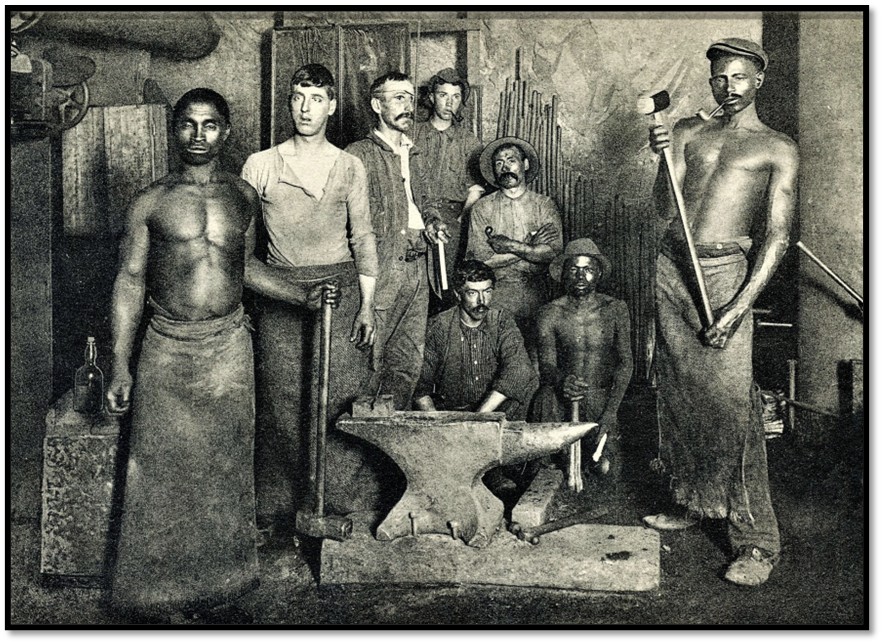
The Blacksmith shop at 1900 feet in No 4 shaft, Robinson Deep gold mine, Witwatersrand in 1906
Beit became one of the most prominent Randlords based on his diamond and gold successes. In a period when South African miners and workers were heartlessly exploited, his mining operations were known for their humane and better treatment of their labour force.
Tributes to Alfred Beit from his colleagues and friends
General Smuts wrote in the preface to Seymour Fort’s 1930 biography of Beit, “Without Beit Rhodes might have been a mere political visionary bereft of power and of practical creation. Beit, South Africa’s pre-eminent builder of roads bridges and railways was the man who engraved Rhodes’ dreams upon the substance of financial realities. Their 20 years’ friendship was so absolutely complete and so perfect as to be almost without parallel amongst those whose names are known in history.”[14]
Geraldine Auerback writes in a tribute to Alfred Beit, “A wealthy financier of abnormal intuition and power of memory, combined with German thoroughness of method, Beit had nothing in common with the ‘financial magnate.’ He was no speculator in any ordinary sense, acquiring property whether on the Rand or elsewhere solely with the object of seriously developing it. He did not gamble, and advice on speculative investments which he always gave reluctantly was far from infallible. Shy and retiring to excess, he was devoid of social ambition and was little known beyond a small circle of intimates who included men in the high position of Lord Rosebery and Lord Haldane. An active sympathy with every form of suffering and an ardent belief in great causes led him to distribute vast sums of money, but his benefactions were always made privately with rare self-effacement. He was the target through life for much undeserved abuse. The terms of the will give the true measure of his character.”[15]
Sir Percy Fitzpatrick, author of Jock of the Bushveld who became a partner in Wernher, Beit & Co said, “Beit was the most capable businessman that South Africa had ever produced. Like many who become prominent in business or through great wealth and are forced into the limelight by sensational occurrences, his personality was not known. To the general public he was merely a name, or an ogre, a financier, multimillionaire and businessman who sacrificed everything to money-making. As a matter of fact, Alfred Beit was none of these things. He was the most kindly, the most generous, and absolutely the most just of men. So, far from being self-assertive, he was modest, unassuming and almost nervously shy. He was generous, not only in material gifts, but even more in those of the spirit, forbearance, forgiveness, and all that we term the great christian spirit of kindliness and consideration for others.”[16]
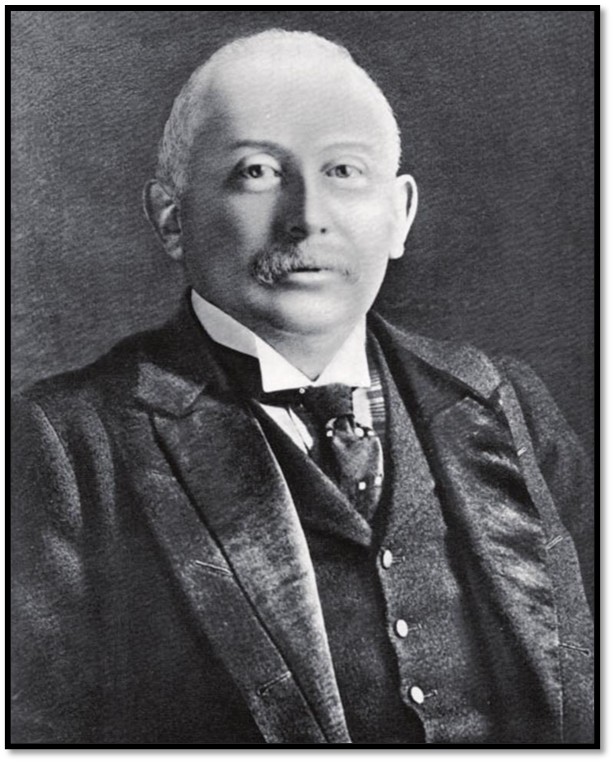
Alfred Beit (1853 – 1906)
Beit’s transition from Randlord to philanthropist
Alfred Beit used the period from Rhodes death in 1902 to his own death in 1906 to transition from a South African mining magnate ‘Randlord’ to one of the most generous philanthropists focusing on long-term infrastructure and education particularly in Britain and present-day Zimbabwe, Zambia and Malawi. After the strain of the 31 December 1895 Jameson Raid and then the Boer War, Beit’s health steadily deteriorated.
Next to the name of Rhodes, Beit is most closely connected with the internal development of Southern and Northern Rhodesia and Nyasaland (present-day Zimbabwe, Zambia and Malawi) His name, particularly pre-1970 was familiar throughout these territories, commemorating the results of his generosity in the form of Beit halls, Beit scholarships and bursaries and Beit bridges.
Beit shared with Rhodes the dream of a railway and telegraph line extending from the Cape to Cairo, opening up the rich hinterland of Africa. It was a project that was often discussed between them and one to which Beit determined to devote his wealth. He also saw that although the territories had rich agricultural and mineralized assets they were handicapped by rivers that were not only unnavigable, but major hindrances to transport during the rains. All three countries depended for their transport entirely on mechanical means - railways, roads and bridges were essential before the wealth of the interior could become unlocked.
Early assessments of prospects in Mashonaland were pessimistic
Rhodes had asked Beit to accompany Randolph Churchill, Winston’s father, on his 1891 August to September tour of Rhodesia. Churchill, who was hotly tipped to be the next British prime minister, had been persuaded by Rhodes to come and see the vast potential of this new land. Churchill was paid £100 by the Daily Graphic for each letter he despatched but was overwhelmingly negative about the country’s mineral prospects saying, “In my opinion, at the present time, all that can be said of Mashonaland from a mining point of view is that the odds are overwhelmingly against the making of a rapid or large fortune by any individual.”[17]
Ironically, Alfred Beit was equally pessimistic about the country’s mining future saying, “I think I will not undertake anything here, so far I have not seen anything that I think worth putting £100 into.”[18]
Rhodes death
Beit held a farewell dinner party for Rhodes who was leaving for the Cape in February 1902 for the trial of Princess Radziwill, who stood accused of forging Rhodes name on certain bills. He was devastated by the news of Rhodes’ death just a month later on 26 March 1902, very soon after his arrival at the Cape. Beit was consumed by grief, but when he did speak it was of the importance of continuing Rhodes’ work.
J.B. Taylor[19] says, “Rhodes’ death brought to a close a comradeship which was one of the foundation stones of South Africa’s history and from that day, Alfred Beit occupied himself with all his might on the progress of Rhodesia and undertook many of the burdens that had previously rested on Rhodes’ shoulders. This was to be his chief concern until his own death only four years later. He put his heart and soul into the development of Rhodesia, especially in communications such as roads, rail links and telegraphs. He visited the country several times. Beit’s own Will made provision for these things in perpetuity. Beit became the chief figure on the boards of the De Beers Company and of the Chartered Company, which he re-joined in that year. Beit was also one Rhodes' trustees under his Will.”
1902 – 1906 Alfred Beit’s remaining years
Both Jameson and Beit were trustees of Rhodes’ Will[20] and in August 1902 left for South Africa to familiarise themselves with Rhodes’ many business affairs bound by their friendship and loyalty to Rhodes. Memorial committees had been set up in Kimberley and Cape Town and Beit spent long hours assisting them.
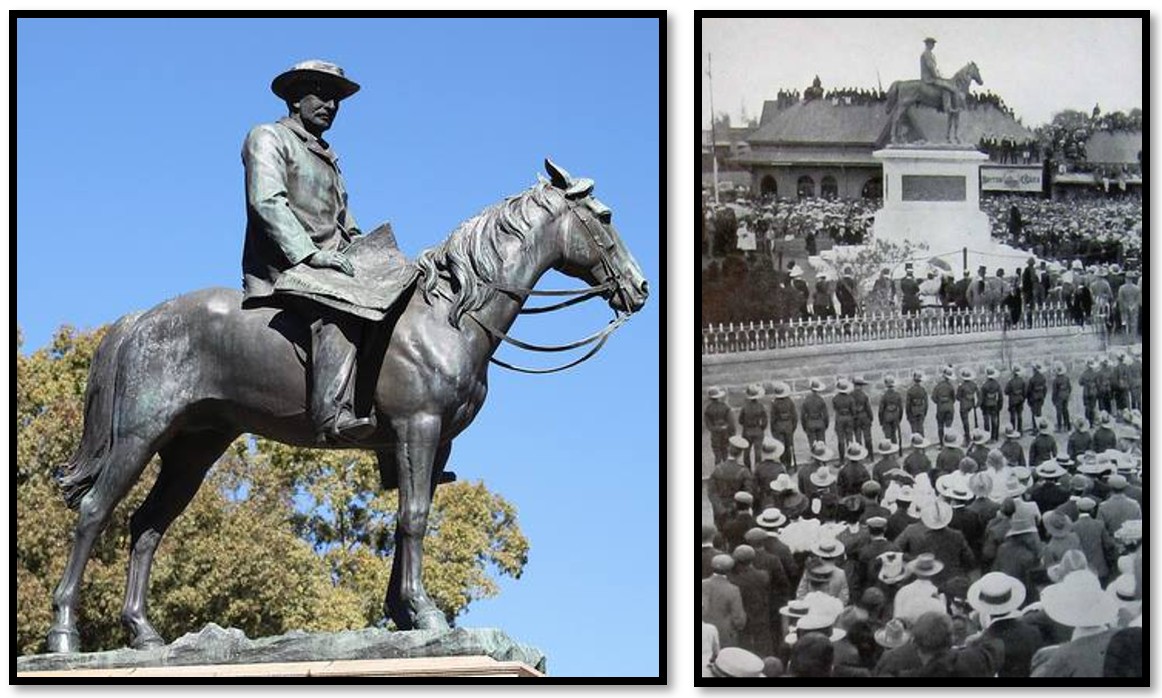
Cecil Rhodes bronze equestrian statue at Kimberley by William Hamo Thornycroft (1850 – 1925) and the unveiling ceremony on 4 December 1907
The equestrian statue above had been paid by public subscription and depicts Rhodes on horseback looking north with a map on his lap, but a suitable location could not be found. Beit wanted somewhere close to where Rhodes and Jameson had lived in the early days. He found a suitable location with Sir Lewis Mitchell on Dutoitspan Road, went to the owners and bought it at a high figure and then handed it over to the committee.
Another memorial approved by Beit and financed by public subscription at Cape Town included £10,000 from Beit, but only finished in 1912, is the Rhodes Memorial designed by Sir Francis Macey and Sir Herbert Baker using the classical architecture so enjoyed by Rhodes. It consists of a massive staircase with 49 steps made from Cape granite, one for each year of Rhodes' life, leading from a semi-circular terrace up to a rectangular U-shaped monument formed of Ionic pillars. Eight bronze lions based on those at Nelson’s Column in Trafalgar Square were cast ‘in situ’ by J.W Swan, with a bust of Rhodes (also by Swan) The inscription is "To the spirit and life work of Cecil John Rhodes who loved and served South Africa." At the bottom of the steps is a bronze statue of a horseman, Physical Energy, by George Frederic Watts.[21]
In August 1903, Alfred Beit again felt compelled to visit Rhodesia, despite growing ill-health, to see what had been done and what was still required. On the way he visited the Premier Diamond mine near Pretoria that had recently been discovered. Taylor advised him to buy into the Premier Syndicate, but Beit declined; in 1905 the Cullinan Diamond of 3,107 carats was found here. Worry that the new discovery would bring an end to the monopoly position enjoyed by De Beers, plus physical over exertion in the heat exploring the mine resulted in Beit suffering exhaustion.
Lifetime bequests[22]
After 1889 he donated regular gifts to the sculpture collection of the Staatliche Museen Preußischer Kulturbesitz (SPK) (State Museums for Prussian Cultural Heritage)
Gifts to the Hamburg Art Gallery included paintings by Peter Paul Rubens and Gainsborough as well as more modern works by Honore Daumier and Vilhelm Hammershøi. From his monetary gifts the Gallery commissioned numerous paintings by German artists.
Gifts to the Hamburg Museum of Arts and Crafts included many arts and crafts items, ceramics, majolica’s, faience’s or stoneware, numerous vases, dishes, glasses, goblets, beakers, leather helmets, sets of cutlery and oven tiles, all dating from the 14th to the 17th centuries.
In 1905 Beit funded at Oxford University a chair of colonial history, now the Beit Professorship of History of the British Commonwealth and also donated funds to the Bodleian Library for the purchase of books on colonial history.
He donated generously to the Leo Frobenius expedition that visited southern and central Africa recording rockart, including in Rhodesia (present-day Zimbabwe) and carrying out ethnologist research and adding many items to German museums.[23]
In 1906 to his native city of Hamburg he donated two million marks to the Hamburgische Wissenschaftliche Stiftunga (Hamburg Scientific Foundation) a charity benefiting scientific projects in Hamburg that eventually became the University of Hamburg. This represented the largest donation by far towards the founding capital of 3.8 million marks.
For these gifts Beit was awarded the Order of the Red Eagle,[24] but turned it down thinking that with his British citizenship he would become a newspaper target.
Beit’s health deteriorates
Beit’s rather frail constitution and delicate health was worsened when he suffered a stroke near Salisbury (now Harare) on 8 January 1904 that led to symptoms of paralysis on the left half of his body. Fortunately, Dr Jameson was with him and although his life was saved, he never fully recovered from this blow.[25] He was able to return to London arriving there on 14 February and immediately went on to Hamburg, where he convalesced for several weeks.
Taylor writes, “there is no doubt that after Beit’s rapid recovery from the stroke, he threw himself too vehemently in the work of his daily life, but it was impossible for him to take things quietly because his brain was always on the go.”
In September 1904, he was well enough to accept the vice-presidency of the Chartered Company offered to him when the previous president, Earl Grey, was appointed Governor General of Canada. It was a great honour for Beit, but added further to his responsibilities, anxious as he was to carry on the work of his late friend. The company’s shareholders welcomed the news; London newspapers stated, “the market likes it,” irrespective of the health consequences for Beit. But as early as March 1905 his health prevented him from taking the chair at the annual general meeting of the Chartered Company and his friends became increasingly alarmed at his poor health.
In the same year his business partner, Julius Wernher reported to Lionel Phillips, that the strain and excitement of floating the Central Mining and Investment Corporation gave Beit another collapse. He said Beit had been taken ill with kidney trouble and ‘catarrh of the big bowel.’
In spring 1906, his doctors recommended Wiesbaden for its natural hot mineral springs that were believed to help with heart-related issues and after a visit to his mother in Hamburg, he was brought home to England, a dying man, and passed away at his country residence, Tewin Water, Hertfordshire, on 16 July 1906 aged fifty-three years old.
The funeral was kept very simple, a plain coffin stood on the simple hearse, which was drawn by two horses. A single clergyman performed the service. Two hymns, a short address and a prayer, that was all. The service however was attended by many mourners. An extra train with fifteen carriages brought the mourners from London, and there were eighty-four motor cars at the church. Over four hundred wreaths were left. He was buried in the churchyard of St Peter’s Church, Tewin Water. His gravestone has the lines, “Write me as one that loved his fellow men” from a poem by Leigh Hunt.
Alfred Beit’s Will and his bequests
Beit was unmarried and without children and was survived by his mother and two sisters with his youngest brother, Otto, as his main heir. Otto was a trustee and later chairman of the Rhodes Trust, as well as a director of the British South Africa Company, but after his brother's death largely withdrew from business life. In his life Otto Beit was almost as significant a figure as his deceased brother, both as an art collector and as a philanthropist; his charitable foundations earned him a knighthood in 1920 and he was made a hereditary baronet in 1924.
Alfred’s estate was assessed at £8,049,886, the bulk of which passed to Otto Beit.
The largest single bequest was £1.2 million to southern Africa where his heart lay to establish a fund, the Beit Trust, “the income of which is to be devoted to the construction, equipment or furtherance of any such methods of communication or transportation in Rhodesia, Portuguese Southeast Africa or the German possessions, and any parts of Africa that may be traversed by the Cape-to-Cairo Railway. The trustees[26] are to have absolute discretion, and if two thirds decide that the fund is no longer required for furthering the work of communication or transportation, they can apply the proceeds to educational, charitable or other public purposes in Rhodesia.” He authorised his trustees, when they considered the time had arrived when the fund could no longer be used for the primary purpose for which it was established, to apply the proceeds to educational, public and charitable purposes in Northern and Southern Rhodesia as they might think fit. This was later modified to include Malawi.
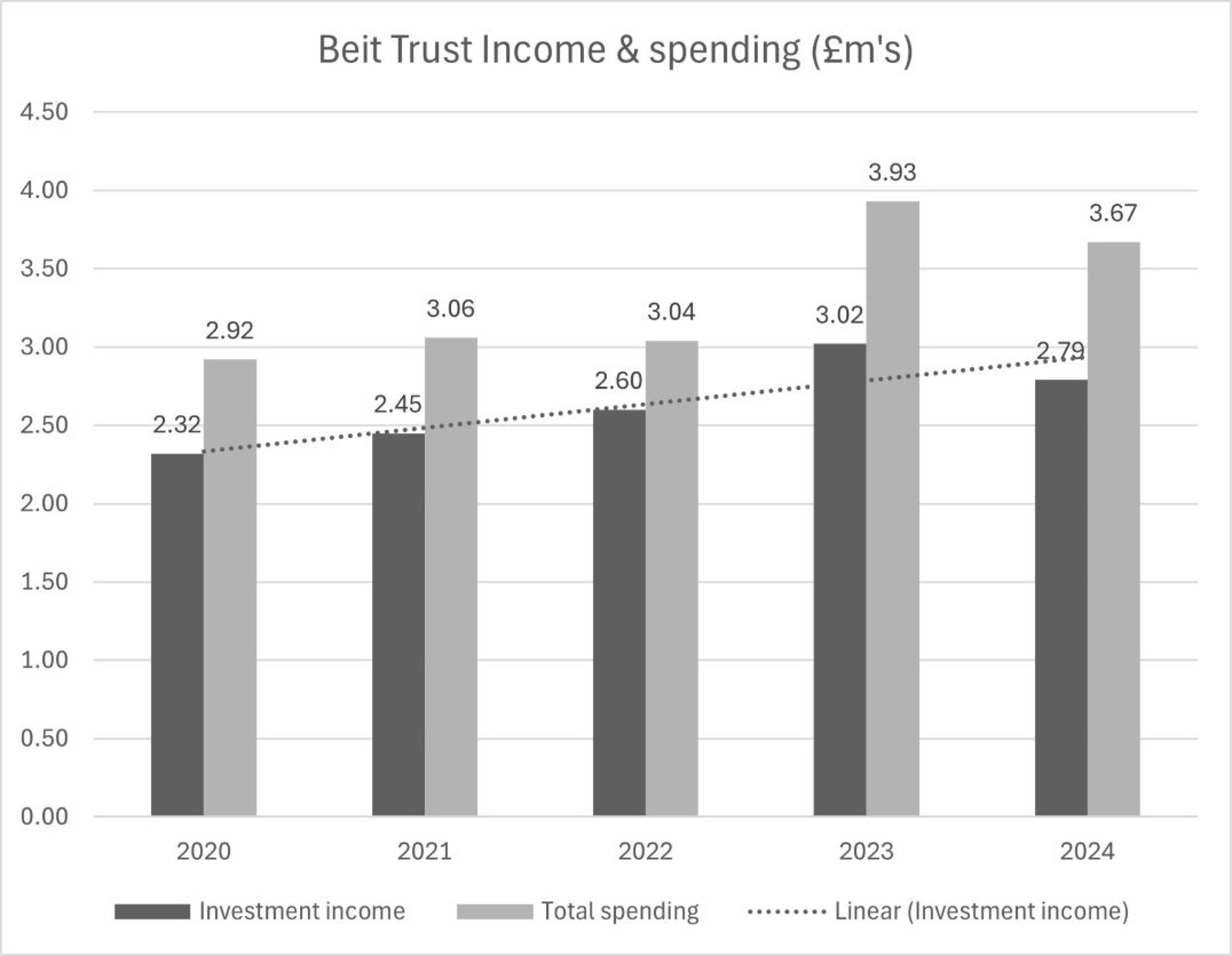
The Beit Railway Trust constructed many of the major bridges that were built in southern Africa in the first half of the twentieth century and led in promoting air travel. In 1954, the trust was reconstituted by an act of Parliament into an incorporated charity and renamed the Beit Trust. Up to the present time the Beit Trust has provided scholarships and grants in support of health, education, welfare, and environmental projects in Zimbabwe, Zambia and Malawi. Details for the five years 2020 – 4 are given below.
Other bequests were:
£250,000 to the University of Johannesburg to build and equip buildings and £50,000 for an Institute of Medical Sciences – both lapsed as they were not built
The Frankenwald estate a 290 hectare site in Johannesburg bequeathed by Beit to be used for educational and scientific purposes and to establish a Transvaal university. The land was transferred to Wits in 1987; in 2024 there are plans to sell the land for residential and commercial projects to provide a fund to support students who qualify for Wits but do not have the funds.
The city of Hamburg was given a 19 hectare site, the “Borsteler Jäger” as a local recreation area for the people of Hamburg, then worth 400,000 marks.
Hamburg philanthropic institutions such as libraries received 400,000 marks
The German Benevolent Society for Released Prisoners received 20,000 marks. Bethanien Hospital and the Central Library for the Blind received 15,000 marks each and a further 43 institutions and associations received amounts between 5 – 10,000 marks each
£200,000 to be distributed equally in London and Hamburg for educational or charitable purposes
£200,000 for educational or charitable purposes in Rhodesia and other territories within the field of the British South Africa Company,
£100,000 for educational or charitable purposes in the Transvaal,
£75,000 for similar purposes in Kimberley and in Cape Colony.
£50,000 and 5,000 Preference shares in the De Beers Company to the College of Technology, London University (present-day Imperial College) The then Rector of Imperial College, Sir Henry Tizard wrote in the journal Nature: “practically the whole of the endowment of the College since its incorporation [in 1907] has been provided by Sir Otto Beit,[27] Mr Alfred Beit and Sir Julius Wernher.”[28]
£25,000 to Rhodes University, Grahamstown,
£20,000 to each of King Edward VII Hospital and Guy's Hospital, London,
His property near Hamburg was left to that city
Rhodes Memorial Fund £10,000
Union Jack Club, London £10,000
His art collections were left to the national galleries in London, Berlin and Hamburg.
Sir Alan Monroe wrote in 2012,[29] “But Alfred Beit also took a more far-sighted view of future needs by giving his Trustees discretion to apply resources to the broader objectives of education and other charitable purposes. A century on, it is this wider spread of activities to which the Trust now devotes its operations, and for which it is best known. Having advantage of the free hand afforded to them, the Trustees have been able to remain faithful to the intentions of the Trust’s founder while adapting its operations to the changing needs and circumstances of the beneficial territories and their peoples. The century has seen the Trust move on successively from communications projects to involvement in education, through school and university buildings, libraries and academic fellowships; to health and social welfare with grants for hospitals, staff housing and research programmes as well as orphanages; and in more recent years to successful wildlife conservation programmes. In all this work the development of human resources is seen as every bit as important as provision of physical assets. Humanitarian relief has also been afforded at moments of disaster and emergency.”
The Beit Trust
The original 1906 bequest of £1.2 million has been added to in the subsequent 120 years by investment income and by the increase in value of its investments. In 2020 the Trust’s net assets[30] were £109 million and had increased to nearly £131 million in 2024.
Initially the Trust was designed for developing infrastructure, specifically to financing the railway and telegraph systems in Southern Rhodesia (now Zimbabwe) and Northern Rhodesia (now Zambia) and in establishing and subsidising the road motor services that served as a feeder from the remote areas to the railway network.
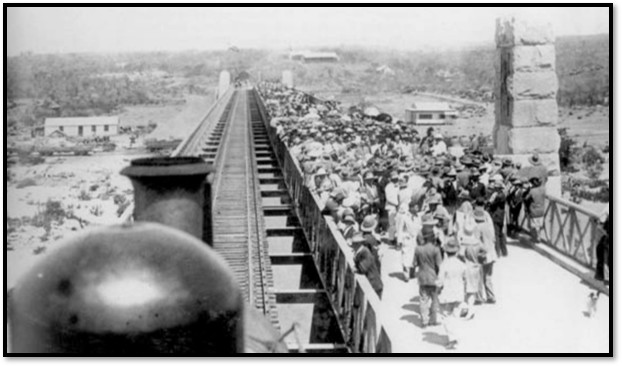
The opening ceremony of the Alfred Beit Bridge (now Beitbridge) over the Limpopo river on 31 August 1929
It then went on to fund major communication projects including the Alfred Beit Bridge (now Beitbridge) built in 1929 over the Limpopo river (£128,000) linking Zimbabwe and South Africa, the magnificent steel-arched Birchenough Bridge (£135,000) measuring 378 metres and opened in 1935 over the Save or Sabi river.[31] It was named after Sir Henry Birchenough, Chairman of the Beit Trust and constructed by Dorman Long.
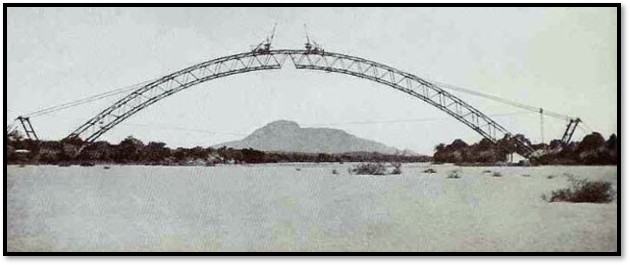
Closure of the Birchenough Bridge arch, morning of 17 June 1935
The Otto Beit Bridge (£180,000) spans 382 metres across the Zambesi river at Chirundu linking Zimbabwe and Zambia and was the first modern suspension bridge with parallel cables built outside America. Built in 1938-9 by Dorman Long it was opened by Lady Lillian Beit, Otto’s Beit’s widow. The steel corroded considerably making it unsuitable for heavy loads as time went on and so a second bridge was built 90 metres upstream in 2002.
The Luangwa Bridge (£80,000) in Zambia was built in 1932 funded by the Beit Trust as a narrow 300 metre long steel and reinforced concrete deck on concrete piers and columns and replaced by a second Luangwa Bridge in 1968. It was destroyed in 1979 by the Zimbabwe-Rhodesia military forces
The original 427 metre Kafue Railway Bridge was also funded by the Beit Trust and completed in 1906 as part of Rhodes’ Cape-to-Cairo railway dream. A subsequent grant from the Trust upgraded the bridge in 1909. A steel girder bridge it had thirteen spans, each 33 metres long, supported on concrete pillars.
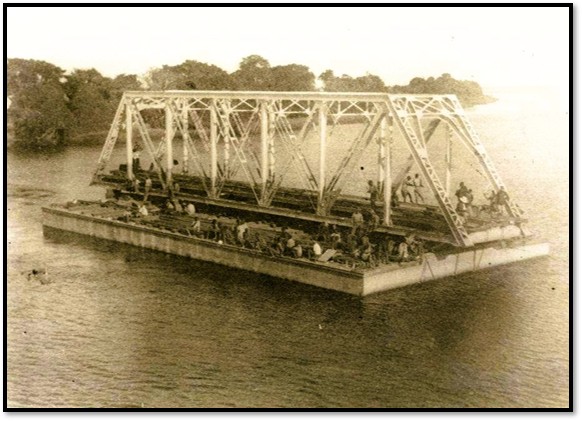
Kafue Railway Bridge under construction in 1906
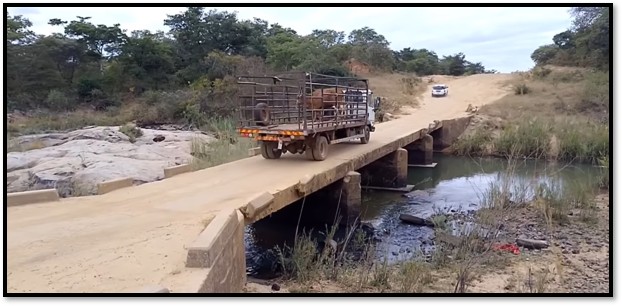
Less spectacular, but just as important are the over four hundred low-level bridges that are scattered throughout the territories of southern Africa and provide access and critical transport links in many of the more remote rural areas.[32] The Beit Trust provided £106,336.[33] General Smuts wrote, “Who has travelled the wide expense of Southern and Northern Rhodesia and not blessed the memory of Beit at sight of a bridge or a causeway over a hopelessly deep and rough river bed, even where there was no water flowing in it? These useful memorials of Beit are scattered all over that young country to help and cheer the traveller.”
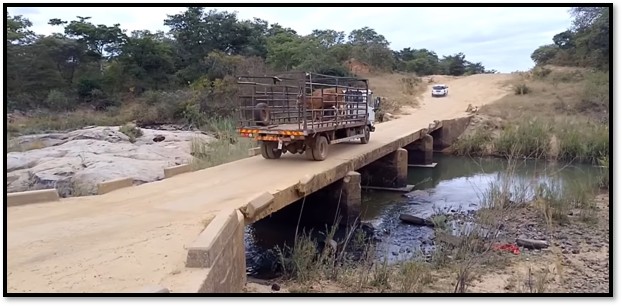
Many of the existing low-level bridges were built between 1926 – 1933; this connects Gutu and Buhera
The Beit Trustees gave £50,000 for the survey of routes, landing grounds, emergency strips and certain airport buildings as the country opened up to flying services and also subsidised[34] Rhodesia's own airways service in 1933; the Rhodesian and Nyasaland Airways Limited (RANA) for its first four years of operation with £19,000 that became the Southern Rhodesia Air Services in 1940 operating from Belvedere airport. It operated regional routes until 1946 when it was succeeded by Central African Airways (CAA)
In his will Beit left £200,000 for educational purposes which was administered by the Southern Rhodesia Government in a variety of ways, including the Beit scholarships. This has been superceded by the Beit Trust that now awards up to twenty scholarships annually that cover fees, tuition and a personal allowance. The Trust selects the scholars who are then partnered with top UK universities such as Cambridge and Edinburgh and some South African universities.
Beit’s Will provides for the trustees to use their discretion in awarding grants for educational, cultural and public health activities within the three territories of Zimbabwe, Zambia and Malawi.
Many of the larger schools have been given grants for the construction of Beit Assembly Halls costing from £7 - £8,000 each. The object of the trustees was to encourage communal activities at those schools and to add dignity to school functions. Libraries have also been provided.
Other projects have included funding for the construction of the National Archives of Zimbabwe.
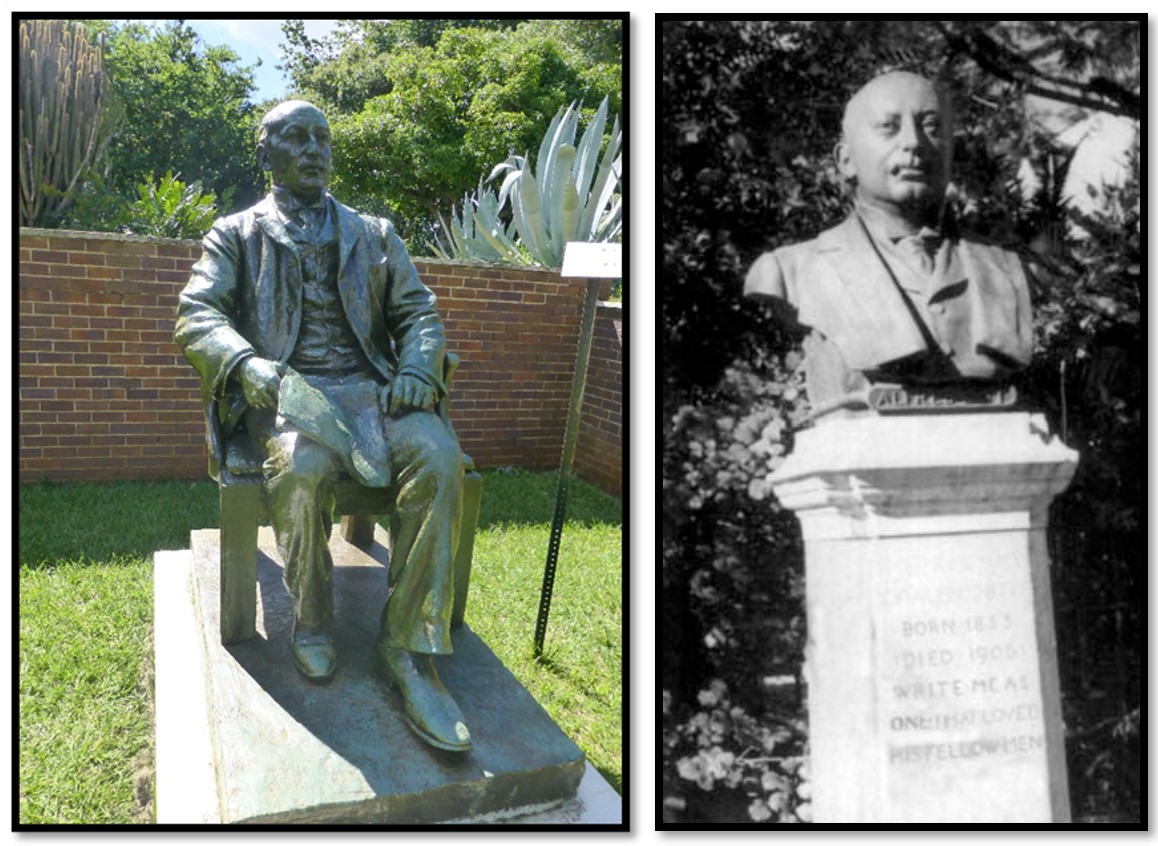
Alfred Beit statue at the National Archives of Zimbabwe[35] Beit’s memorial at Kimberley[36]
Imperial College London was a major recipient of funding particularly the Royal School of Mines (now Departments of Earth Science and Materials) where a memorial to Alfred Beit and Julius Wernher remains over the entrance. This is the only remaining building of Imperial College that dates back to imperial days.[37] Also nearby a university residence (Beit Hall) is named after its major donor.
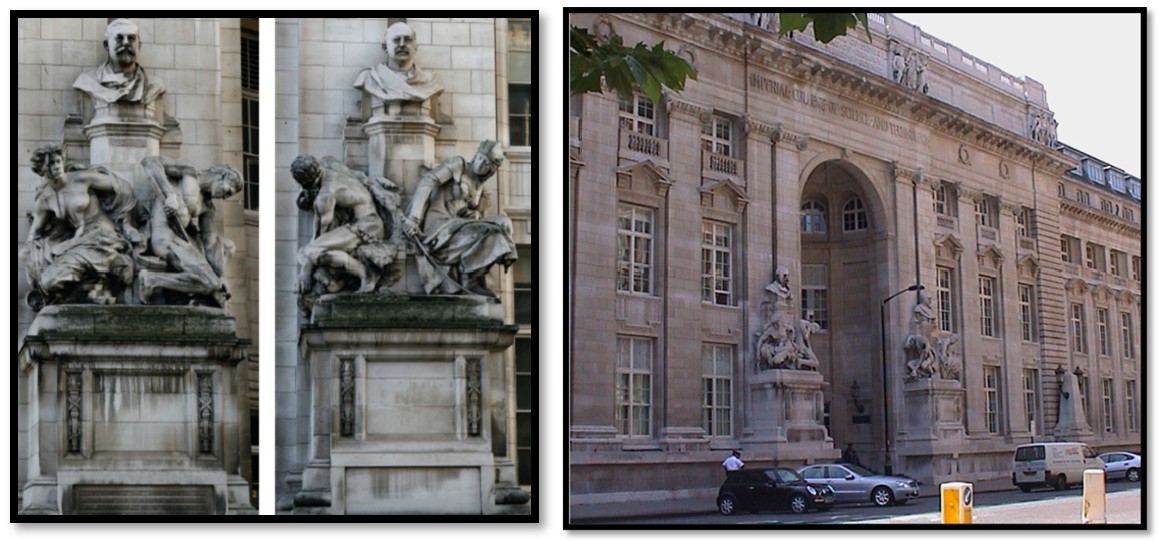
Statues of Julius Wernher (L) and Alfred Beit (R), by Paul Montford, erected 1910, at the entrance to the former Royal School of Mines, now part of Imperial College.
The purpose of the Beit Trust has changed over the years
In 1946, the Trustees changed the focus from communications infrastructure to assistance in:
· Education (including now postgraduate scholarships, school buildings, teacher training, libraries, books and computers)
· Health (including hospitals, clinics, medical equipment, support for regional trainee surgeons and in-country secondments for junior doctors)
· Welfare (including care homes for the elderly)
· Culture and conservation (notably the conservation of endangered species and climate action)
The Beit Trust says it takes care to evaluate its priorities and ensure its ways of working remain effective in achieving its objectives. It does so, for Trust-funded projects, through regular spot-checks by trustees, the secretary, the Harare-based representative and the Trust’s regional correspondents; and, in the broader context, through consultations with a wide range of other sources. An internal Strategic Review in September 2023 confirmed that the Trust is effectively fulfilling its mandate.[38]
How the Beit Trust works
A committee of regional correspondents, Zimbabwe (3) Zambia (4) and Malawi (3) make recommendations on each grant application six weeks before the trustees meet. They are all volunteers and considered essential for keeping administrative costs low. In 2024 an amount of £1.6 million was made available for new projects recommended in-country by the correspondents.
The trustees meet every six months to agree broad strategy on investments, reserves and risk management, and to consider grant applications. In addition, trustees allocate £1 million a year to long-term recurrent grants for academic and medical scholarships and bursaries, library books, school computers, contingency support and, for the final time in 2024, student hardship relief at South African universities.[39]
The Grant Policy
Applications for grants are considered on merit. Trustees seldom give grants to government organisations. Instead, they support independent institutions, in particular schools, hospitals and health centres. Trustees seek to maintain, as far as possible, an equitable distribution of grants between the three countries and they are regularly reviewed.[40]
Charitable Ventures supported by the Beit Trust between 2020 - 2024
In the period 2020 – 2014 the number of Beit Trust postgraduate scholarships varied between 21 – 24 at British and South African institutions. Joint scholarships continued with Stellenbosch, Rhodes, and UCT in South Africa and with Cambridge, Edinburgh, Glasgow, Leeds, Oxford, St Andrews and Strathclyde Universities in the UK.
The Trust provided £80,000 per year between 2020 – 2023 in hardship support for undergraduate and postgraduate students from the grant area. at four South African universities. In 2024 a final amount of £40,000 was provided.
Since 2009 the Trust has supported one new training surgeon from each of the three countries through their five year training at the College of Surgeons of East, Central and Southern Africa (COSECSA)
The trustees allocated £10,000 per year between 2020 – 2024 to the Lowveld Rhino Trust in Zimbabwe.
In 2023 – 2024 an amount of £30,000 a year for five years was awarded to a community outreach and education project connected with black rhino conservation
Between 2020 – 2023 a registered UK charity Book Aid International (BAI) was given a grant of £75,000 for books to Zambia, Zimbabwe and Malawi; increased to £80,000 in 2024.
In 2020 – 2024 Biblionef (South Africa) a charity that supplies book packs to schools in southern Africa was granted support of up to £30,000.
Graphical presentations of Beit Trust financials 2020 – 2024
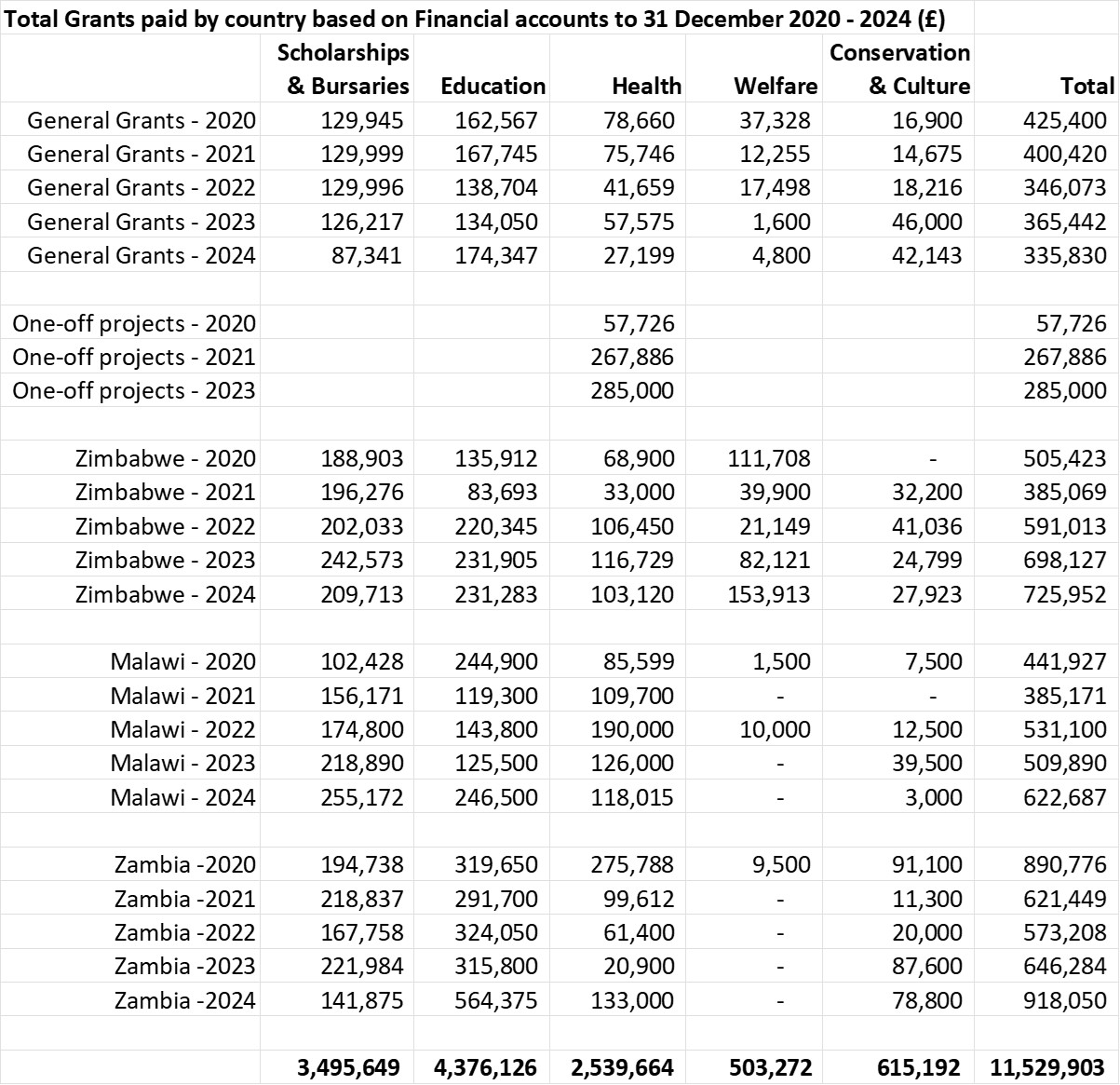
Analysis of Grants paid by the Beit Trust for the years ended 31 December 2020 - 24[41]
The graphs below contained detailed grant expenditure from 2020 – 2024 broken down by:
· Grant type (General grants, One-off projects, etc
· Country (Zimbabwe, Malawi, Zambia)
· Category (Scholarships and Bursaries, Education, Health, Welfare, Conservation and Culture)
· Totals per year
· Totals per country over five years
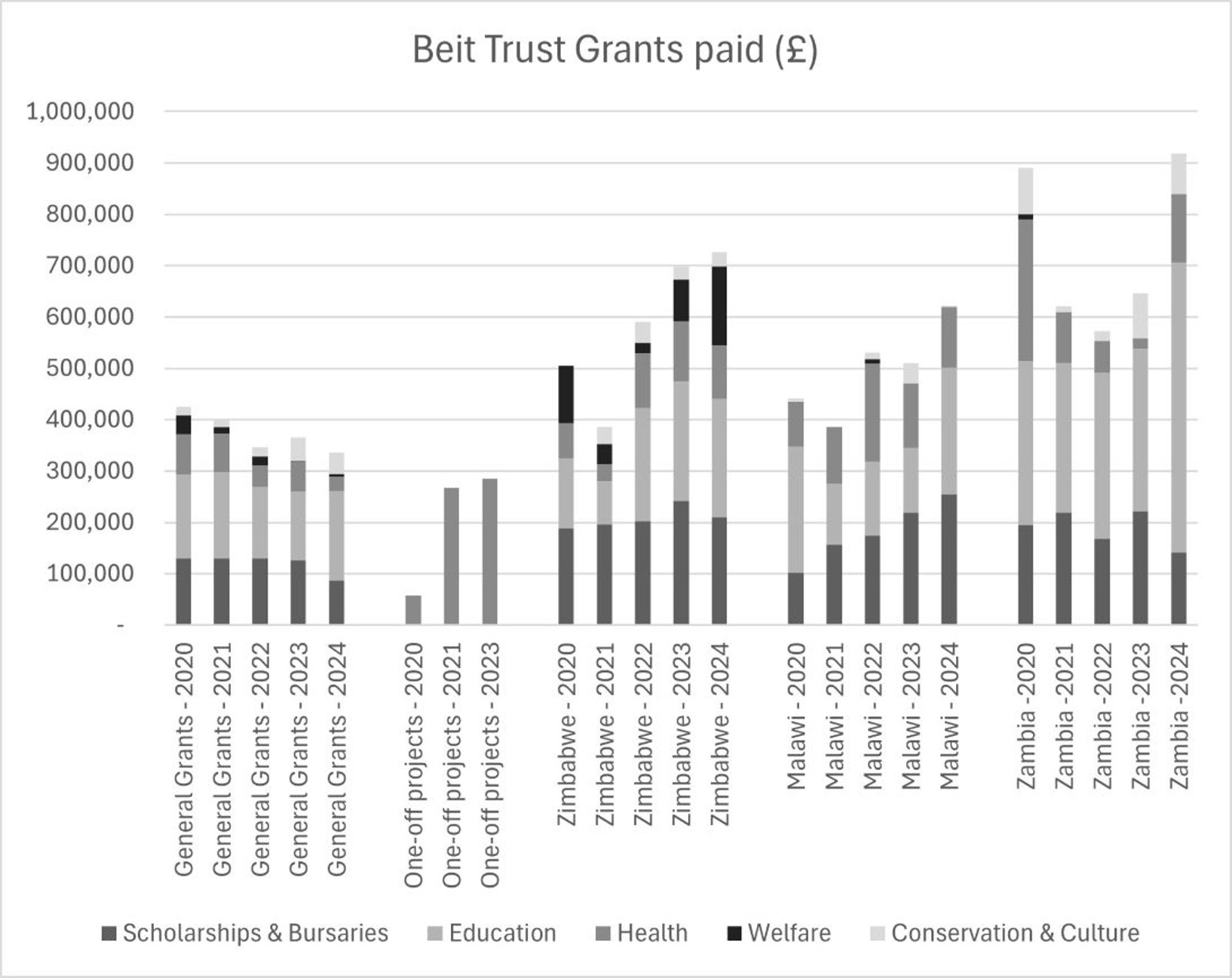
Zimbabwe
Grant spending peaks in 2024 (£725,952)
There is consistent support across categories like Scholarships and Bursaries (£1,039,498) and Education (£903,138)
Malawi
Highest grants are paid in 2024 (£622,687) showing strong recent growth
Zambia
Highest overall expenditure with maximum in 2024 (£918,050)
Very high overall totals particularly in Education (£1,815,575) and Scholarships and Bursaries (£945,192)
Education grants to Malawi (+£121,000) and Zambia’s (+£248,575) increased significantly from 2023 to 2024
2020 Health spending in Zambia (£275,788) was particularly high due to Covid period funding
Welfare and Conservation and Culture enjoyed quite modest funding throughout the period
2020-21 saw contractions in grant spending except Education and One-off projects
There was a strong rebound in grant spending in 2023 that continued in 2024
Actual amounts paid are in the Appendix at the end of this article
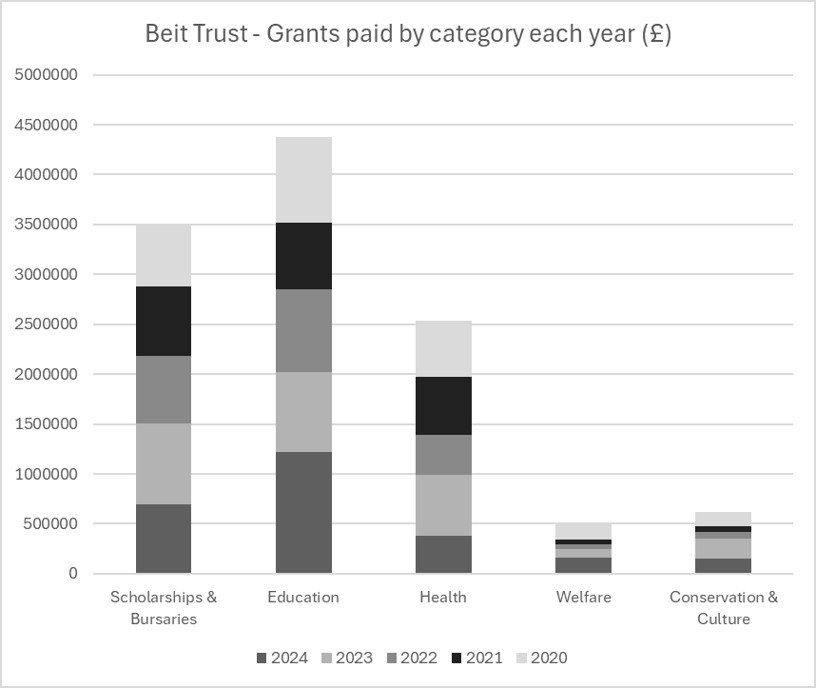
Education is the largest funded category of grant spending (4,376,126 – 38% of the total) followed by Scholarships and Bursaries (£3,495,649 – 30% of the total) Welfare receives the lowest share (£503,272 – 4% of the total)
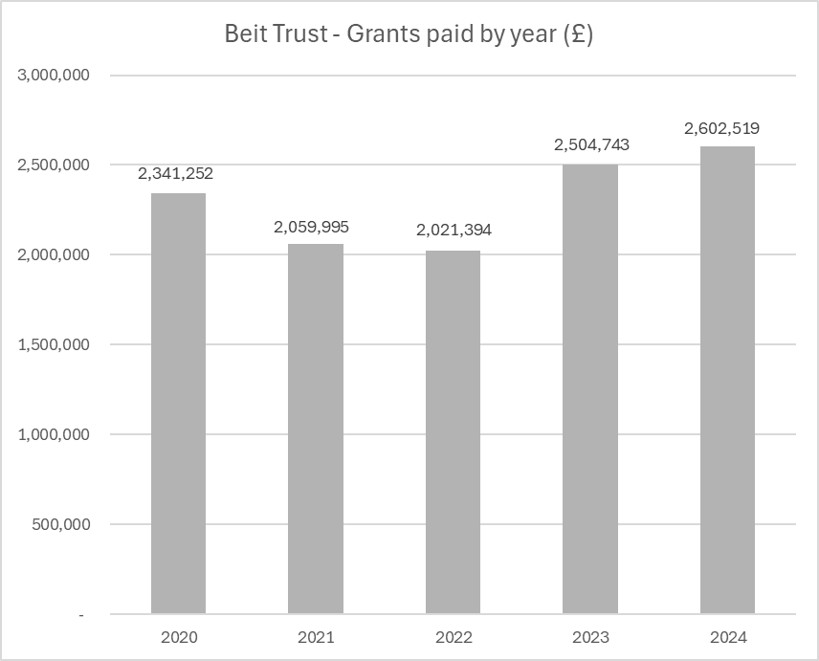
Grant spending declined during the years 2020 to 2022 reaching a five-year low of £2,021,394 but there was a significant increase in 2023 followed by the highest grant spending in 2024. Total grant expenditure over the five years was £11,529,903
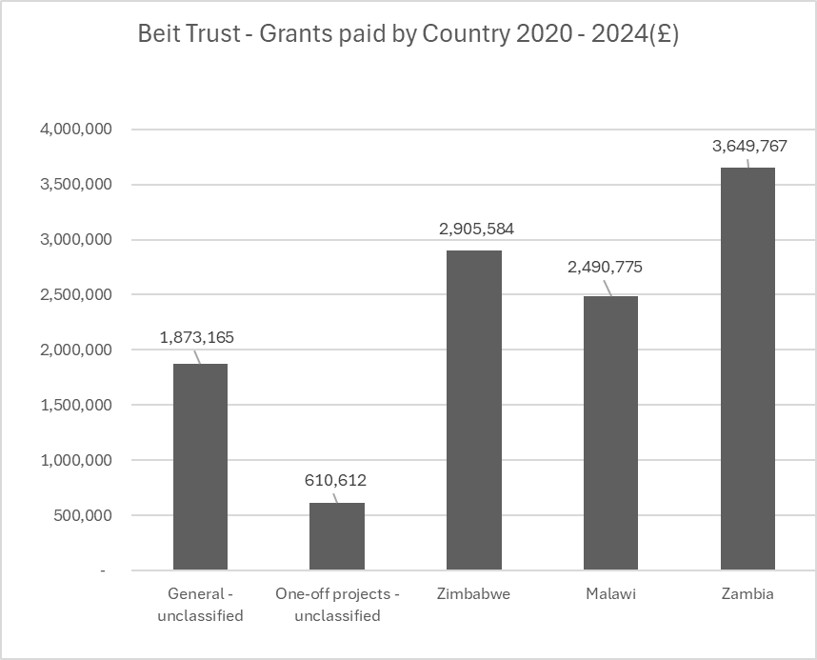
Zambia received the highest total grant funding (£3,649,767 – 32% of the total) Zimbabwe received 25% and Malawi 22%. Nearly £2.5 million was paid out in unclassified general and one-off projects.
References
H. Albrecht. Alfred Beit: the Hamburg Diamond King. Hamburgische Wissenschaftliche Stiftung
gegründet 1907
Anon. Alfred Beit’s gift to the nation. The Bulawayo Chronicle Jubilee supplement of Friday, 6 September 1940 celebrating 50 years of achievement in Southern Rhodesia
Anon. Rhodes Scholarships. The Bulawayo Chronicle Jubilee supplement of Friday, 6 September 1940 celebrating 50 years of achievement in Southern Rhodesia.
G. Auerback. Alfred Beit – South Africa’s Financial Genius.
Part 1 https://kehilalinks.jewishgen.org/kimberley/Alfred_Beit.html
Part 2 https://www.chol.website/memoirs/Alfred%20Beit%20Part%202%20Transvaal%20and%20Rhodesia.pdf
P.H. Emden. Randlords. Hodder and Stoughton Ltd, 1933
M. Meredith. Diamonds, Gold and War: The British, the Boers and the making of South Africa. Public Affairs, New York 2007
J. Pellow. Donors to an Imperial Project: Randlords as benefactors to the Royal School of Mines, Imperial College of Science and Technology. https://www.imperial.ac.uk/media/imperial-college/administration-and-support-services/equality/public/history-group/Appendix-9---Alfred-Beit,-Otto-Beit-and-Julius-Wernher.pdf
L. Phillips. Some Reminiscences. Hutchinson & Co, 1924
R.I. Rotberg. The Founder: Cecil Rhodes and the Pursuit of Power. Oxford University Press, 1988
G. Seymour Fort. Alfred Beit : A Study of the Man and his Work. Ivor Nicholson & Watson, London 1932. https://archive.org/details/alfredbeit0000gsey/page/n7/mode/2up
Dr H.O. Simon. The Centenary of Alfred Beit. The Chronicle. 3 July 1953. Rhodes Centennial Supplement, Page 43
J.B. Taylor. A Pioneer looks back. Hutchinson & Co, London, 1939
The Beit Trust. https://beittrust.org.uk/
Wikipedia – Alfred Beit
Appendix
Notes
[1] Some Reminiscences, P88
[2] Alfred Beit: the Hamburg Diamond King, P22
[3] Beit was 163 cms according to his military pass card
[4] The first diamond was discovered in 1866 by children playing at ‘De Kalk’ farm near the Orange river. It weighed 22.5 carats and was worth £500 but at the time was viewed as a “one-off.” This changed in 1869 when a 83.5 carat stone was found and started a rush of diamond diggers
[5] Alfred Beit: the Hamburg Diamond King, P34
[6] The amalgamation of diamond mines at Kimberley is described in the article Alfred Beit (1853 – 1906)
[7] Ibid, P45-6
[8] The Founder: Cecil Rhodes and the Pursuit of Power, P286
[9] See the article Land and the British South Africa Company - the Renny-Tailyour and Lippert concessions under Harare on the website www.zimfieldguide.com
[10] Some Reminiscences, P49
[11] Ibid, P50
[12] Ibid, P87
[13] Ibid, P125-6
[14] Alfred Beit : A Study of the Man and his Work
[15] Alfred Beit: South Africa’s financial genius, Part 2
[16] Ibid
[17] Diamonds, Gold and War, P272-3
[18] Ibid, P273
[19] J.B ‘Jim’ Taylor worked in Beit’s office and was trained in diamond buying at Kimberley and later became a gold broker in Johannesburg and wrote the book ‘A Pioneer looks back’ describing his experiences with Alfred Beit
[20] Otto Beit was also a Trustee of Rhodes’ Will
[21] See the article Rhodes Memorial, Cape Town under Bulawayo on the website www.zimfieldguide.com
[22] Alfred Beit: the Hamburg Diamond King, P102 - 6
[23] Leo Frobenius (1873 – 1938) was a German ethnologist and authority on prehistoric art. He made twelve expeditions to Africa between 1904 – 35 including extensive tours of Rhodesia, South Africa and South West Africa. Elizabeth Goodall, famous for Zimbabwe rockart images, accompanied him as an artist on the southern Africa expedition as Elizabeth Mannsfeld but made Rhodesia (present-day Zimbabwe) her home
[24] The Order of the Red Eagle was an old Prussian Order awarded to both military and civilians for merit and service
[25] Alfred Beit: the Hamburg Diamond King, P118
[26] The original trustees were Otto Beit, Julius Wernher and Bourchier Hawksley
[27] Sir Otto Beit (1865–1930) was Alfred’s younger brother and joined him in his mining ventures. After Alfred’s death he inherited the major part of Alfred’s estate, managed the Beit Trust and himself became a renowned philanthropist including a donation of £250,000 to Imperial College for medical research. Otto took a particular interest in students welfare and funded the student hostel and the Student Union Quad in Prince Consort Road and scholarships
[28] Nature No. 3194, Volume 127 January 17th, 1931
[29] Foreword to Alfred Beit: the Hamburg Diamond King by Henning Albrecht
[30] Net assets are investments and current assets less current liabilities
[31] See the article Birchenough Bridge under Manicaland on the website www.zimfieldguide.com
[32] https://beittrust.org.uk/beit-trust-history/#:~:text=Under%20The%20Railway%20Fund's%20original,needed%20communication%20in%20rural%20areas.
[33] https://www.rhodesianstudycircle.org.uk/wp-content/uploads/2018/08/022-1969-Bridges-2021-08.pdf
[34] https://www.facebook.com/groups/Rhodesians.Worldwide/posts/5697000026985278/
[35] Beit’s statue has been removed from its once prominent position to the rear of the building
[36] Beit’s memorial at Kimberley has also been removed to the Kimberley public library
[37] Donors to an Imperial Project
[38] Beit Trust Annual Report and Accounts 2024 – the Trust’s Objectives
[39] Ibid – the Trust’s Organisation
[40] Ibid – Grants Policy
[41] Sourced from the Beit Trust financial accounts filed with the Charities Commission